Connect Master Logo
  • Blog
  • All Levels
  • Levels 1-10

    12345678910

    Levels 11-20

    11121314151617181920

    Levels 21-30

    21222324252627282930

    Levels 31-40

    31323334353637383940

    Levels 41-50

    41424344454647484950

    Levels 51-60

    51525354555657585960

    Levels 61-70

    61626364656667686970

    Levels 71-80

    71727374757677787980

    Levels 81-90

    81828384858687888990

    Levels 91-100

    919293949596979899100

    Levels 101-110

    101102103104105106107108109110

    Levels 111-120

    111112113114115116117118119120

    Levels 121-130

    121122123124125126127128129130

    Levels 131-140

    131132133134135136137138139140

    Levels 141-150

    141142143144145146147148149150

    Levels 151-160

    151152153154155156157158159160

    Levels 161-170

    161162163164165166167168169170

    Levels 171-180

    171172173174175176177178179180

    Levels 181-190

    181182183184185186187188189190

    Levels 191-200

    191192193194195196197198199200

    Levels 201-210

    201202203204205206207208209210

    Levels 211-220

    211212213214215216217218219220

    Levels 221-230

    221222223224225226227228229230

    Levels 231-240

    231232233234235236237238239240

    Levels 241-250

    241242243244245246247248249250

    Levels 251-260

    251252253254255256257258259260

    Levels 261-270

    261262263264265266267268269270

    Levels 271-280

    271272273274275276277278279280

    Levels 281-290

    281282283284285286287288289290

    Levels 291-300

    291292293294295296297298299300

    Levels 301-310

    301302303304305306307308309310

    Levels 311-320

    311312313314315316317318319320

    Levels 321-330

    321322323324325326327328329330

    Levels 331-340

    331332333334335336337338339340

    Levels 341-350

    341342343344345346347348349350

    Levels 351-360

    351352353354355356357358359360

    Levels 361-370

    361362363364365366367368369370

    Levels 371-380

    371372373374375376377378379380

    Levels 381-390

    381382383384385386387388389390

    Levels 391-400

    391392393394395396397398399400

    Levels 401-410

    401402403404405406407408409410

    Levels 411-420

    411412413414415416417418419420

    Levels 421-430

    421422423424425426427428429430

    Levels 431-440

    431432433434435436437438439440

    Levels 441-450

    441442443444445446447448449450

    Levels 451-460

    451452453454455456457458459460

    Levels 461-470

    461462463464465466467468469470

    Levels 471-480

    471472473474475476477478479480

    Levels 481-490

    481482483484485486487488489490

    Levels 491-500

    491492493494495496497498499500

    Levels 501-510

    501502503504505506507508509510

    Levels 511-520

    511512513514515516517518519520

    Levels 521-530

    521522523524525526527528529530

    Levels 531-540

    531532533534535536537538539540

    Levels 541-550

    541542543544545546547548549550

    Levels 551-560

    551552553554555556557558559560

    Levels 561-570

    561562563564565566567568569570

    Levels 571-580

    571572573574575576577578579580

    Levels 581-590

    581582583584585586587588589590

    Levels 591-600

    591592593594595596597598599600
  • Story Answers
Connect Master Logo
Story AnswersNormal Levels

Levels 1-10

12345678910

Levels 11-20

11121314151617181920

Levels 21-30

21222324252627282930

Levels 31-40

31323334353637383940

Levels 41-50

41424344454647484950

Levels 51-60

51525354555657585960

Levels 61-70

61626364656667686970

Levels 71-80

71727374757677787980

Levels 81-90

81828384858687888990

Levels 91-100

919293949596979899100

Levels 101-110

101102103104105106107108109110

Levels 111-120

111112113114115116117118119120

Levels 121-130

121122123124125126127128129130

Levels 131-140

131132133134135136137138139140

Levels 141-150

141142143144145146147148149150

Levels 151-160

151152153154155156157158159160

Levels 161-170

161162163164165166167168169170

Levels 171-180

171172173174175176177178179180

Levels 181-190

181182183184185186187188189190

Levels 191-200

191192193194195196197198199200

Levels 201-210

201202203204205206207208209210

Levels 211-220

211212213214215216217218219220

Levels 221-230

221222223224225226227228229230

Levels 231-240

231232233234235236237238239240

Levels 241-250

241242243244245246247248249250

Levels 251-260

251252253254255256257258259260

Levels 261-270

261262263264265266267268269270

Levels 271-280

271272273274275276277278279280

Levels 281-290

281282283284285286287288289290

Levels 291-300

291292293294295296297298299300

Levels 301-310

301302303304305306307308309310

Levels 311-320

311312313314315316317318319320

Levels 321-330

321322323324325326327328329330

Levels 331-340

331332333334335336337338339340

Levels 341-350

341342343344345346347348349350

Levels 351-360

351352353354355356357358359360

Levels 361-370

361362363364365366367368369370

Levels 371-380

371372373374375376377378379380

Levels 381-390

381382383384385386387388389390

Levels 391-400

391392393394395396397398399400

Levels 401-410

401402403404405406407408409410

Levels 411-420

411412413414415416417418419420

Levels 421-430

421422423424425426427428429430

Levels 431-440

431432433434435436437438439440

Levels 441-450

441442443444445446447448449450

Levels 451-460

451452453454455456457458459460

Levels 461-470

461462463464465466467468469470

Levels 471-480

471472473474475476477478479480

Levels 481-490

481482483484485486487488489490

Levels 491-500

491492493494495496497498499500

Levels 501-510

501502503504505506507508509510

Levels 511-520

511512513514515516517518519520

Levels 521-530

521522523524525526527528529530

Levels 531-540

531532533534535536537538539540

Levels 541-550

541542543544545546547548549550

Levels 551-560

551552553554555556557558559560

Levels 561-570

561562563564565566567568569570

Levels 571-580

571572573574575576577578579580

Levels 581-590

581582583584585586587588589590

Levels 591-600

591592593594595596597598599600
‌
‌
‌
‌
‌
‌
‌
‌
‌
‌
‌
‌
‌
‌
‌
‌
‌
‌
‌
‌
‌
‌
‌
‌
‌
‌
‌
‌
‌
‌
‌
‌
‌
‌
‌
‌
‌
‌
‌
‌
‌
‌
‌
‌
‌
Connect Master Logo

Connect Master Guide is not affiliated with, endorsed by, or connected to the original Connect Master game or its publishers. This is an independent fan site created for informational purposes only. All trademarks and copyrights belong to their respective owners.

Site
Connect Master GameDownload GameAbout UsBlogContact Us
Featured Levels
Connect Master Level 80Connect Master Level 85Connect Master Level 88Connect Master Level 90Connect Master Level 140Connect Master Level 145Connect Master Level 150Connect Master Level 210Connect Master Level 273Connect Master Level 295Connect Master Level 360Connect Master Level 370Connect Master Level 375Connect Master Level 385Connect Master Level 425Connect Master Level 445All Level WalkthroughsConnect Master Story AnswersConnect Master Story Mode Answers
Legal
Terms of ServicePrivacy Policy
Game is Hard
  • Home
  • Blog
  • How Hard Levels Are Designed in Connect Master

How Hard Levels Are Designed in Connect Master

December 10, 2025
How Hard Levels Are Designed in Connect Master
card-0
card-1
card-2
card-3
View Levels Walkthrough

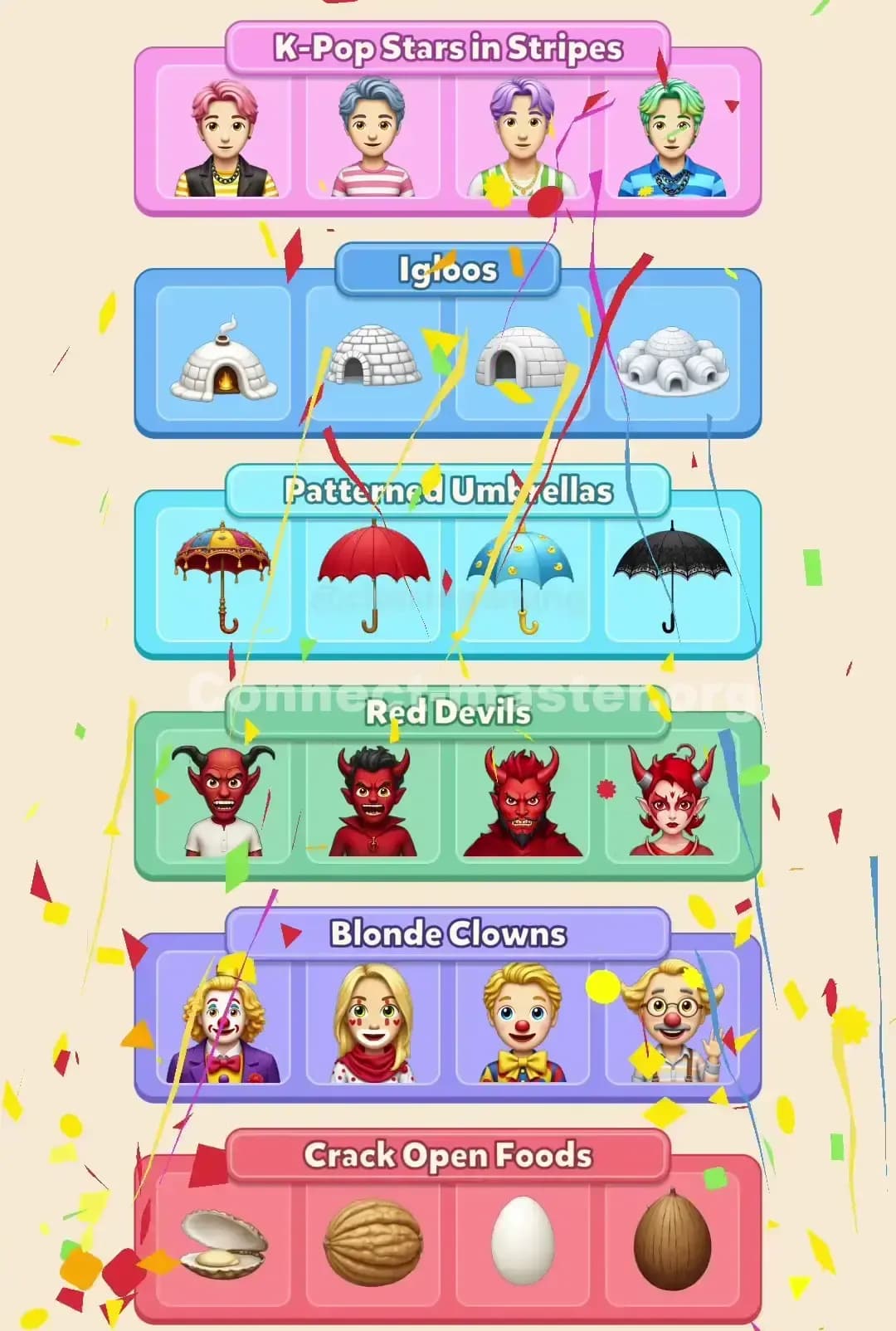
If you’re stuck on a hard level in Connect Master and the timer keeps laughing at you, you’re not alone. Hard stages in this game aren’t just “more stuff on the board.” They’re carefully engineered chaos: overlapping traits, fake patterns, locks, keys, and a clock that punishes every second you spend hesitating.

In this article I’m going to break down how hard levels are designed, what the game expects you to see, and how to turn that knowledge into real, practical strategies so you stop dying to the timer and start deleting these boards on purpose.


1. Why Hard Levels Feel So Brutal

On easy and normal stages, your brain can play on autopilot. You see four obvious items that belong together, tap them, and the board melts away.

On hard levels, the designers flip that on its head:

  • Every tile belongs to two or more possible groups.
  • The “loudest” trait is often wrong.
  • The timer is tight enough that you can’t calmly test every idea.

So instead of feeling like a chill sorting task, the level feels like a speed exam where every question has three answers that are almost right.

You’re not bad at the game; the game is intentionally loading your brain with too many plausible options.


2. Core Rules Refresher (So the Difficulty Actually Makes Sense)

Before we talk design tricks, quick refresher:

  • You’re building sets of four that share a clear trait or category.
  • Traits can be obvious (sport, item type, color) or subtle (hair, mood, outfit details, “role”).
  • Once a set is cleared, the board compresses and sometimes unlocks new tiles (keys opening locks, cages freeing characters, etc.).

Hard levels lean hardest on that second bullet: subtle traits. If you only look for simple stuff like “all bees” or “all balls,” you’ll constantly build groups the game doesn’t accept, or you’ll waste time chasing the wrong patterns.


3. What Turns a Normal Stage into a Hard Level

A typical hard level layers several nasty design choices:

3.1 Trait Overload

Every character or object might have:

  • A sport (baseball, tennis, soccer).
  • A role (player, coach, beekeeper, devil, etc.).
  • A visual quirk (headband, beanie, helmet, dreadlocks).
  • A mood (angry, smug, neutral).
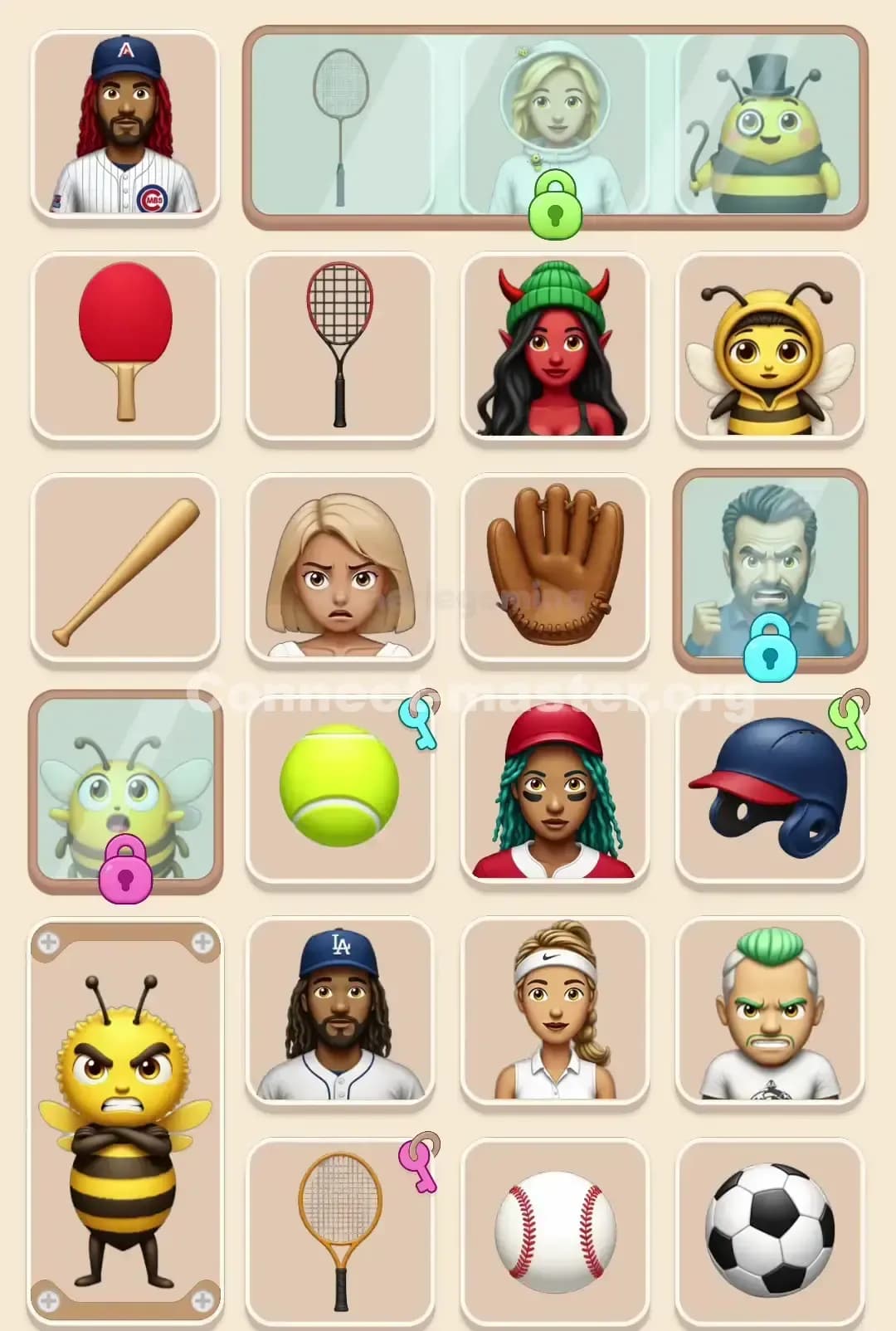
hard level in Connect Master

When four tiles share three different possible traits, your brain constantly second-guesses itself: “Is this ‘beekeepers’ or ‘people in white hoodies’? Is this ‘baseball items’ or ‘rackets’ or ‘round balls’?”

That hesitation is where the timer wins.

3.2 False Friends and Red Herrings

Designers love tiles that look like they belong in a group but don’t:

  • A ping-pong paddle sneaking into a group of rackets.
  • A soccer ball sitting near tennis items and other balls.
  • A devil in a beanie that could fit “devils,” “beanies,” or “characters in red.”

Those decoys drain minutes as you keep trying doomed combinations.

3.3 Tight Timer + Mental Load

Hard levels usually give you just enough time to win if you already understand the pattern. That means:

  • If you learn the categories while playing, you’re late.
  • If you restart a few times, suddenly it feels “easy” — because the design assumed a learning curve and timed you accordingly.

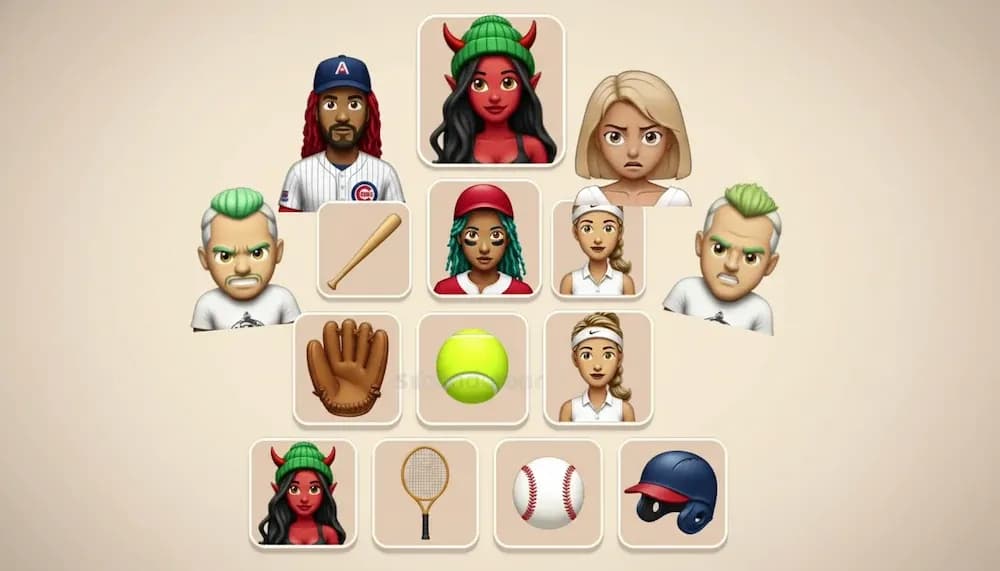
4. Anatomy of a Famous Hard Level (Sports, Devils, Bees, and Chaos)

Let’s use a classic example-style layout you’ve probably seen:
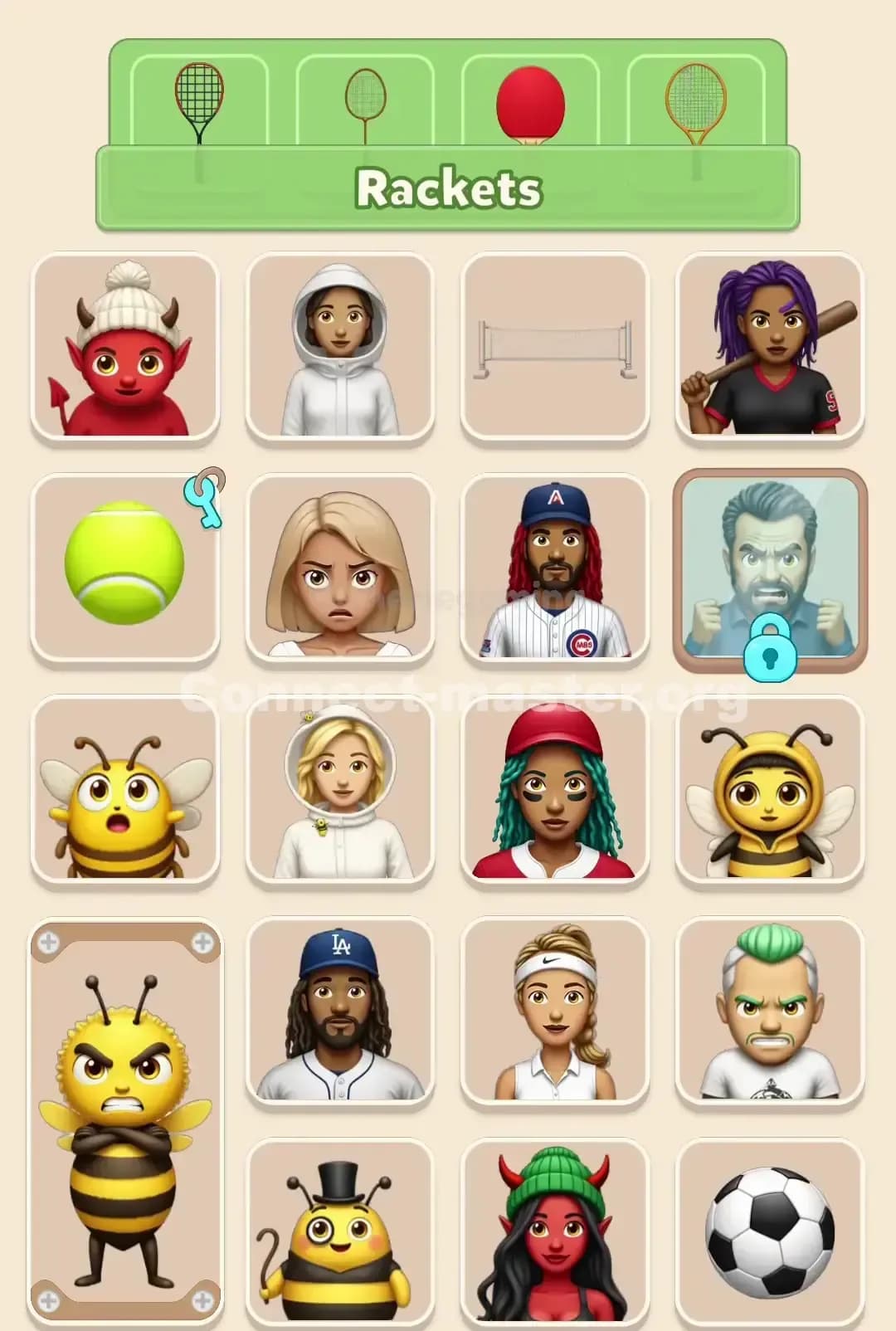
  • The board is crammed with sports gear (bats, balls, rackets, helmets).
  • You’ve got devils in beanies, angry bees, beekeepers, athletes with headbands, and baseball players with dreadlocks.
  • Some tiles sit behind colored locks, and the matching keys are scattered across the board.
hard level in Connect Master

Here’s why that kind of level explodes your brain:

  1. Overlapping sports themes. “Rackets,” “tennis items,” “soccer items,” “baseball stuff,” and “generic balls” all exist at once. If you chase the wrong sports category, you dead-end later.

  2. Multiple ways to group characters. A devil can belong to:

    • “Devils”
    • “Characters wearing beanies”
    • “Red characters”

    A baseball player can belong to:

    • “Baseball players”
    • “Dreadlocked characters”
    • “Athletes with caps”
  3. Locks and keys delay your information. You can’t see the full set of options until keys unlock certain bees or characters. That means your first groups must be chosen without full knowledge of all tiles.

  4. The solution categories are very specific. In the final breakdown you often see categories like:

    • Tennis items
    • Soccer items
    • Devils with beanies
    • Beekeepers
    • Dreadlocked baseball players
    • Athletes with headbands

    Notice how specific they are. The level isn’t asking for “all bees” or “all baseball” — it’s asking you to notice stacked traits.

If you ignore those stacked traits, the level feels unfair. Once you recognize them, it suddenly feels clever instead of cruel.


5. How Designers Stack Traits to Make Hard Levels

Think of traits in three layers:

5.1 Obvious Traits (Beginner Bait)

  • Sport: tennis/baseball/soccer.
  • Item type: ball/racket/bat/helmet.
  • Simple “all bees,” “all devils,” “all players.”

The game expects you to see these immediately. Hard levels use them to distract you from the real categories.

5.2 Mid-Level Traits

  • Hair: dreadlocks vs short hair.
  • Accessories: headbands, hats, helmets, beanies.
  • Outfit color families: white uniforms, red shirts, yellow stripes.

These form the “real” categories most of the time.

5.3 Deep Traits

  • Role: beekeeper vs baseball player vs devil vs generic athlete.
  • “Vibe” or archetype: angry bees vs cute bees; serious athletes vs casual sports fans.

When a level feels impossible, it usually hides at least one category in this deep layer.


6. Timer Pressure: Designed Stress, Not Just a Number

The timer isn’t neutral. It’s tuned around a few assumptions:

  • You’ll waste time on at least 1–2 wrong categories.
  • You’ll hesitate before committing to a weird grouping like “Devils with beanies.”
  • You’ll spend a few seconds watching animations, keys unlocking, and categories being revealed.

So if you play “carefully,” you actually lose. The game rewards:

  • Snapping quickly to a hypothesis (“This level is about roles and accessories, not just sports”).
  • Committing to that hypothesis early.
  • Only changing your mind when you hit a hard contradiction.

7. Board Layout Tricks Unique to Hard Levels

Designers don’t just pick tricky traits; they arrange them to mess with your perception.

  • Clusters that mislead. Four rackets might appear near each other, making you think “rackets” is a category. The real category might be “tennis items,” and one of those rackets is actually a decoy.

  • Symmetry that lies. The board might mirror characters across columns, implying a pattern that doesn’t exist in the final categories.

  • Locked columns and cages. Important members of a category might be locked behind colored padlocks, so you can’t even see the full set until you’ve already committed to clearing other stuff.


8. Hints, Keys, and the “Economy” of Errors

Hard levels are balanced around the idea that you’ll:

  • Make some wrong guesses.
  • Burn at least one hint sometimes.
  • Unlock a few key tiles later in the run.

The hint system usually points toward anchor categories — things like “rackets” or “beekeepers” that, once cleared, free space and reveal more of the board. You don’t have to use hints, but the whole level pacing assumes some help, even if that help is just pattern recognition from previous runs.


9. What Hard Levels Really Test in Your Brain

You’re not just fighting a timer; you’re training specific puzzle skills:

  • Chunking. Seeing “four beekeepers” as one clean unit in your head instead of four separate tiles.
  • Selective attention. Ignoring bright, obvious details (like a red shirt) when the real category is “characters in white hoodies.”
  • Rapid hypothesis testing. “If there’s a group of dreadlocked baseball players, where’s the fourth one?” That kind of thinking saves time.
  • Tilt control. After a wrong group, most players spam-tap random tiles. That’s exactly what the timer wants.

10. Design Patterns You’ll See Again and Again

Once you recognize these patterns, hard levels start repeating themselves:

  • All-sports but different rules. One level might group by item, another by player hairstyle, another by position (goalkeeper vs field players).

  • Same character, different mood. Bees or devils might be sorted by facial expressions instead of color or outfit.

  • Everything fits two categories. Every tile logically matches two traits; only one is “legal.” You win by spotting the trait that consistently works across four tiles, not just two.


11. Turning Design Knowledge into Real Strategy

Here’s the gameplay loop I use whenever I’m staring at a nightmare board and the timer is already being smug.

11.1 Step 1 – Do a 5-Second “Scan”

Before tapping anything, ask:

  • “Are the items grouped more by sport, role, or accessory?”
  • “Do I see four really specific things? (e.g., four beekeepers, four devils, four headbands)”

If you spot a super-specific group, that’s probably a real category. Don’t overthink it—lock it in.

11.2 Step 2 – Find the Anchor Categories

Anchor categories usually:

  • Use mid/deep traits (beekeepers, devils with beanies, dreadlocked players).
  • Visually stand out as a “set” more than other tiles.
  • Sit near the keys or locks that gate other tiles.

Clear those first. They free space and reveal the board’s logic.

11.3 Step 3 – Use “Odd-One-Out” Reasoning

Suppose you see three obvious tennis items and a fourth tile that almost fits. Ask:

  • “Is this fourth thing slightly off? Wrong color, wrong context, wrong sport?”

If yes, treat it as a decoy and look for a different fourth tile that matches more cleanly. This saves you from forcing fake groups that the game will reject.

11.4 Step 4 – Don’t Panic When You Hit a Lock

When locks and keys are involved:

  1. Scan for keys that are easy to group.
  2. Clear a set that includes a key early if possible.
  3. When tiles unlock, immediately re-scan for new specific patterns (especially deep traits like role or mood).

11.5 Step 5 – Practice a Fast, Confident Rhythm

Hard levels reward a steady tap rhythm more than raw speed:

  • Decide quickly, then tap decisively.
  • If you’re unsure between two patterns, pick the one that uses more specific traits (beekeepers > generic “people in white”).
  • Accept that a run might be “information gathering” the first time. Your second run will be much faster because you already know the categories that appear at the end.

12. Why These Brutal Levels Keep You Hooked

When a hard level finally cracks, it feels incredible:

  • The cluttered board suddenly resolves into clean, satisfying sets.
  • Traits that looked random now feel like an elegant design.
  • You don’t just beat the timer; you beat the designer’s mind game.

That’s why even the most frustrating hard stages end up being fan favorites. They’re the ones you remember, the ones everyone talks about, the ones players look up solutions for when they’re absolutely stuck.


13. Quick FAQ for Tilted Players

“Why don’t my obvious groups count?” Because the level is using narrow, specific categories, not your first-glance logic. If “all balls” doesn’t work, try “tennis items” or “soccer items” instead.

“Why does it feel like one tile doesn’t belong anywhere?” That tile usually anchors a different category you haven’t spotted yet. When something seems like a stray, ask: “What trait does only this share with three others?”

“Is the timer actually fair?” Yes, but only if you already understand the categories. The timer assumes you’ll play confidently, not learn the rules from scratch during the run.

“Do I have to rely on hints?” You can clear every level without hints, but hints exist because the design is built around occasional confusion. Use them as learning tools: when a hint exposes a category, remember that pattern for future levels.


14. Conclusion: Beat the Designers at Their Own Game

Hard levels in Connect Master aren’t random; they’re structured puzzles built around trait stacking, misdirection, and time pressure. When you stop playing them like messy object hunts and start treating them like logic problems, everything changes.

Before you hit “Play” on your next nightmare level, run this mental checklist:

  1. Scan for deep traits: roles, accessories, moods.
  2. Lock in one or two very specific categories early.
  3. Watch for decoys that almost fit a group but not quite.
  4. Use keys smartly so you’re not waiting on locked tiles at the end.
  5. Stay calm when something feels impossible; that’s just a sign the real category is deeper than the obvious one.

Once you internalize how these levels are built, the timer stops feeling like a bully and starts feeling like a fair rival. And that’s when hard levels go from “I hate this” to “Okay, one more run… I’ve got you this time.”