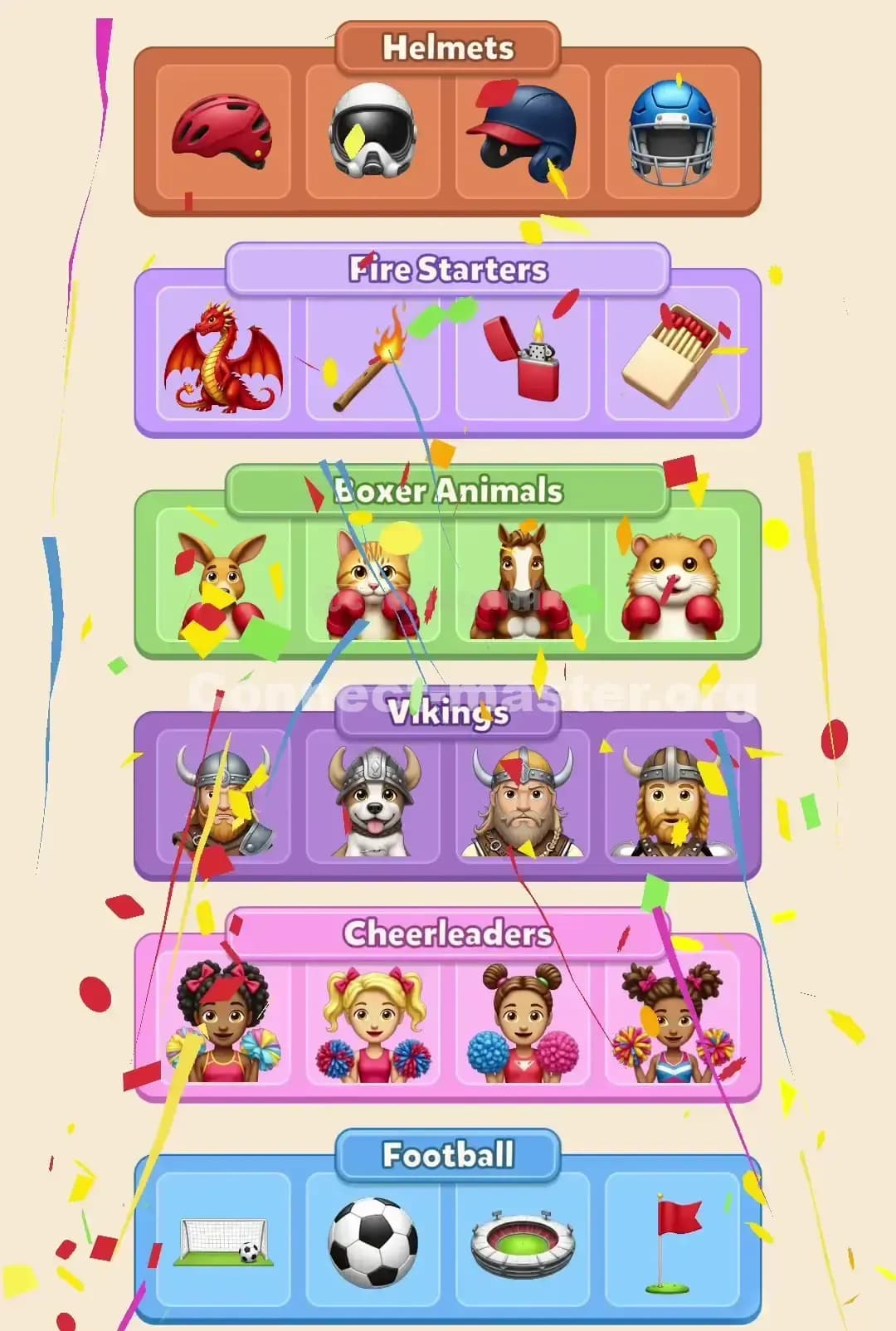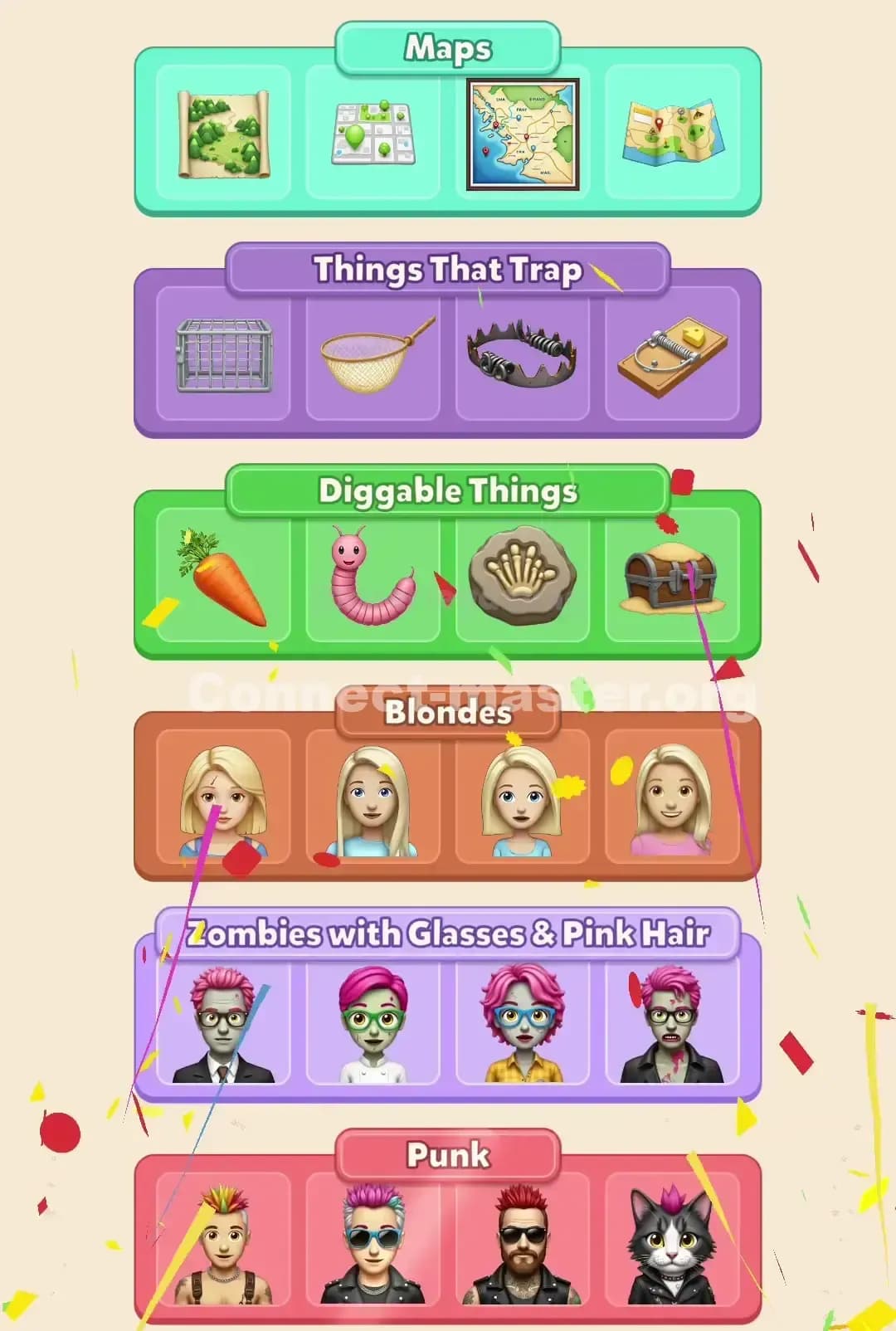
Connect Master Level 174 Solution Walkthrough & Answer
How to solve Connect Master level 174? Get instant solution & answer for Connect Master 174.


Connect Master Level 174 Pattern Overview
The Theme and Tile Breakdown
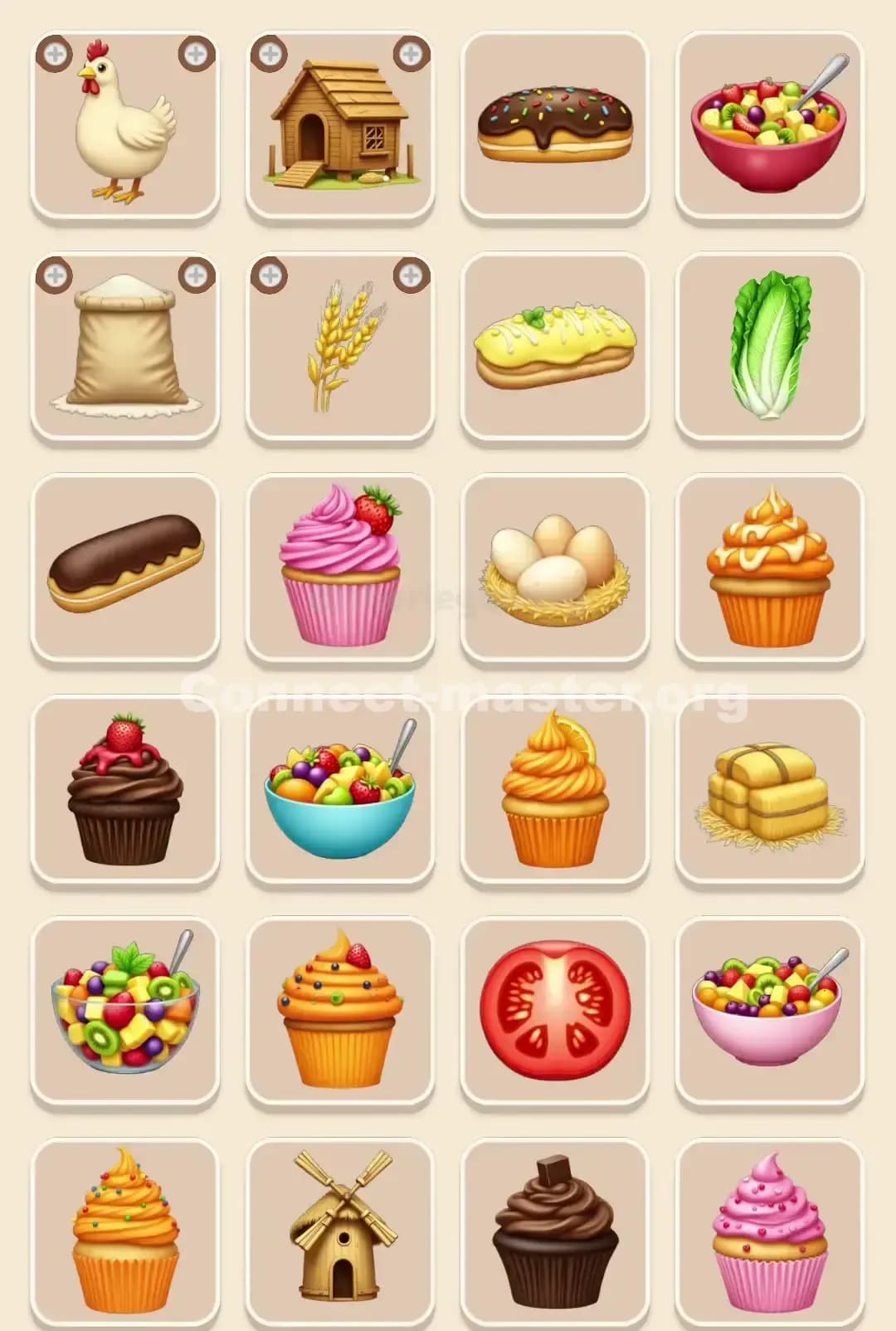
Connect Master Level 174 centers on a delightful food theme, and you're working with 24 tiles organized into six distinct groups. The board feels immediately approachable because the visual categories are broad—fruit salads, desserts, poultry items, grain-related objects, sandwich ingredients, and pastries—but the real challenge lies in the subtle details that separate similar-looking tiles from one another. Each set of four tiles shares a unifying trait that goes beyond surface appearance; you'll need to look at colors, shapes, and thematic consistency to nail this level.
The Six Sets of Connect Master Level 174
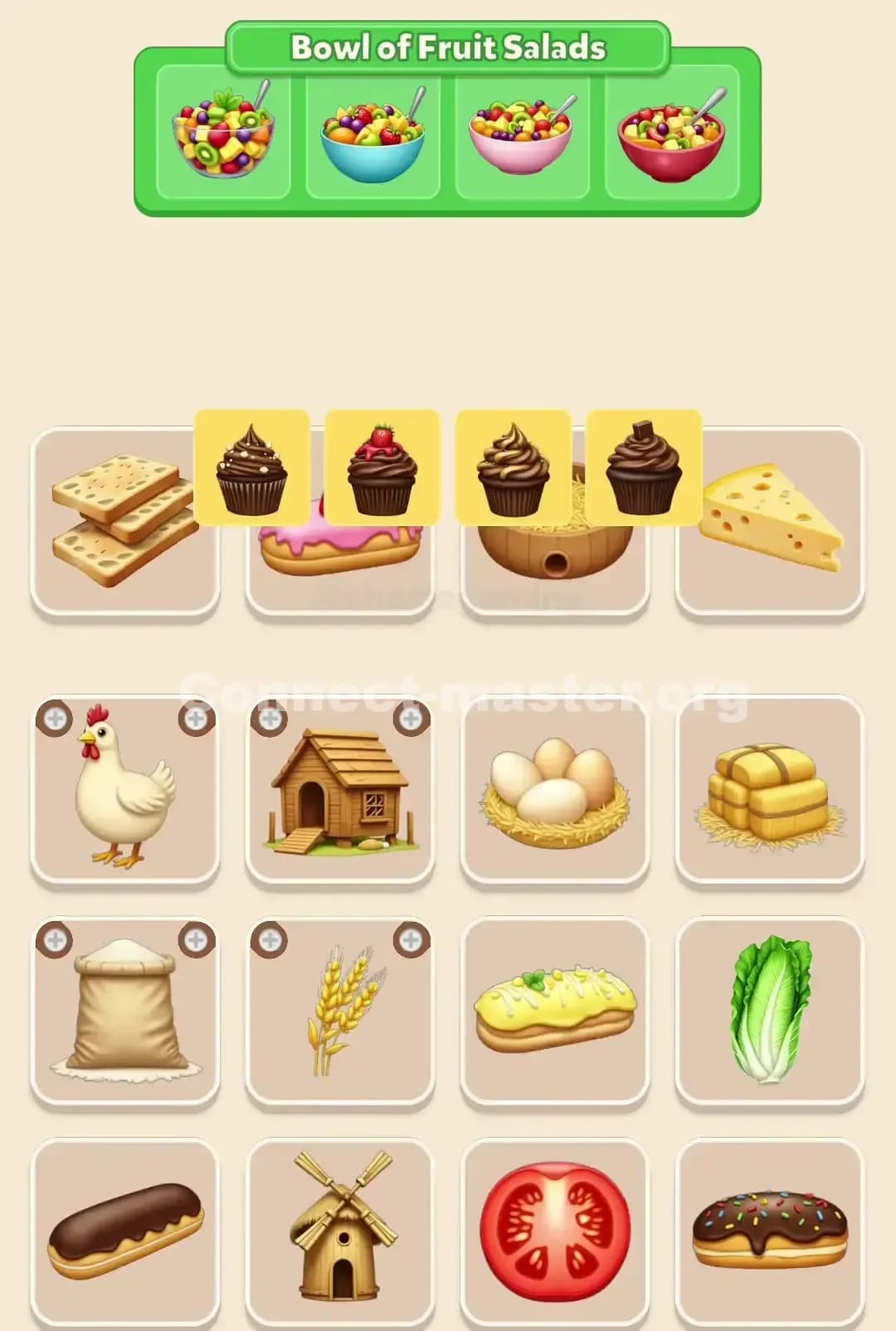
The solution breaks down into these clear category groups. Bowl of Fruit Salads contains four differently colored bowls (transparent with fruit inside), each with its own hue and presentation style. Chocolate Cupcakes features four brown cupcakes topped with various frosting styles and colorful garnishes. Chicken Coop brings together four items directly connected to chicken farming: a hen, a wooden coop structure, a nest of eggs, and a wooden feed bowl. Flour Production includes items representing the grain-to-flour journey: a sack of flour, wheat stalks, a windmill, and a loaf of bread. Sandwich Layers groups together four common sandwich fillings and bread components that you'd stack between slices. Finally, Eclairs showcases four individual pastries, each with distinct toppings and colors but all sharing that elongated, filled-pastry shape.
Why Connect Master Level 174 Feels So Tricky
The Most Confusing Set
The Flour Production set causes the most headaches, and I'll tell you why: three of those tiles look like they belong there (the sack, the wheat, the windmill), but the bread loaf almost tricks you into thinking it's part of the Sandwich Layers group instead. Both involve bread, but the key difference is that the bread loaf in Flour Production represents the end product of grain milling, not an ingredient component. Once you realize the set is about the process from grain to finished flour rather than consumable sandwich items, it clicks into place.
The Subtle Visual Overlaps
The Chocolate Cupcakes group is deceptively tricky because all four tiles are brown with similar frosting heights, yet each one has slightly different toppings and garnish colors. I nearly grouped two of them together thinking they were identical until I zoomed in and noticed one had pink frosting while another had a chocolate curl. The chocolate color is consistent, but the topping details—berries versus swirls versus sprinkles—are what actually distinguish them as four separate representatives of cupcake varieties.
Another overlap that catches players off-guard is between Bowl of Fruit Salads and the general idea of "food in containers." Yes, each bowl holds fruit, but what ties them together is specifically that each bowl is a different color, and they're all the same type of vessel (wide, shallow, spoon-inclusive). It's not just "bowl" or "salad"—it's the combination of bowl style plus multi-colored fruit contents.
The "Aha!" Moment
I needed two full playthroughs before I finally saw that Chicken Coop wasn't about eggs exclusively. The nest of eggs threw me because eggs are a food product, just like the other sets, but the nest, the coop structure, and the chicken herself are non-food farm items. That realization—that one set breaks the "food" rule entirely—was my turning point. Once I stepped back and asked "What ties these four together functionally, not just visually?", the whole puzzle opened up.
Step-by-Step Solution for Connect Master Level 174
Opening: Anchor Your Board with Obvious Sets
Start by locking in Eclairs immediately. These four pastries are unmistakable—they're all elongated, individually plated, and decorated with different toppings. There's no ambiguity here, and claiming this set first frees up mental space for the harder groups. Next, secure Sandwich Layers because its four tiles (bread, cheese, tomato, lettuce) are instantly recognizable as raw ingredients rather than finished dishes. By removing these two certainties, you've reduced your working set from 24 to 16 tiles, and the board suddenly feels less overwhelming.
Mid-Game: Process of Elimination and Detail Comparison
Now focus on Bowl of Fruit Salads and Chocolate Cupcakes, which are related but distinct because one is about vessel color variation and the other is about frosting-topping variation. Compare each bowl carefully: does this one have a blue tint, or a pink tint, or a red tint? Similarly, run your eyes across the cupcakes and note the garnish on top—berry, sprinkle, swirl—rather than just accepting they're all chocolate. This deliberate comparison prevents you from accidentally pairing two fruit salads together or mixing a cupcake with another group.
For the remaining eight tiles, you're down to Chicken Coop and Flour Production. This is where I needed to slow down and ask: "Is this item about farming, or about grain processing?" The windmill, wheat, and sack obviously belong to grain production. The chicken, coop, eggs, and feed bowl represent the chicken farm lifecycle. Once you separate the farm-animal theme from the grain-mill theme, you're golden.
End-Game: The Final Two Sets
Clinch Flour Production by confirming that all four tiles represent stages of making flour from raw wheat to finished product: raw grain (wheat stalks), the structure that mills it (windmill), the container holding the flour (sack), and the bread that results from it (loaf). Don't let the bread fool you into the sandwich category—its presence here reflects the milling cycle, not sandwich assembly.
Finish with Chicken Coop as your last set. The chicken, the wooden coop house, the nest full of eggs, and the wooden feed bowl all form the infrastructure and products of a chicken farm. None of these are processed into other foods; they're the raw materials and living spaces of poultry farming. This set feels thematic and cohesive once you understand it's about the chicken farming ecosystem, not individual food items.
The Logic Behind This Connect Master Level 174 Solution
From General Traits to Specific Details
The winning strategy for Connect Master Level 174 is to start broad and then narrow ruthlessly. Begin by asking "What category does each tile belong to?"—fruit, baked goods, farm items, grain items, or sandwich components. Then, within each category, ask "What makes these four distinct from others in the same broad group?" This two-step filter eliminates decoys and false groupings. A bread loaf is both a baked good and a grain product, but it only belongs to Flour Production because it fits the narrower "grain-milling process" category, not "sandwich assembly."
The Power of Naming Your Sets
Giving each group a descriptive name—like Flour Production or Chicken Coop—anchors your thinking and prevents double-counting tiles. When you mentally label a set with a clear name, you're forcing yourself to ask "Does this tile fit this specific theme?" rather than just "Does this look similar to that other tile?" Connect Master Level 174 rewards players who stay disciplined about category names, because the names themselves become your verification tool. If you call a set "Grain to Bread," then a random vegetable shouldn't tempt you, even if it's nearby on the board.
This systematic approach transforms Connect Master Level 174 from a frustrating visual puzzle into a logical exercise. Each tile has exactly one home, and naming that home clearly ensures you'll find it.