Connect Master Level 207 Solution Walkthrough & Answer
How to solve Connect Master level 207? Get instant solution & answer for Connect Master 207.
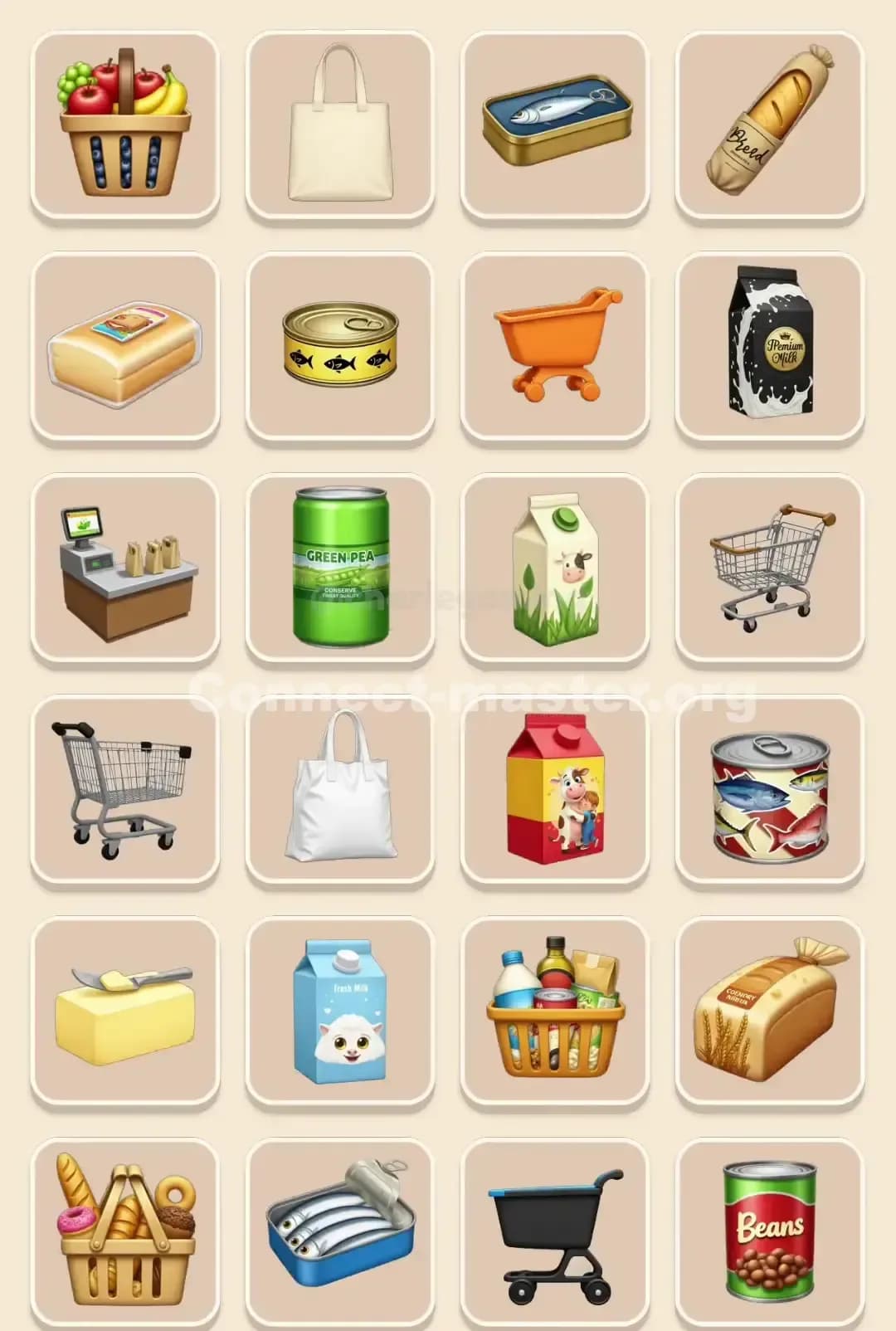
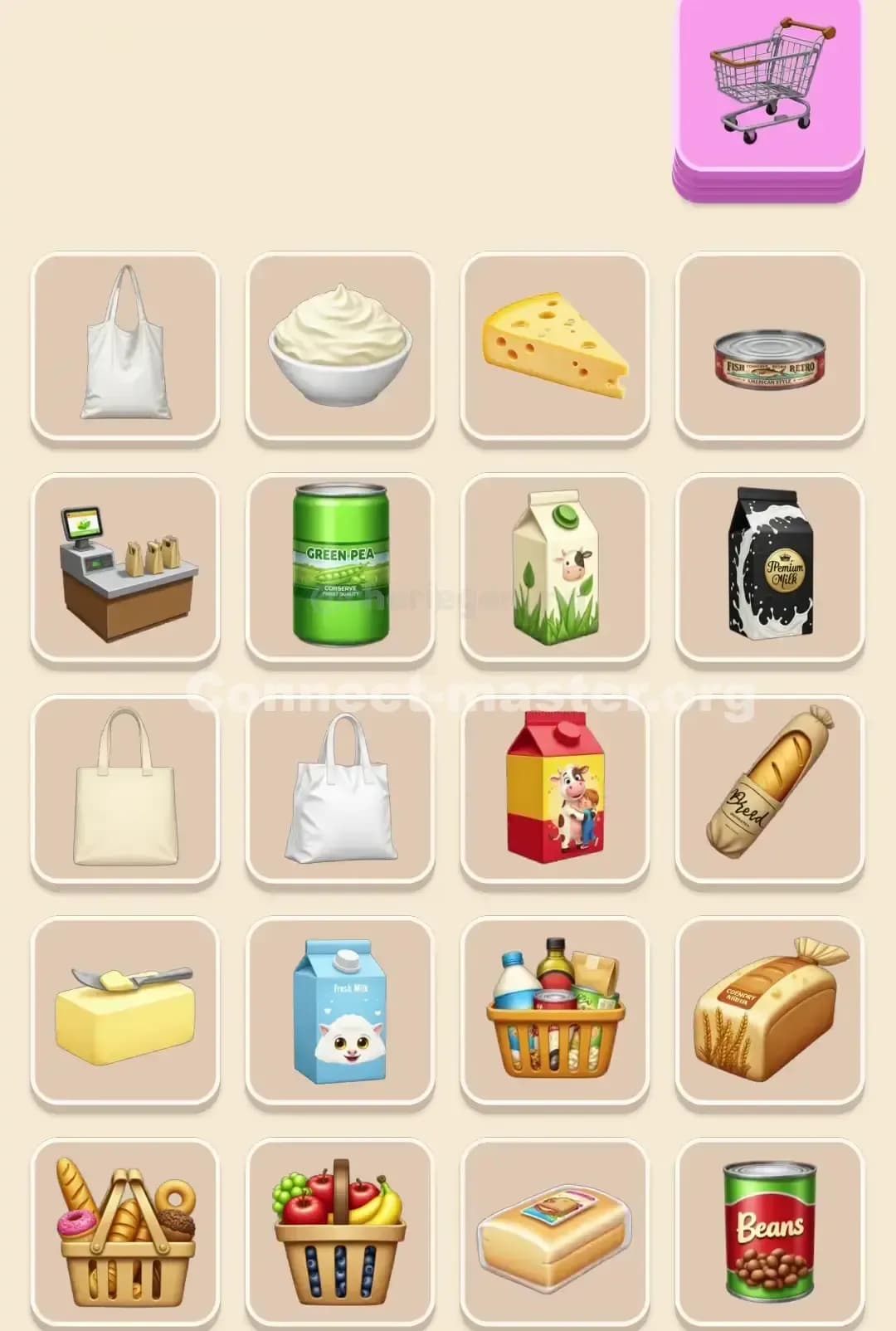
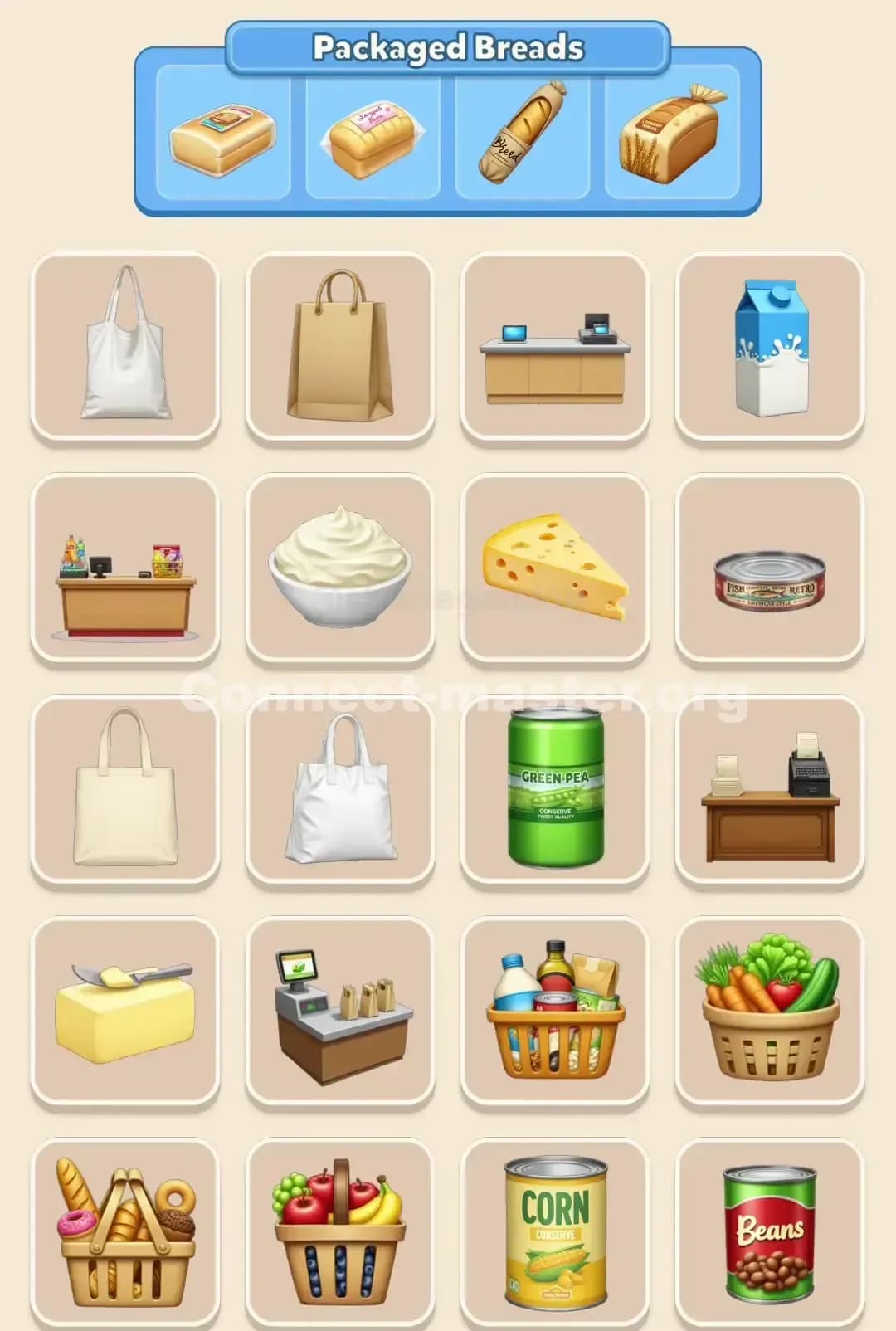
Connect Master Level 207 Pattern Overview
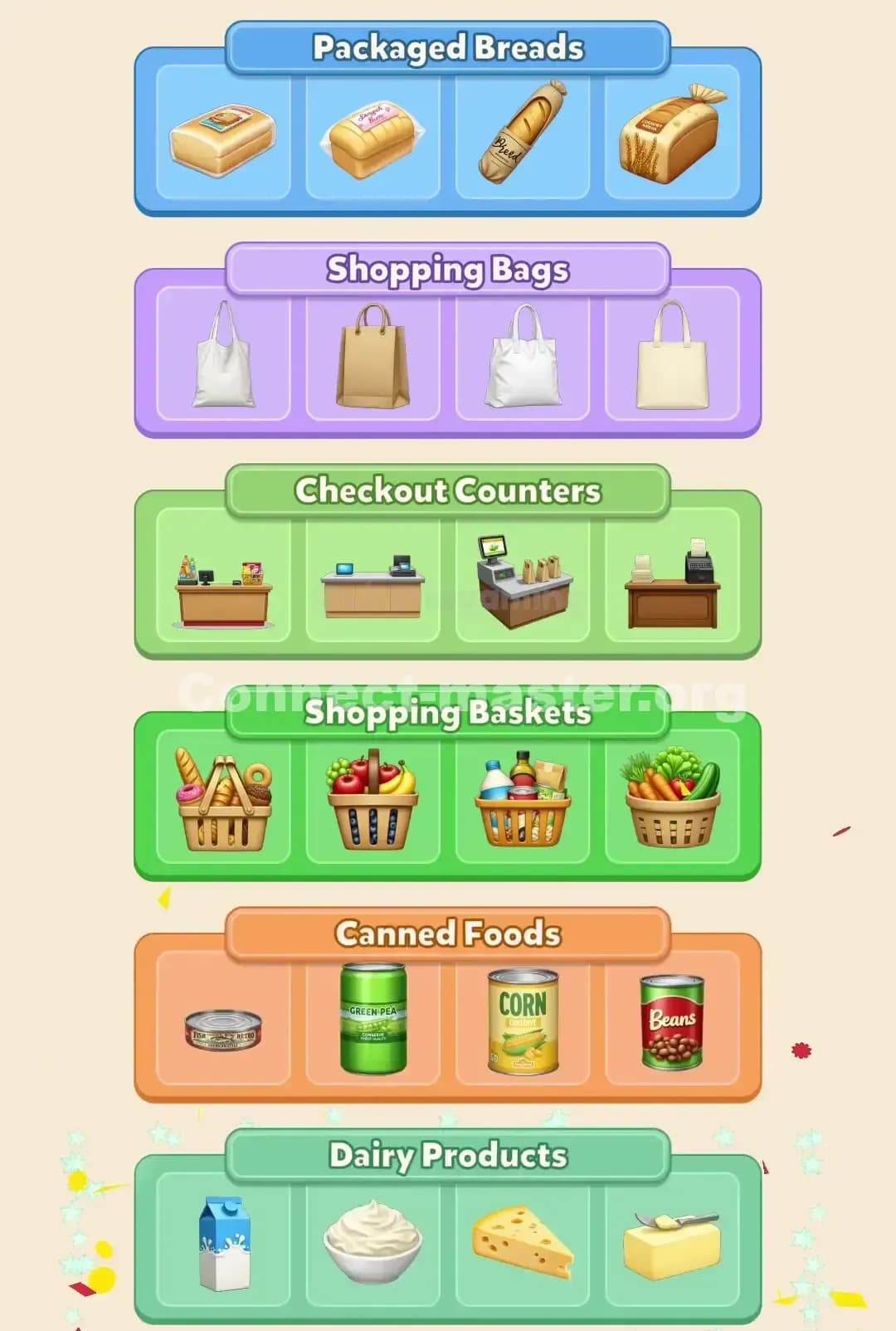
Connect Master Level 207 is a supermarket-themed puzzle that'll test your eye for detail across six different grocery categories. You're working with 24 tiles total, split into six sets of four, and each one represents a different shopping section you'd find in a typical store. The puzzle combines household staples with clever visual decoys, so you'll need to compare colors, shapes, and specific item details to nail every group. This level feels balanced—not impossibly hard, but definitely rewarding once you crack the logic.
The Six Categories in Connect Master Level 207
The puzzle breaks down into six distinct sets: Packaged Breads (loaves and specialty bread items), Shopping Bags (various tote and paper bag styles), Checkout Counters (different register setups with equipment), Shopping Baskets (hand baskets filled with groceries), Canned Foods (vegetables and proteins in tin cans), and Dairy Products (milk, cheese, cream, and related items). Once you name these categories in your head, it becomes much easier to sort tiles methodically instead of jumping around the board at random.
Why Connect Master Level 207 Feels So Tricky
The Most Confusing Set: Checkout Counters
The Checkout Counters set trips up most players because all four tiles look like variations of the same brown wooden desk, but they're actually set up with different equipment and arrangements. You might assume all rectangular counters belong together, but the real trick is spotting which four share the exact same underlying counter structure while the others have subtle differences in their layouts or the items placed on top. I needed two retries here before I realized I was comparing "register types" instead of "counter bases."
Tricky Overlaps and How to Spot the Differences
Packaged Breads vs. Canned Foods: Both categories involve items with labels and tan/brown coloring, so you might accidentally lump a tall bread loaf in with a can. The key? Check the top and bottom edges—breads have visible texture (crusty tops, seeded tops), while cans have flat metal lids and rims. Look at the silhouette too; bread is irregular and organic, cans are perfectly cylindrical.
Shopping Bags vs. Shopping Baskets: This overlap is sneaky because both hold items and use similar beige and tan tones. However, bags are flat with handles and constructed from soft material (canvas or paper), while baskets are rigid woven structures with visible weave patterns. If it's got a woven texture and you can see the basket framework, it's a basket; if it's a smooth flat surface with soft edges, it's a bag.
Dairy Products: The biggest internal challenge within this set is separating cheese (solid, rectangular) from sour cream (white, creamy in a bowl). Cheese has sharp corners and a yellow-gold color with holes or a defined shape, while cream is white and sits in a clear bowl. Milk is obvious (blue carton with white label), so use that as your anchor and build around it.
Step-by-Step Solution for Connect Master Level 207
Opening: Lock In the Obvious Sets First
Start with Canned Foods—this set is your easiest entry point for Connect Master Level 207. All four tiles are clearly cylindrical metal cans with printed labels, and they're visually distinct from everything else on the board. Once you've locked those in, jump to Dairy Products because milk cartons, cheese blocks, and cream bowls don't look like anything else either. These two quick wins shrink your mental load immediately and free up space to focus on the trickier categories.
Mid-Game: Process of Elimination with Visual Comparisons
Now tackle Shopping Bags and Shopping Baskets—this is where you'll use the weave-vs.-smooth-fabric rule I mentioned earlier. Lay out the four baskets (they all have visible wicker or woven grid patterns) and the four bags (flat, smooth, with simple handles). As you eliminate tiles here, you'll naturally see which ones are left for Packaged Breads: look for any items with a bread-like top (seeds, crust texture, rounded loaf shape) versus flat can lids.
With five sets narrowed down, Checkout Counters becomes your final puzzle. Compare the exact shape and height of each counter base, then look at what's sitting on top—some have computers and monitors, others have product racks or a register box. Match them by their core counter type (all four should have the same fundamental brown wooden structure) rather than by the equipment on top.
End-Game: The Checkout Counter Challenge
The reason Checkout Counters is your last set to lock in is that it requires you to ignore the distracting equipment and focus purely on the counter itself. You're essentially looking for "counter with colorful items on top," "counter with computer monitors," "counter with a modern register," and "counter with a product display rack"—but all four share the same base footprint and color. Once you remove every other tile from the board, the four counters become obvious because they're literally the only tiles left. This is where the process of elimination saves you from overthinking the details.
The Logic Behind This Connect Master Level 207 Solution
Build from Big Traits Down to Tiny Details
The winning strategy for Connect Master Level 207 is to start by identifying the broadest, most obvious shared trait (e.g., "all metal cylinders" for cans), then filter out the decoys by zooming in on small details (label color, number of handles, texture type). This top-down approach means you're narrowing options rather than chasing false patterns. You won't accidentally mix a bread with a can because you've already visually separated them at the "smooth metal vs. textured grain" level.
Naming Each Set Keeps You Organized
Here's the game-changer: once you've named each set (Packaged Breads, Shopping Bags, etc.), you've created mental buckets that prevent tile double-counting. Instead of staring at 24 random items, you're thinking "which four belong in the Checkout Counters bucket?" This naming system also forces you to commit to one specific trait per set, which means you're less likely to accidentally split a logical group across two categories. When you feel stuck on Connect Master Level 207, step back and rename the unclear sets with even more specific descriptors—instead of "counters," try "counters with register boxes" versus "counters with shelving"—and the puzzle often clicks into place.
By combining visual filtering (obvious traits first) with naming discipline, you'll solve Connect Master Level 207 with confidence and speed.