Connect Master Level 193 Solution Walkthrough & Answer
How to solve Connect Master level 193? Get instant solution & answer for Connect Master 193.
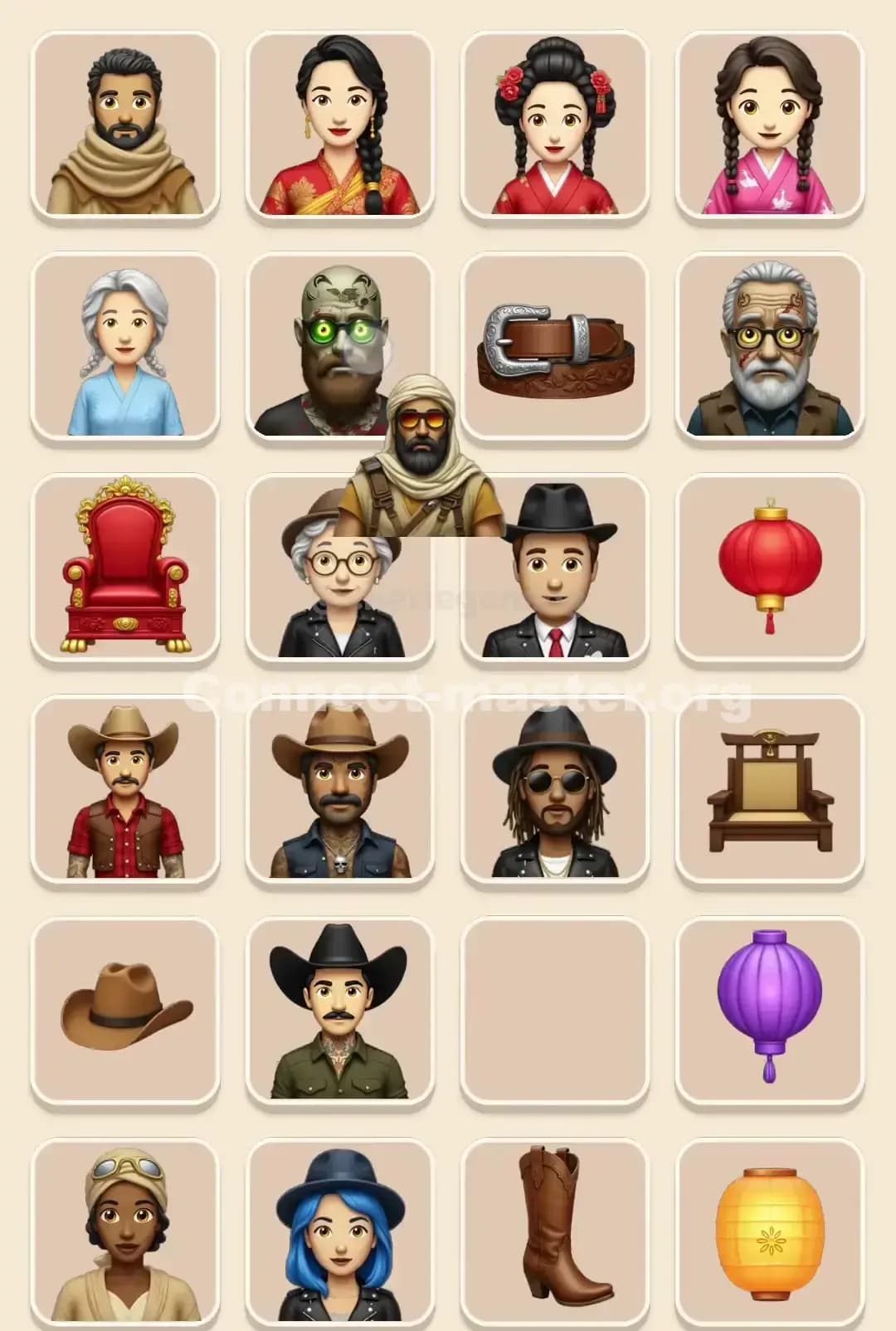
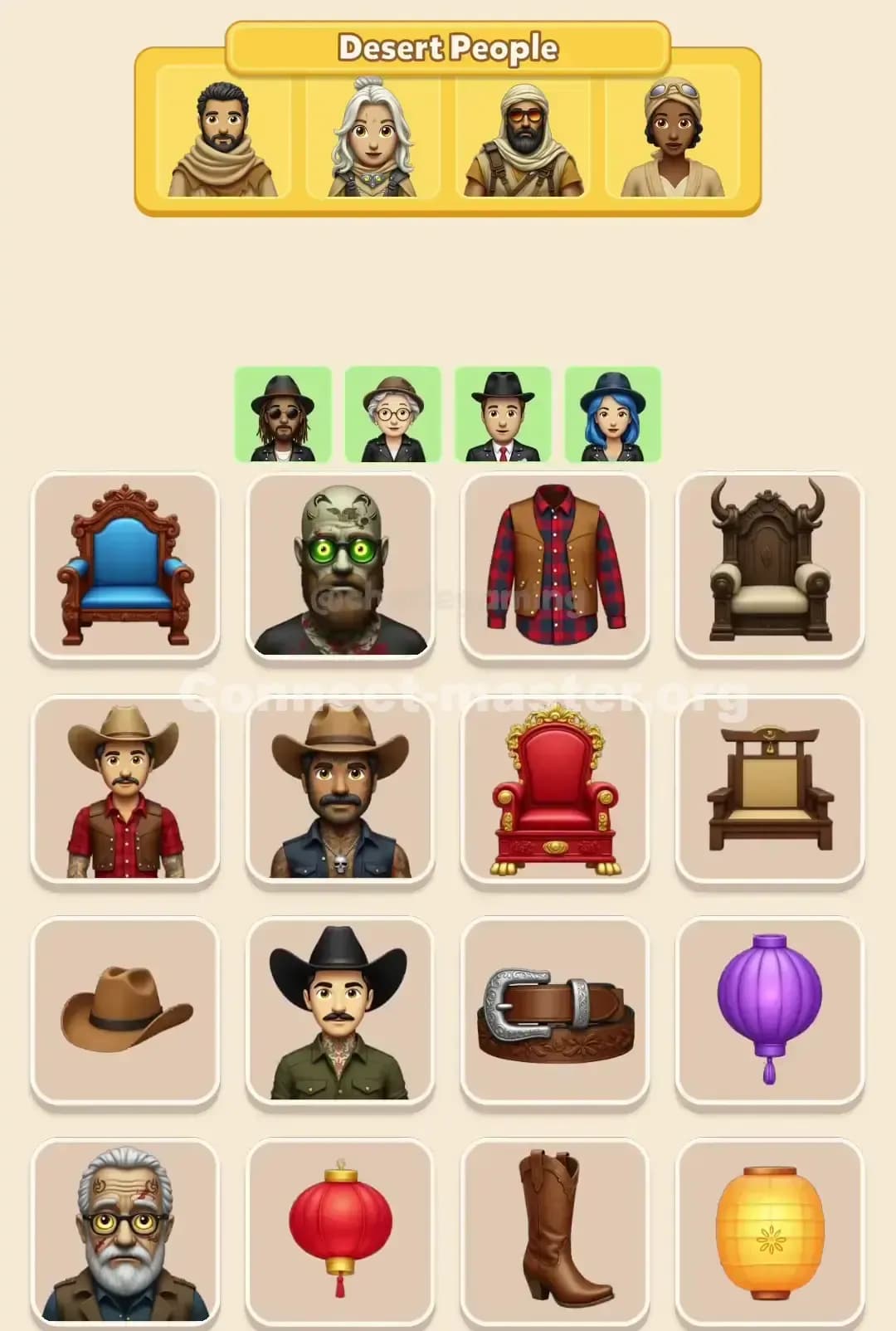
Connect Master Level 193 Pattern Overview
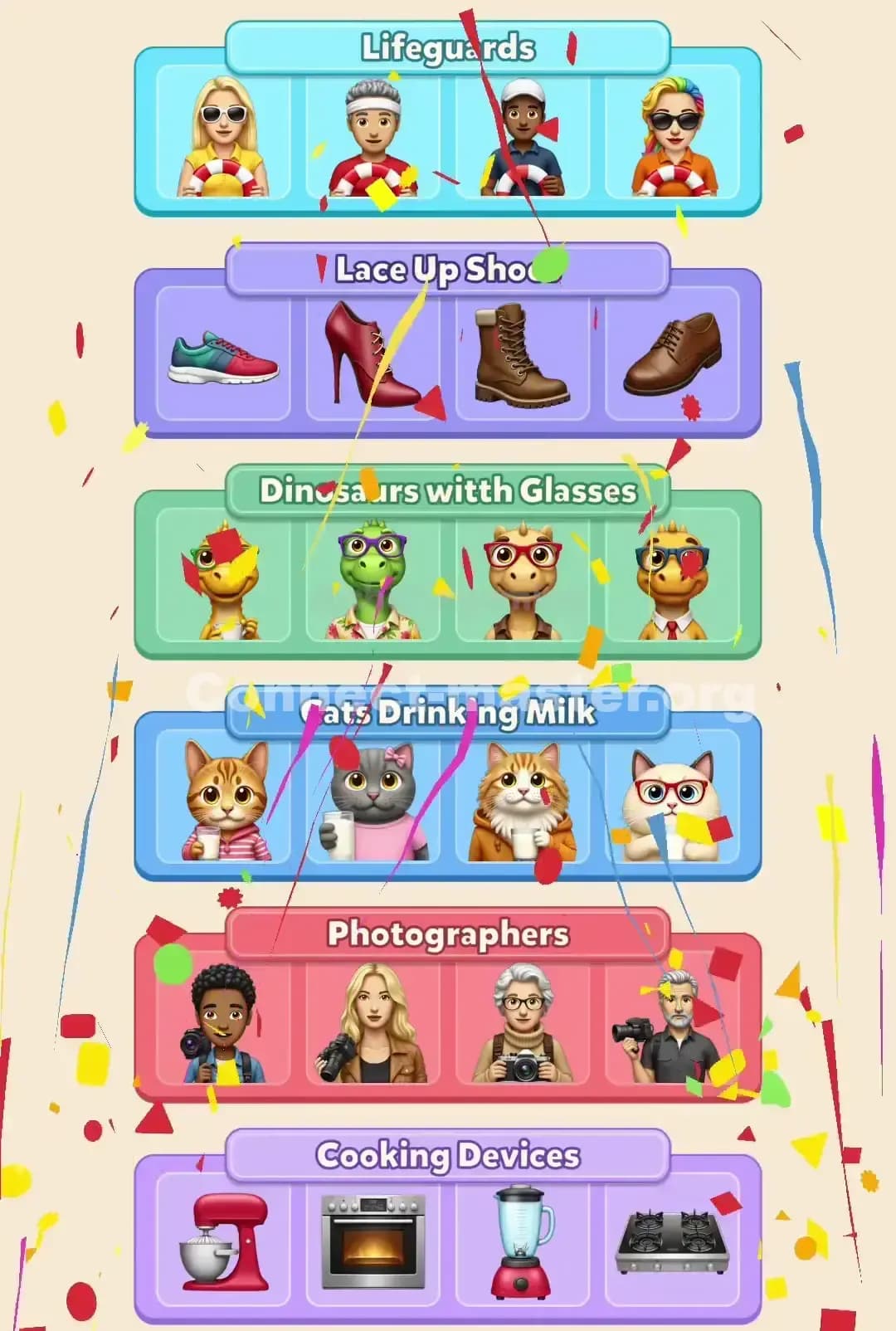
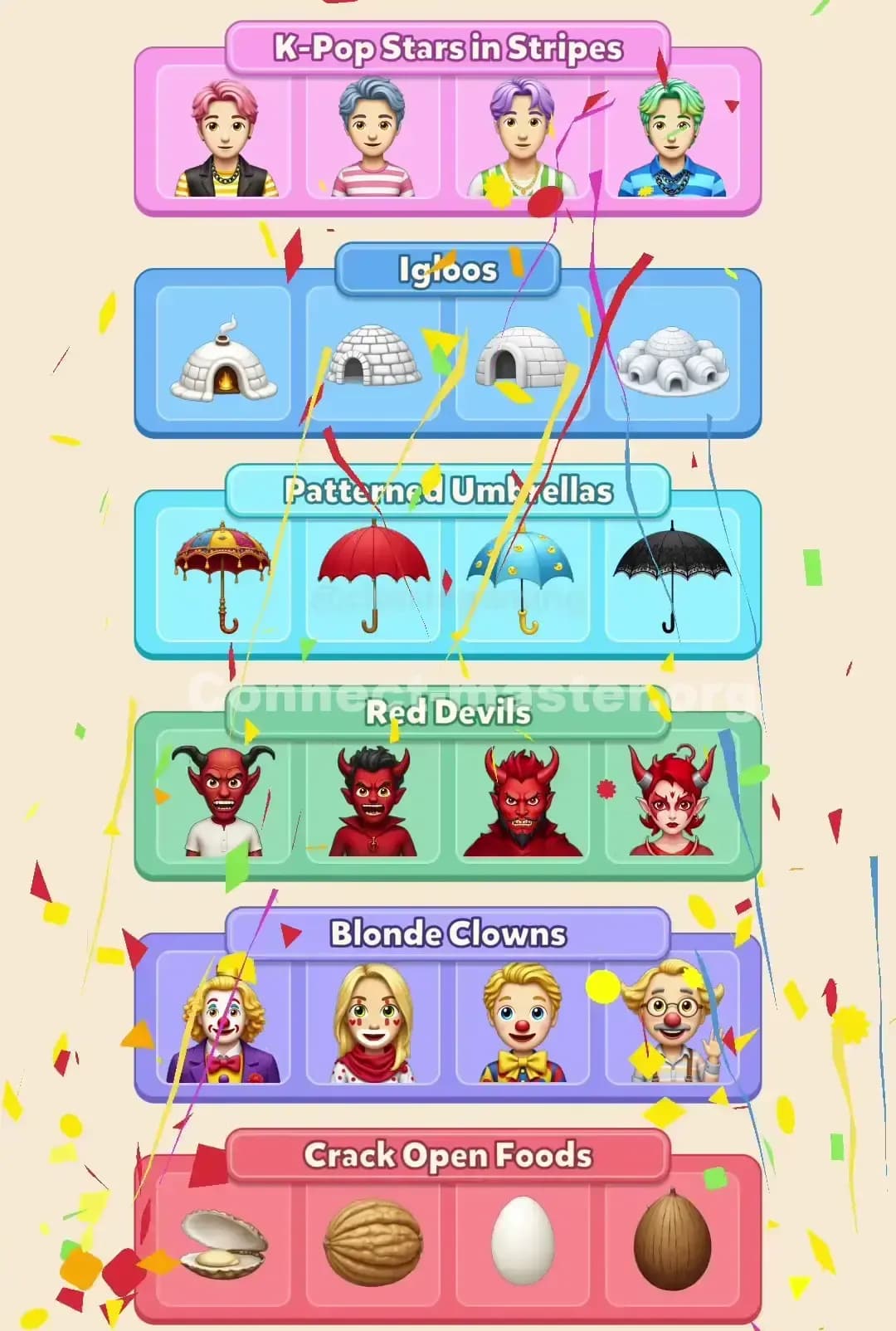
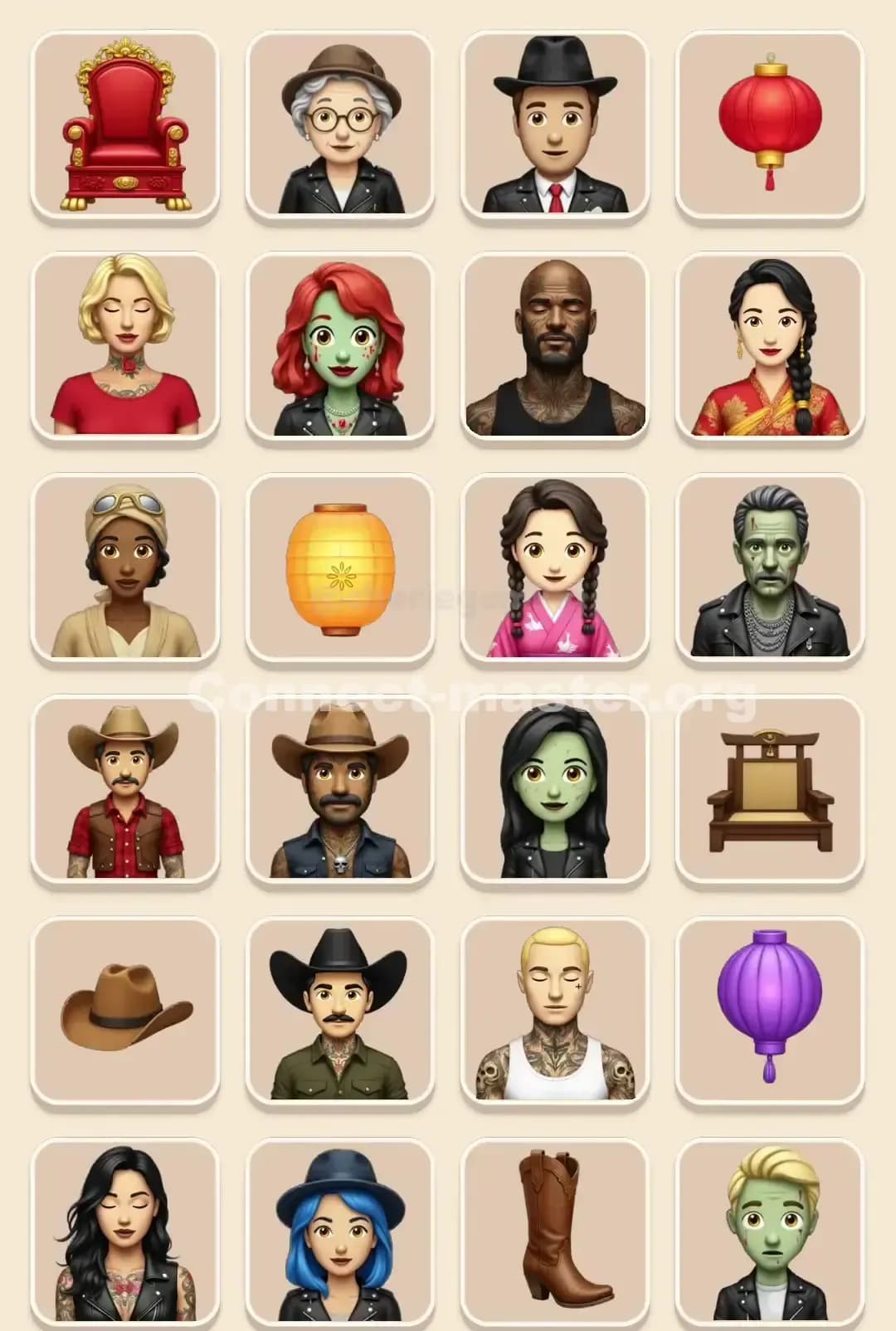
Connect Master Level 193 is a character and object-focused puzzle that brings together desert cultures, Western aesthetics, and Asian design elements. You're looking at six distinct sets of four tiles each, all neatly organized around a cohesive theme of international dress, furniture, and accessories. The puzzle mixes human characters with decorative objects, which means you'll need to switch your pattern-recognition lens between "What are they wearing?" and "What style is this item?"
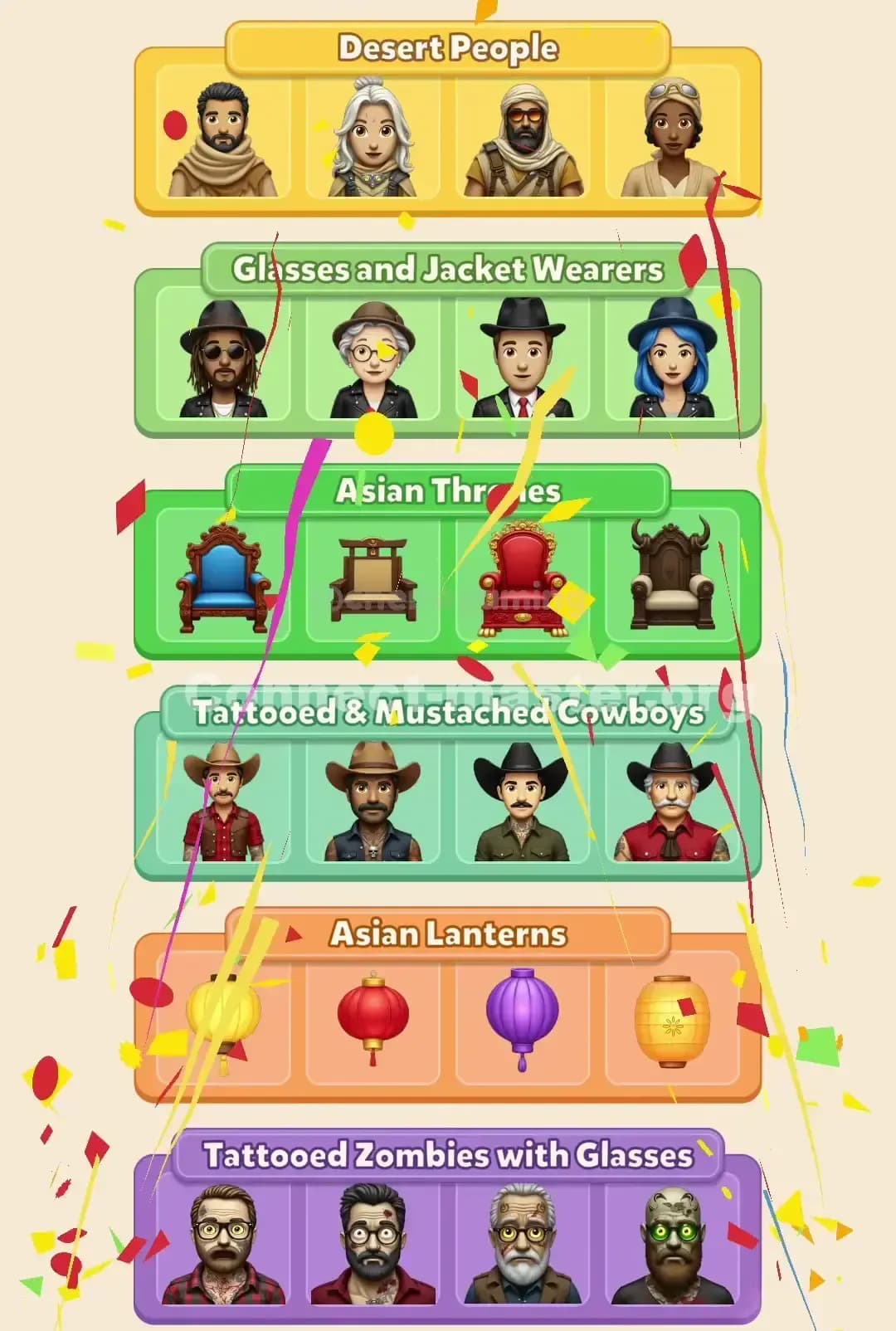
The six sets in Connect Master Level 193 break down as follows: Desert People (characters in traditional desert garments and head coverings), Glasses and Jacket Wearers (individuals sporting eyewear and formal or structured outerwear), Asian Thrones (ornate seated furniture pieces with Asian design), Tattooed & Mustached Cowboys (Western-dressed men with facial hair and body art), Asian Lanterns (hanging or standing light fixtures in Asian style), and Tattooed Zombies with Glasses (undead characters marked by both facial tattoos and spectacles). Each category is visually distinct once you train your eye, but the overlapping details—especially around eyewear and facial features—can absolutely throw you off if you're not paying close attention.
Why Connect Master Level 193 Feels So Tricky
The Most Confusing Set: Tattooed Zombies with Glasses
I needed two retries here before the pattern finally clicked. The Tattooed Zombies with Glasses set is genuinely easy to overlook because at first glance, you might think some of these characters belong with the Glasses and Jacket Wearers instead. The key difference? The zombies have visible facial tattoos or decay marks, plus a distinctly undead appearance—sunken features, greenish or grayish skin tone, and an overall "monster" vibe. The regular glasses-wearers in the green row above are living humans in modern or formal outfits. Once you spot the zombie factor, they snap into place, but that moment of confusion is totally real.
Subtle Overlaps That Trip Up Players
The biggest trap in Connect Master Level 193 involves distinguishing between Glasses and Jacket Wearers and Tattooed Zombies with Glasses. Both groups wear spectacles, so you absolutely have to examine whether the character is alive or undead. Look closely at skin tone, eye expression, and whether there are visible tattoo marks or decay. A living person with glasses and a black leather jacket belongs in the green row; a zombie with glasses and facial tattoos belongs in the purple row.
Another sneaky overlap exists between the Tattooed & Mustached Cowboys and the Desert People. Both groups wear hats and have facial hair, but here's the tell: Cowboys are strictly Western-dressed with Stetsons, bandanas, or leather vests, while Desert People wear traditional scarves, wraps, and desert-appropriate fabrics. The texture and style of headwear matter enormously here—a tan fabric wrap is desert; a classic cowboy hat is Western.
The third subtle distinction that caught me off guard was between Asian Thrones and other furniture. Asian Thrones are absolutely ornate, often carved with intricate details and featuring traditional wooden frames. They're clearly ceremonial seating, not modern chairs. Their decorative excess is their defining trait.
The "Aha!" Moment
What finally made Connect Master Level 193 click for me was realizing that facial hair and tattoos were being used as tying elements, but they needed context. A mustached cowboy with tattoos is different from a mustached desert person, which is different from a tattooed zombie. The mustache alone doesn't bind anyone; it's the combination of mustache, tattoo, Western clothing, and hat style that locks the Cowboys together.
Step-by-Step Solution for Connect Master Level 193
Opening: Lock Down the Obvious Sets First
Start with Asian Thrones because those ornate furniture pieces are instantly recognizable and completely distinct from any character. You won't accidentally confuse a decorative wooden throne with a person, so this set gives you immediate confidence and clears mental space. Next, confidently select Asian Lanterns—yellow, red, purple, and gold hanging or standing light fixtures have zero overlap with any other category. These two non-character sets take about thirty seconds to spot and eliminate a huge chunk of the board.
Once those are gone, tackle Desert People by looking for traditional head wraps, scarves, and sand-colored robes. The desert aesthetic is unmistakable once you focus on it. You're scanning for fabric patterns, headwear style, and skin tone that suggests an arid climate. This set is relatively clean because desert people don't typically wear leather jackets or modern eyewear.
Mid-Game: Process of Elimination with Visual Details
Now you've got roughly 12 tiles left, split between Glasses and Jacket Wearers, Tattooed & Mustached Cowboys, and Tattooed Zombies with Glasses. This is where Connect Master Level 193 demands precision. Create two mental categories: "Living humans with modern style" versus "Undead creatures." Scan every remaining tile for zombie indicators—greenish skin, hollow or glowing eyes, visible decay, or an overall grotesque quality. Those go immediately into the zombie category.
For the remaining living characters, separate Western cowboys from formally dressed glasses-wearers. Cowboys wear Stetsons, bandanas, colorful vests, or denim; their accessories are rustic and wild. Glasses-wearers are cleaner, more modern, often wearing structured jackets (leather or blazer-style) and contemporary eyewear. The outfit formality and accessory elegance differ sharply.
End-Game: Sealing the Final Two Sets
Here's where I locked it down: Tattooed & Mustached Cowboys are defined by three things—a Western hat, visible facial hair (usually a prominent mustache or beard), and often a tattoo or decorative body art. These men have a roguish, frontier energy. Tattooed Zombies with Glasses wear specs and have visible tattoos or decay marks; they're undead and eerie rather than charming desperados. The zombie set might also include some creatures with less traditional Western style but distinctly spooky features.
The moment I stopped trying to match "any facial hair" with "any tattoo" and started asking "Is this person alive? Is this outfit Western or undead-style? Does the character read as a fun rogue or a horror creature?" Connect Master Level 193 became solvable. One tile I almost misplaced had a mustache and tattoo but wore modern glasses and a leather jacket—that was the glasses-wearer, not the cowboy, because the styling was contemporary and refined, not Wild West.
The Logic Behind This Connect Master Level 193 Solution
From Obvious to Microscopic: The Narrowing Method
Connect Master Level 193 rewards the player who starts big and zooms in. Begin by eliminating entire categories that share no traits with characters—furniture and lights are your quickest wins. Then identify pure aesthetic groups like "desert" versus "Western," where geography and clothing style create clear separation. Finally, zoom into individual facial features, clothing texture, and character liveliness. This funnel-down approach prevents you from staring at a tile and spiraling through "Could this belong here? Or here? Or here?" Instead, you've already narrowed your options to two realistic groups by the time you're examining fine details.
The Power of Category Naming
Naming each set—Desert People, Glasses and Jacket Wearers, Asian Thrones, Tattooed & Mustached Cowboys, Asian Lanterns, Tattooed Zombies with Glasses—is not just helpful; it's essential for solving Connect Master Level 193 without errors. Once you've labeled a group, your brain stops double-counting tiles. You won't accidentally use the same zombie-with-glasses in both the "Glasses" set and the "Zombie" set because you've explicitly named the zombie group and committed to its unique identity. The naming creates mental scaffolding that prevents the kind of overlap confusion that makes logic puzzles frustrating. You're not just grouping; you're categorizing with intentionality.