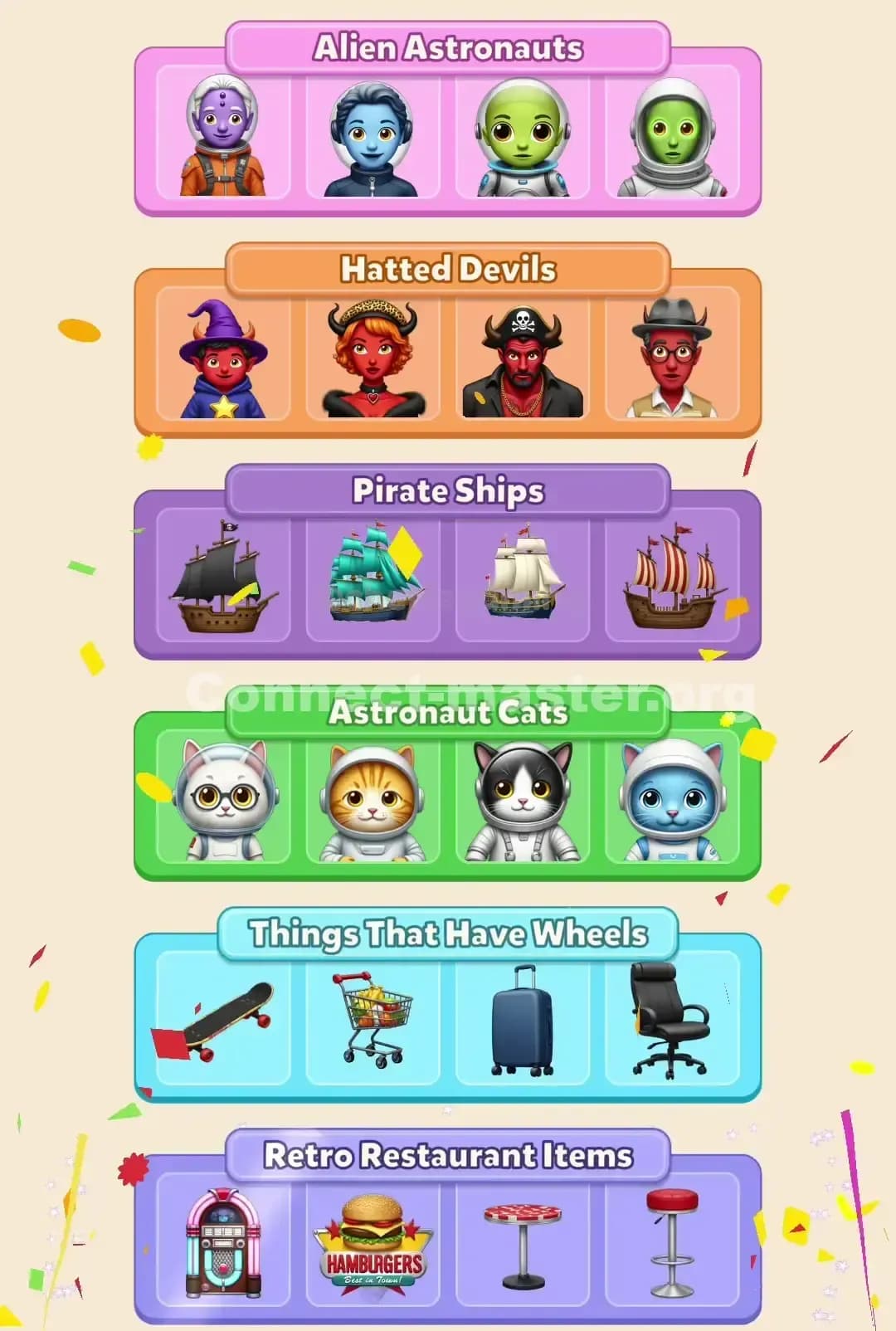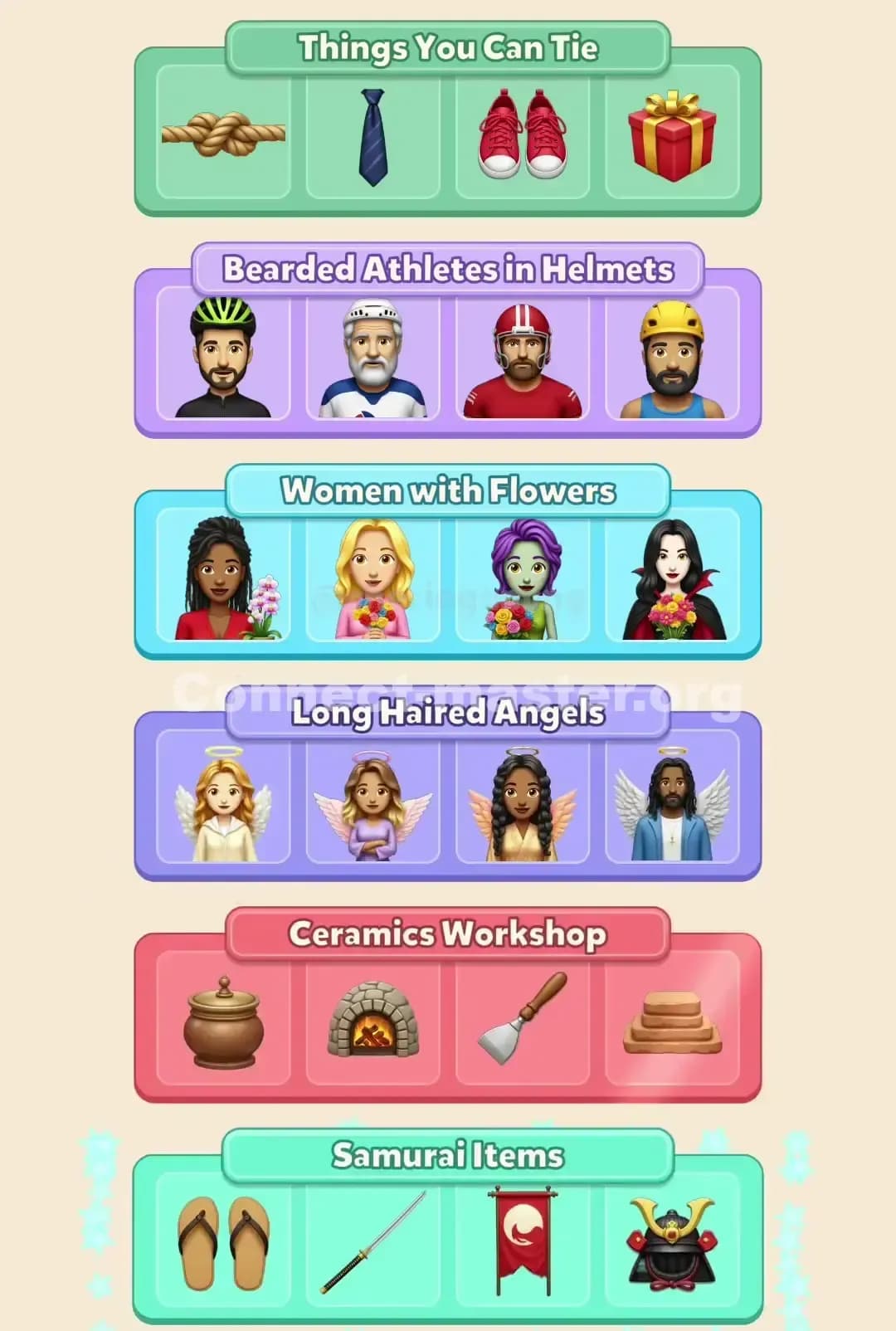
Connect Master Level 164 Solution Walkthrough & Answer
How to solve Connect Master level 164? Get instant solution & answer for Connect Master 164.
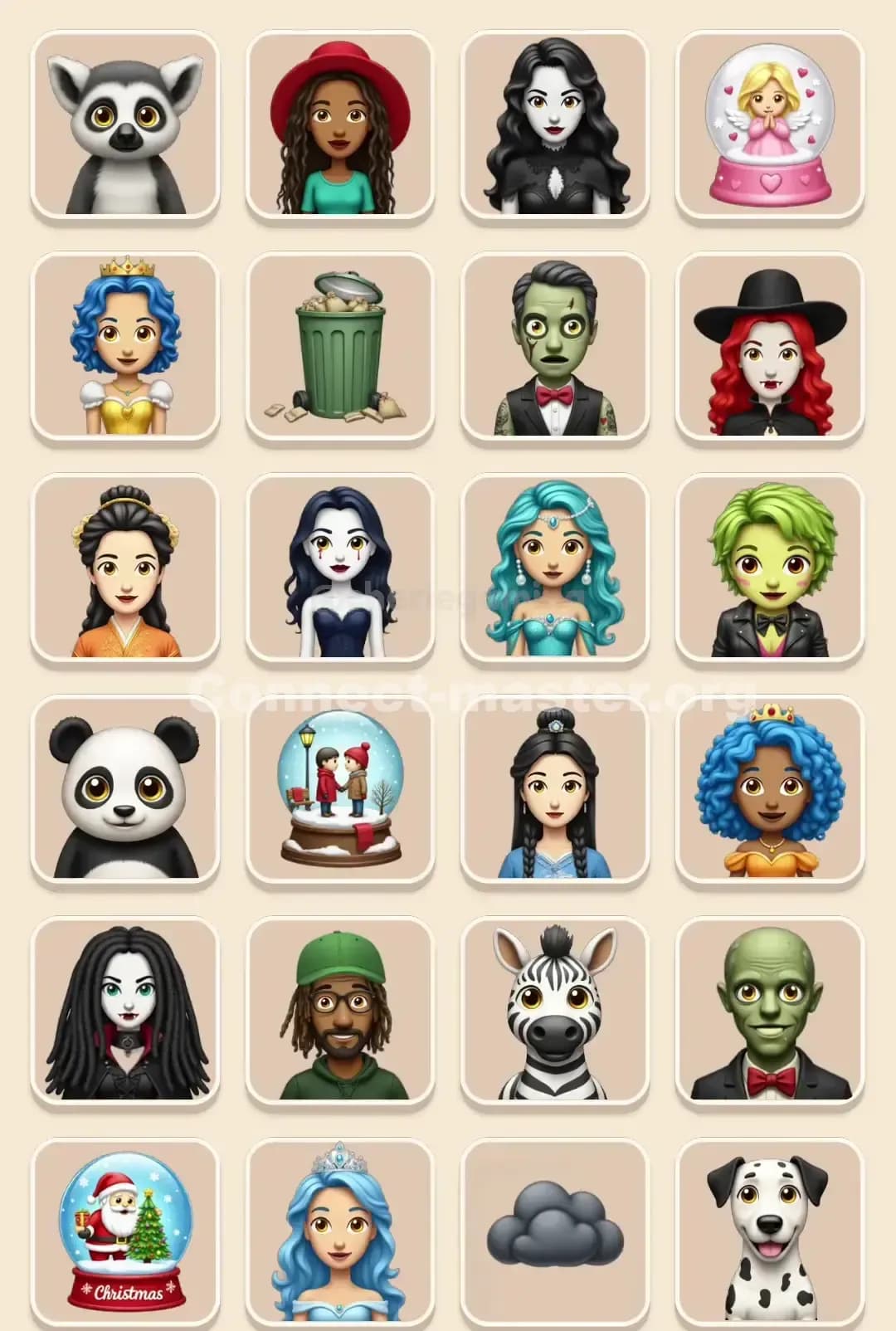
Connect Master Level 164 Pattern Overview
The Overall Theme and Set Breakdown
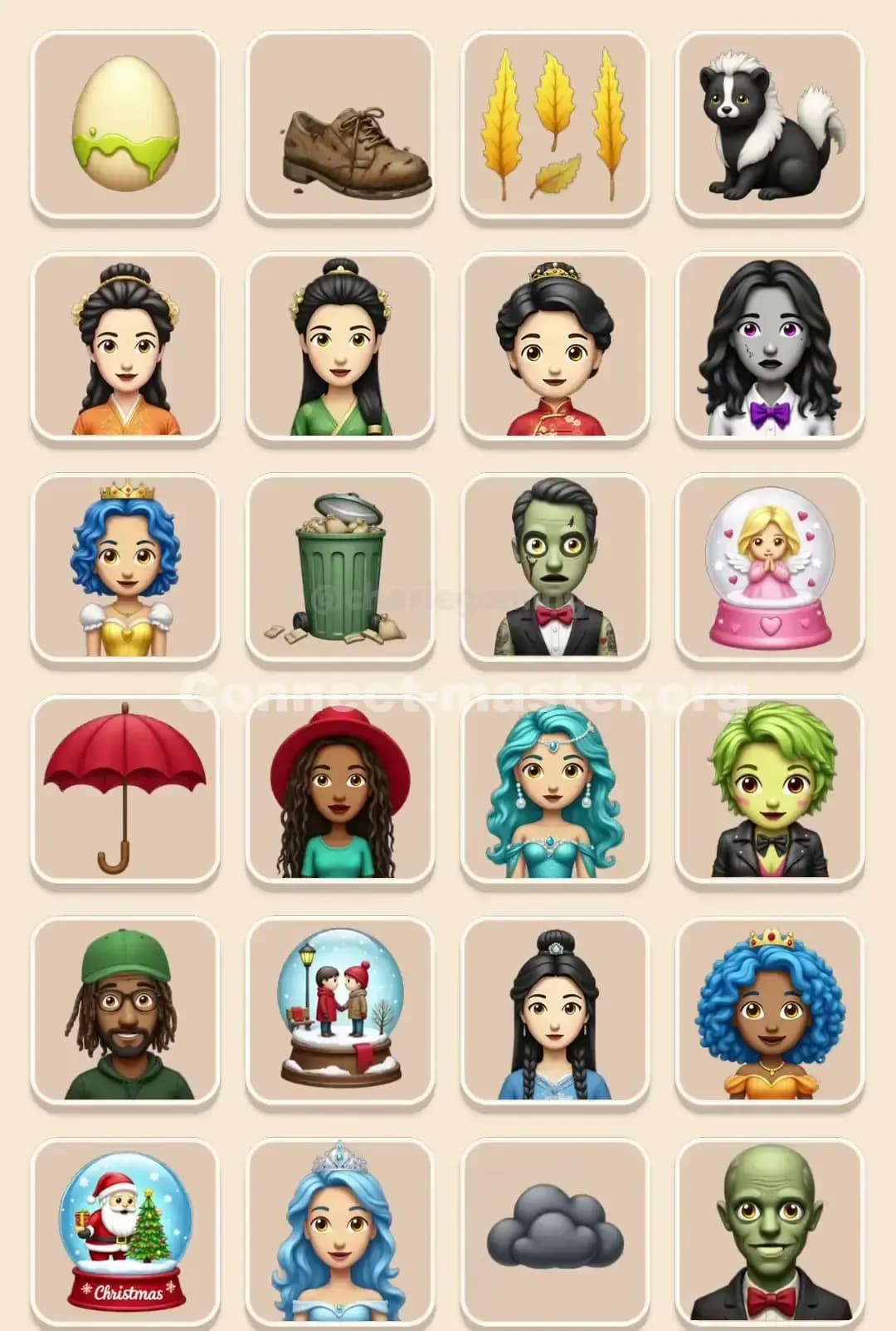
Connect Master Level 164 is a character and object-based puzzle that mixes cultural figures, festive decorations, and nature-themed elements into six distinct categories. What makes this level interesting is that it deliberately splits characters into multiple themed groups rather than lumping them all together—so you can't just think "people" and call it a day. You're looking at exactly 24 tiles that slot neatly into six sets of four, each with a crystal-clear visual or conceptual link.
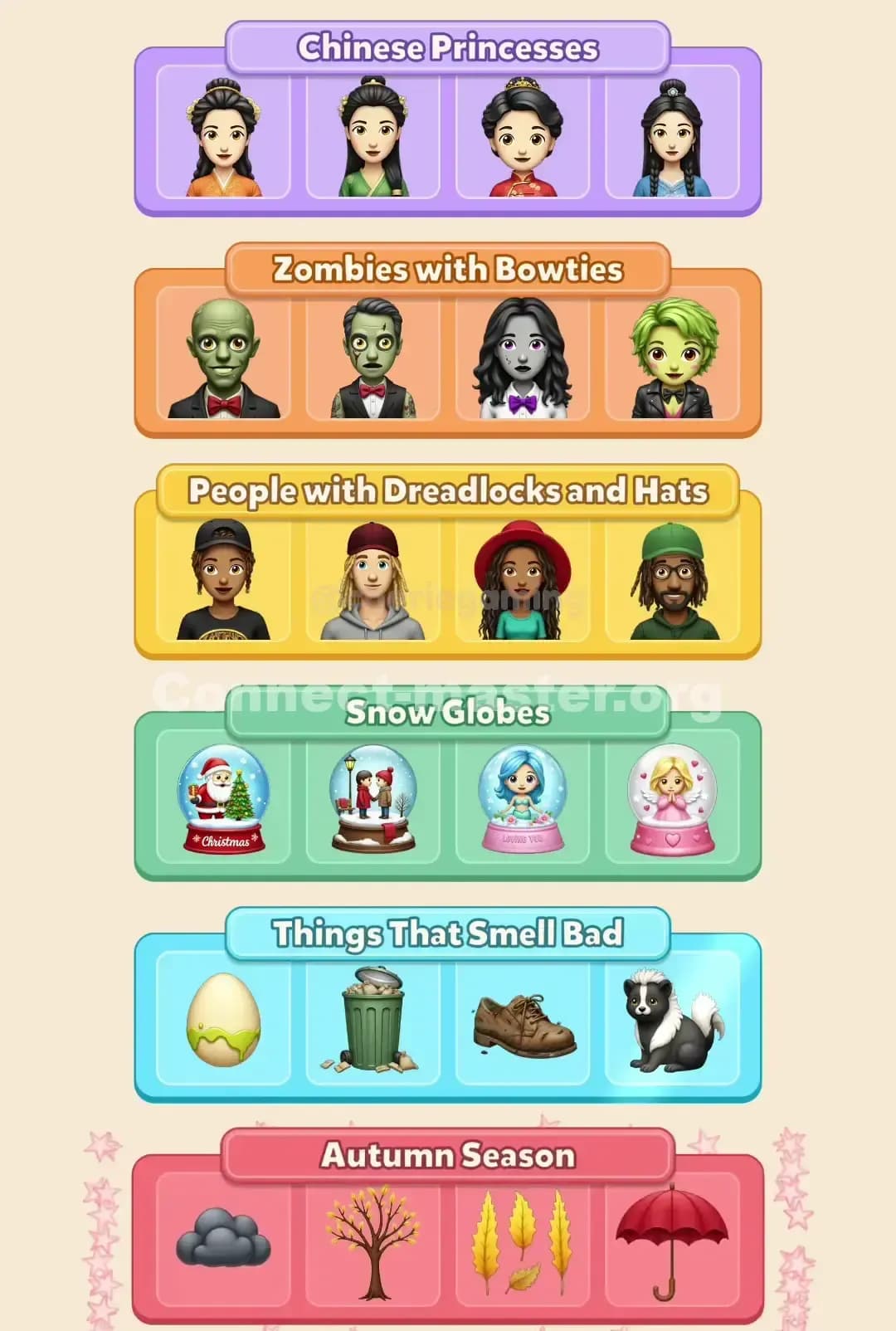
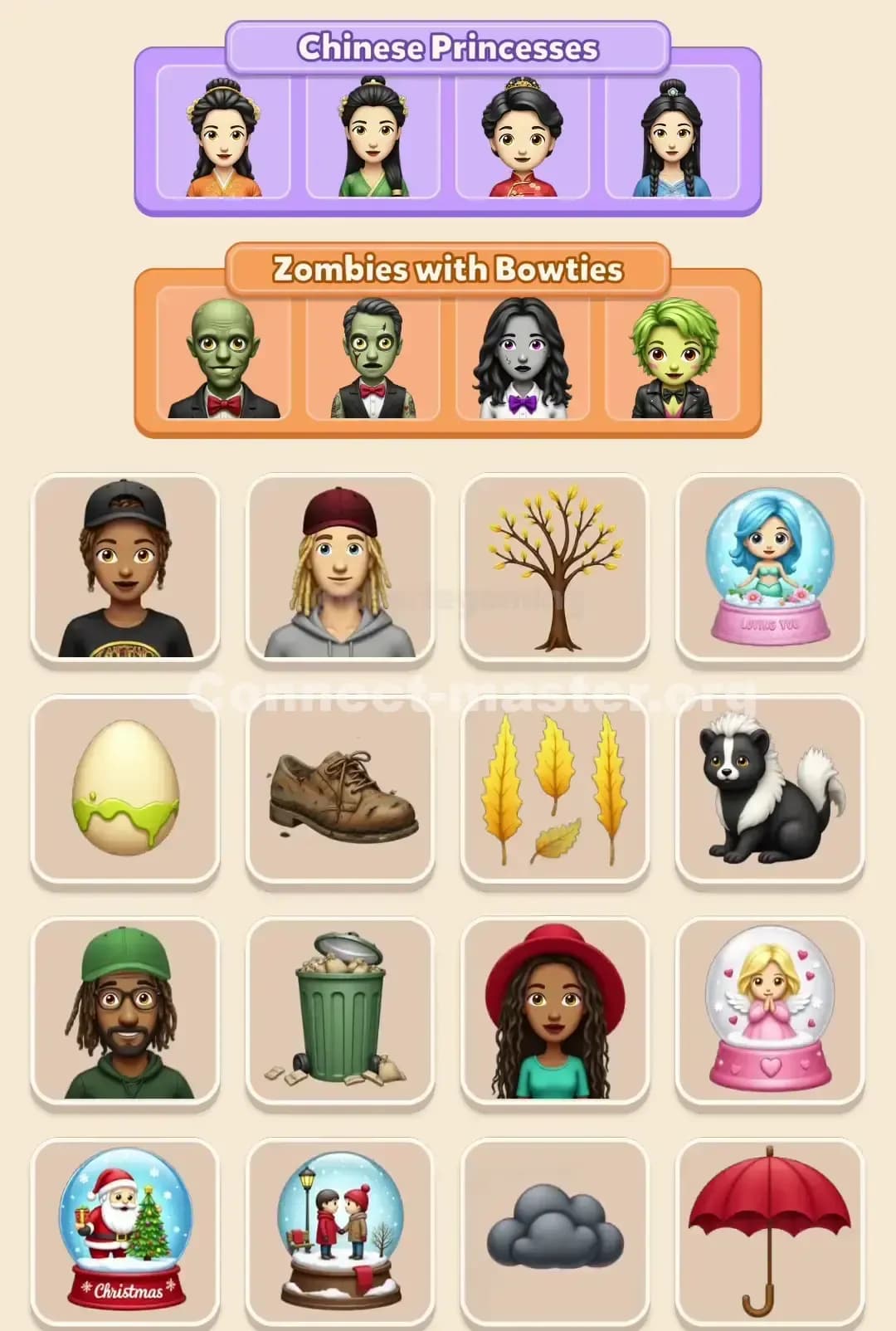
The six sets in Connect Master Level 164 are:
- Chinese Princesses: Four elegant women wearing traditional Asian royal attire, each with distinct hairstyles and colored robes that signal their individual identities.
- Zombies with Bowties: Four undead-looking characters, each sporting a formal bowtie or ribbon accessory, blending macabre with sophistication.
- People with Dreadlocks and Hats: Four individuals sporting long braided or locked hair paired with various hat styles (caps, beanies, hoods).
- Snow Globes: Four decorative domed souvenirs featuring miniature winter or holiday scenes inside, each with a unique base color and theme.
- Things That Smell Bad: Four objectively stinky items—a cracked egg, a garbage bin, old shoes, and a skunk—united by an olfactory theme rather than appearance.
- Autumn Season: Four nature and weather symbols associated with fall—a storm cloud, a leafless tree, golden feathers, and a burgundy umbrella.
Why These Sets Work Together
The genius of Connect Master Level 164 is that almost every set has at least one tile that could trick you into mispairing. The Zombies look like they could belong with other undead characters if you weren't paying attention to the bowties. The Dreadlocks group includes people of different skin tones and styles, so you might assume they're just "diverse characters"—until you notice the hairstyle and hat pattern. Even the Autumn Season set could confuse players who think the cloud belongs with winter rather than fall. I needed two retries here because I initially wanted to group the snow globes with the Winter Princess characters, forgetting that those four were already locked into their own Chinese Royalty category.
Why Connect Master Level 164 Feels So Tricky
The Sneaky Zombie Set
The most confusing category in Connect Master Level 164 is the Zombies with Bowties. At first glance, they look like formal characters dressed in suits, but the pale skin, sunken eyes, and greenish or grayish complexion all scream "undead." What makes players overlook this set is that the bowtie detail—a symbol of elegance and formality—doesn't immediately register as a unifying trait. You see a zombie and think "horror character," not "formal undead creature." The bowtie is the key detail that separates this group from other character sets. If you're not actively looking for the tie or ribbon accessory on each zombie's neck or chest, you'll miss the pattern entirely.
Confusing Overlaps Between Near-Matches
The People with Dreadlocks and Hats set causes real confusion because the four characters don't look particularly similar at first. One person wears a black baseball cap, another has a burgundy beanie, a third sports a red hood, and the fourth wears a green cap. The trap is thinking, "These are just random people with different outfits." The actual unifier is that every single character has dreadlocked or tightly braided hair visible and is wearing a hat or cap-like headpiece. Compare this carefully: if a character has dreadlocks but no hat, or a hat but straight hair, they don't belong here. This set requires you to check both conditions simultaneously, which is why players sometimes try to move one of these people into the "Zombies" category or another character group.
Another near-miss happens between the Snow Globes and the Christmas-themed graphics elsewhere on the board. Some snow globes contain Santa or holiday figures inside them, which might make you wonder if they belong with the Chinese Princesses or other character sets. The key is remembering that the globe itself—the dome, the base, the enclosed diorama format—is the defining feature. It doesn't matter if there's a person inside the globe; the globe is the object being categorized.
The Autumn Season Identity Crisis
I found myself second-guessing the Autumn Season set because not every tile screams "fall" equally. A burgundy umbrella is used year-round, golden feathers could represent spring plumage, and a storm cloud suggests rain more than autumn. However, when you consider them together and compare them against winter symbols (like the snow globes), the pattern clicks: the dark cloud is the gray, moody precipitation of autumn, the leafless tree represents trees stripped bare in fall, the feathers are harvest-gold and shed naturally in that season, and the umbrella's deep crimson color and presence alongside stormy weather all point to autumn's rainy, transitional character. Once you name this set "Autumn Season" in your head, those four tiles stick together automatically.
Step-by-Step Solution for Connect Master Level 164
Opening: Lock In the Obvious Categories
Start Connect Master Level 164 by identifying the absolute easiest set: the Snow Globes. All four tiles are miniature domed souvenirs with visible snow, characters, or winter imagery inside a clear glass sphere sitting on a colored base. There's no ambiguity here—grab those four immediately and lock them in. This frees up mental real estate and removes four tiles that might otherwise distract you.
Next, go for the Chinese Princesses. These four women are unmistakable: they're wearing vibrant silk robes in different colors (orange, green, red, blue), elaborate upswept hairstyles adorned with ornamental pins or crowns, and they're all rendered in the same elegant art style. Even if you don't know they're specifically Chinese royalty, the visual consistency is striking. Lock these in as your second set and you've cleared half the board's character tiles.
Mid-Game: Process of Elimination and Visual Comparison
With Snow Globes and Chinese Princesses locked, you're left with 16 tiles: four zombies, four dreadlock-and-hat people, four smelly objects, and four autumn symbols. Now the work gets granular. Pick out the Zombies with Bowties by carefully examining skin tone and undead features. Look at each character and ask: "Are their features pale, greenish, or zombie-like?" and "Is there a bowtie or formal ribbon visible?" If yes to both, it's a zombie. You'll spot a green-skinned zombie with a red bowtie, a pale zombie with a burgundy bowtie, a dark-haired zombie with a purple bowtie, and a lime-green zombie with a dark jacket and bowtie. These four are unmistakable once you focus on the undead aesthetic plus the formal accessory.
With eight tiles gone, you're down to the four dreadlock-and-hat people, four stinky objects, and four autumn symbols. Separate the People with Dreadlocks and Hats by confirming that each character has both visible braided/locked hair and some kind of hat or cap. Don't overthink their outfit colors or expressions—just check those two visual markers. Once you've identified all four, lock them in.
End-Game: The Final Two Sets
You're now staring at Things That Smell Bad and Autumn Season—eight tiles total, eight seconds left mentally. The smelly objects are straightforward: a cracked egg (rotten), a garbage can overflowing with trash (rank), worn brown shoes (stinky feet), and a black-and-white skunk (notoriously foul). These four are bound by a crude but unmistakable theme: each one has an unpleasant odor. Don't overthink this set; it's deliberately absurd and memorable.
That leaves Autumn Season as your final four: a dark storm cloud, a bare tree with dark branches, golden-yellow falling feathers or leaves, and a burgundy umbrella. The linking trait is "symbols and phenomena of the autumn season." The cloud brings rain, the tree is stripped of leaves in fall, the feathers represent the golden palette and natural shedding of autumn, and the umbrella keeps you dry during autumn's wet weather. Once you see this thematic unity, the set locks in and Connect Master Level 164 is solved.
The Logic Behind This Connect Master Level 164 Solution
From Broad Traits to Minute Details
The winning strategy for Connect Master Level 164 is to start by identifying sets with the most obvious, visually consistent traits—like "all snow globes" or "all faces wearing traditional Asian royal clothing"—and work your way down to sets that require you to notice smaller details. This approach prevents you from getting bogged down in ambiguity early on. Once you've removed the low-hanging fruit, the remaining tiles become easier to evaluate because you're no longer juggling as many options.
The reason this works is that Connect Master puzzles are designed so that each tile belongs to exactly one set. By locking in the obvious groups first, you're not just reducing visual clutter; you're creating anchor points that inform everything else. For example, once you know the four Chinese Princesses are locked, you know that any other character tile can't be part of a "royalty" set—it must belong to a different character category. This logical constraint cascades through your analysis and makes later deductions inevitable.
The Power of Naming Each Set
A crucial mental trick is to give each group in Connect Master Level 164 a short, descriptive name the moment you think you've found it. Instead of just "these four go together," say out loud or write down: "Zombies with Bowties," "Snow Globes," "Things That Smell Bad." Naming forces you to articulate the exact trait that unites those four tiles, and it prevents you from accidentally reusing a tile in another set. When you reach the end-game scenario with ambiguous tiles, those names act as a filter: you ask yourself, "Does this tile belong with the Autumn Season group or the Dreadlock People group?" and your brain immediately knows which category each potential member was supposed to support. This systematic labeling is what separates a confused mess of tiles from a clear, solved puzzle. By the time you finish Connect Master Level 164, you won't just have four solved sets—you'll have a mental map of exactly why each tile is where it belongs.