Connect Master Level 673 Solution Walkthrough & Answer
How to solve Connect Master level 673? Get instant solution & answer for Connect Master 673.
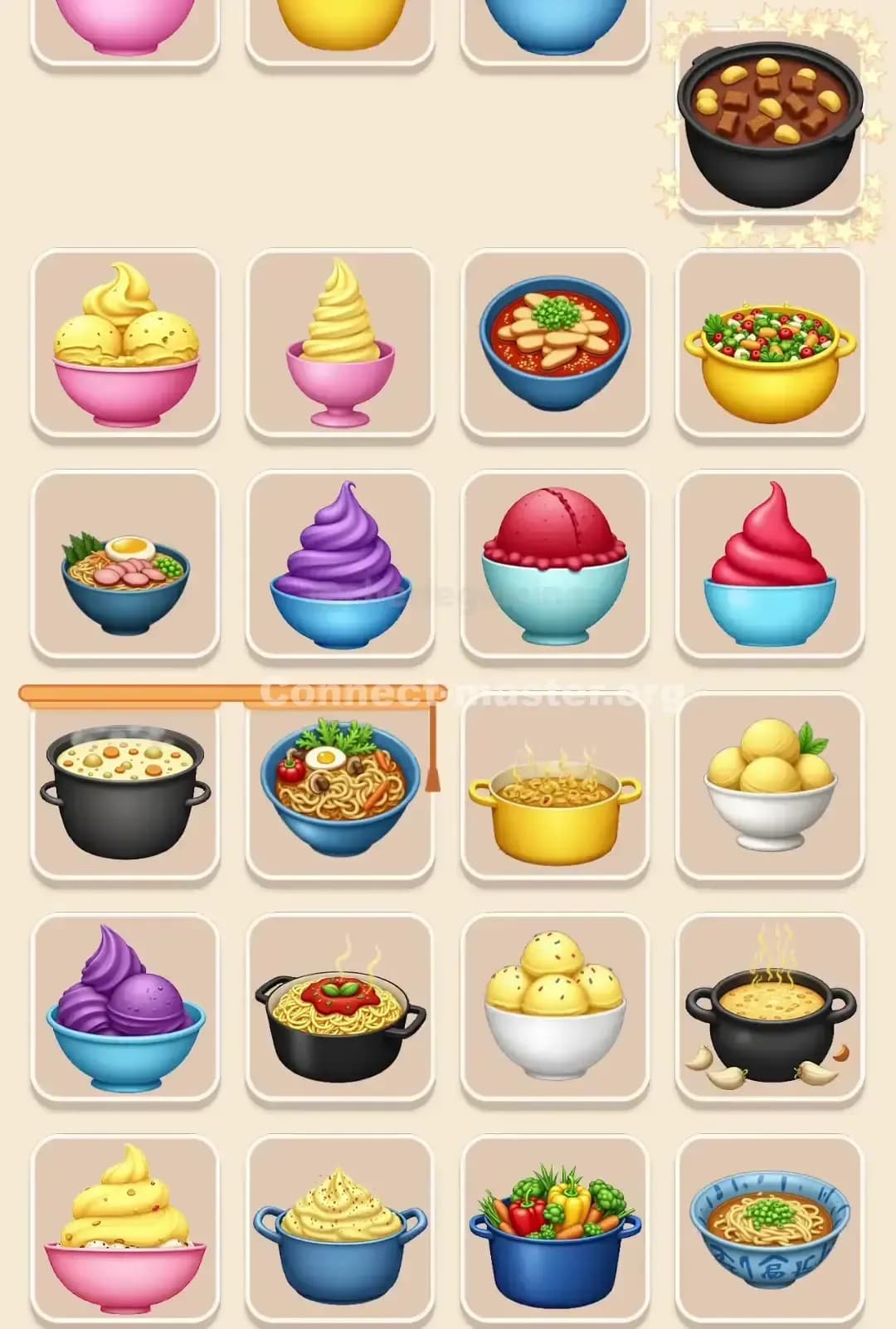
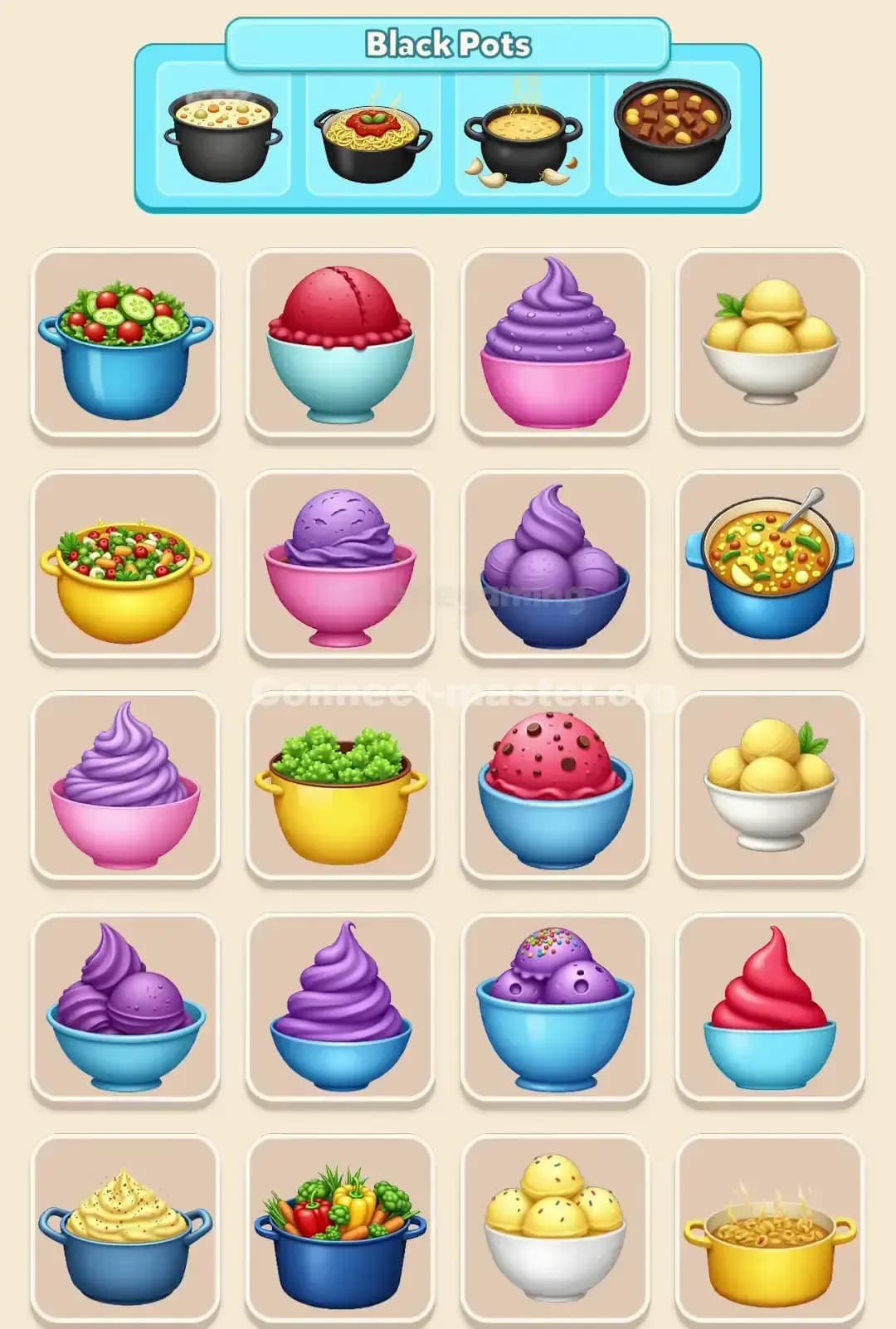
Connect Master Level 673 Pattern Overview
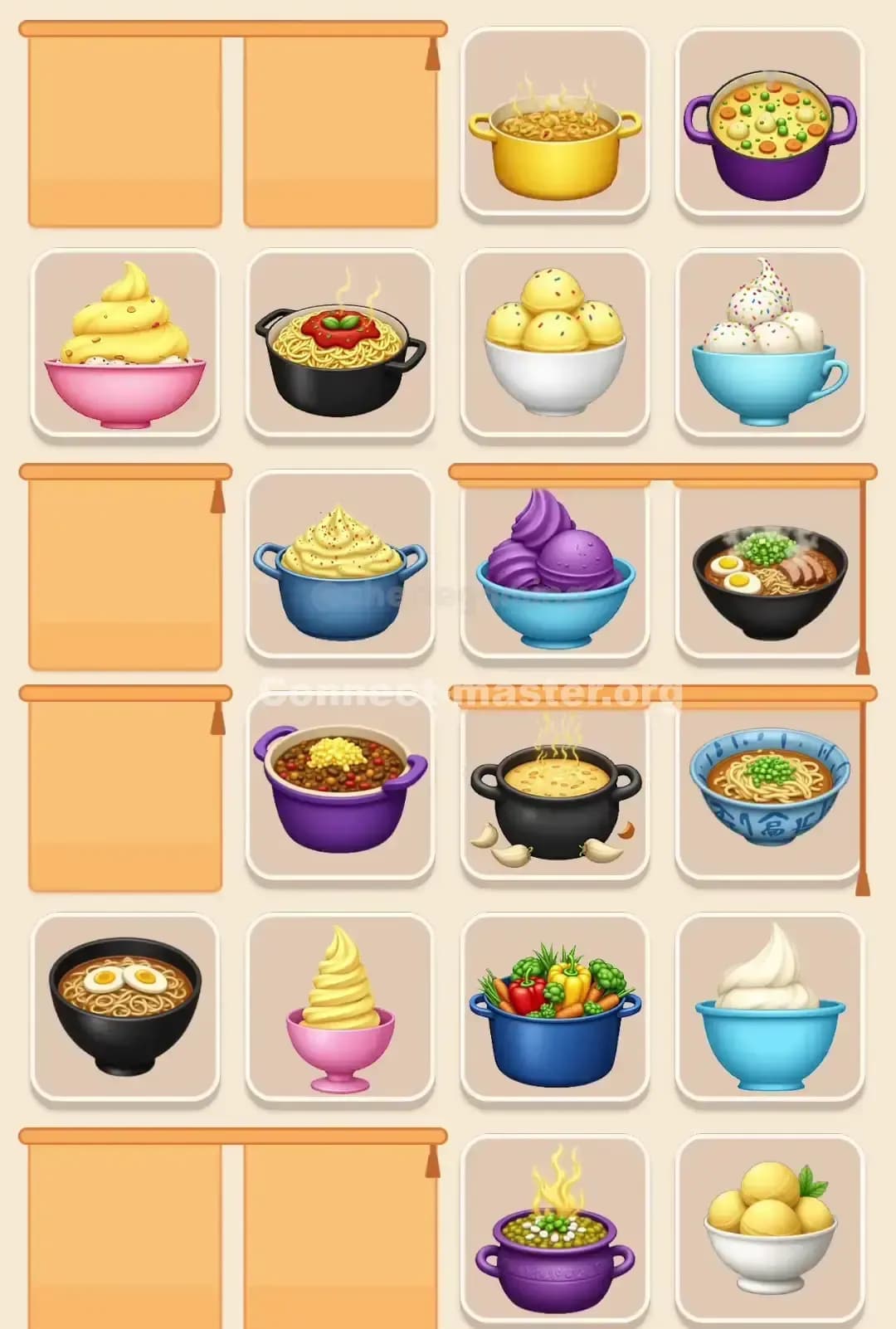
Connect Master Level 673 is a food-themed puzzle that combines cookware and desserts into six distinct sets. You're looking at 24 tiles total, split evenly across six categories that each share a clear visual trait. The puzzle mixes container colors, food types, and serving styles, so at first glance it feels like there are way more possible groupings than there actually are. Once you lock in the obvious sets, the trickier ones reveal themselves pretty quickly.
The Six Sets in Connect Master Level 673
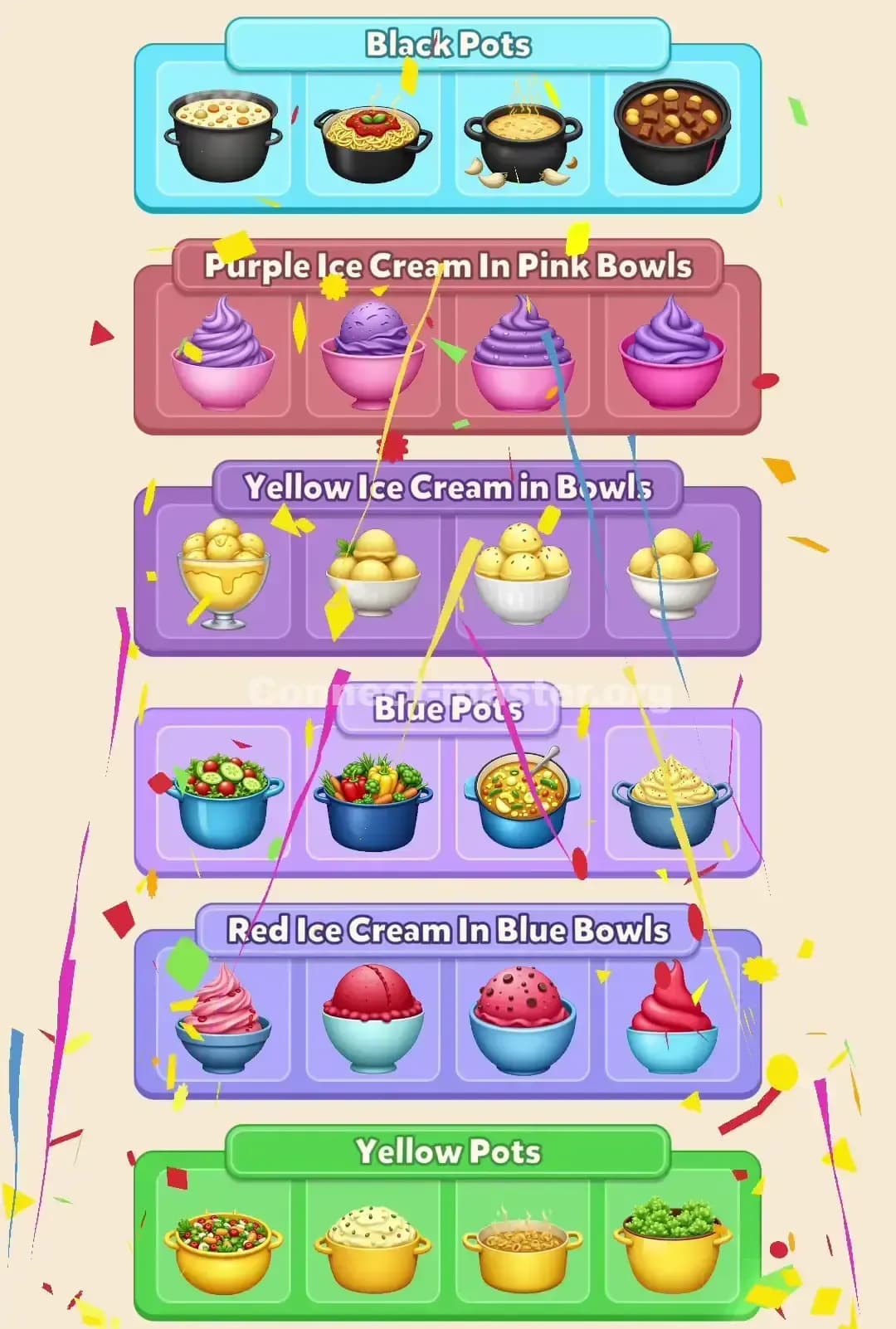
The solution breaks down into Black Pots, Purple Ice Cream in Pink Bowls, Yellow Ice Cream in Bowls, Blue Pots, Red Ice Cream in Blue Bowls, and Yellow Pots. Each set has exactly four tiles that share one unmistakable trait—either the container color, the food color, or a combination of both. Naming them this way keeps your brain organized and prevents you from accidentally grouping a tile twice.
Why Connect Master Level 673 Feels So Tricky
The Deceptive Ice Cream Sets
The hardest part of Connect Master Level 673 is separating the three ice cream sets from each other. You've got purple ice cream, yellow ice cream, and red ice cream, each served in different bowl colors. The trap is that your eye wants to group "all ice cream" together, but that's not how the logic works here. Instead, you need to lock onto the exact color combo: purple ice cream only goes with pink bowls, yellow ice cream goes with white or pale bowls, and red ice cream pairs exclusively with light blue bowls. I needed two retries here before I stopped looking at "ice cream" as one category and started seeing the bowl color as the deciding factor.
Subtle Overlaps Between Pot Sets
The three pot sets—Black Pots, Blue Pots, and Yellow Pots—look deceptively similar at first. They're all cookware with food inside, so your brain tries to lump them together. The key difference is the pot color itself. Black Pots contain stews and soups with visible chunks (potatoes, meat, beans). Blue Pots hold either fresh salads or noodle dishes. Yellow Pots are filled with rice, mashed potatoes, or other grain-based sides. Once you focus on the pot color rather than the food type, the groupings snap into place.
The Noodle Dish Confusion
One tile that almost tripped me up was the noodle dish in a blue pot. It looks like it could belong with the Black Pots (since noodles are often cooked in black pots), but the pot itself is blue, so it belongs with the other Blue Pots. This is where Connect Master Level 673 tests your attention to detail—the container color overrides the food type when deciding which set a tile belongs to.
Step-by-Step Solution for Connect Master Level 673
Opening: Lock in the Obvious Pot Sets First
Start by identifying all the Black Pots. These are the easiest to spot because black cookware stands out against the lighter background, and the contents are always chunky stews or soups. Once you've mentally flagged those four tiles, move to the Yellow Pots. Yellow is equally distinctive, and these pots always contain lighter-colored foods like mashed potatoes, rice, or salads with a creamy base. Locking in these two sets immediately removes eight tiles from the board and gives you a clearer view of what's left. This is the fastest way to build momentum in Connect Master Level 673.
Mid-Game: Use Process of Elimination on the Remaining Pots
After you've secured Black Pots and Yellow Pots, the Blue Pots become obvious by elimination. But don't just assume—verify that all four Blue Pots tiles are actually there. You should see a mix of salads and noodle dishes, all in blue cookware. This step is crucial because it clears the entire "pot" category and leaves you with only the ice cream sets to solve.
End-Game: Separate the Ice Cream Sets by Bowl Color
Now comes the trickiest part of Connect Master Level 673. You have three ice cream sets left, and they all look similar at first glance. Start with Purple Ice Cream in Pink Bowls—purple is a distinctive color, and pink bowls are equally recognizable. Once you've locked those four tiles, move to Yellow Ice Cream in Bowls. These tiles feature yellow ice cream served in white or pale-colored bowls, often with a pedestal or footed base. Finally, Red Ice Cream in Blue Bowls should be your last set. Red ice cream in light blue bowls is the final piece of the puzzle. The key to nailing this section is comparing bowl colors side by side—don't rely on memory, actually look at each tile and confirm the bowl shade before committing to a group.
The Logic Behind This Connect Master Level 673 Solution
From Broad Traits to Specific Details
The winning strategy for Connect Master Level 673 is to start with the biggest, most obvious trait—container type (pot versus bowl)—and then narrow down to color. This two-step filtering system eliminates confusion because you're not trying to hold six categories in your head at once. Instead, you're asking simple yes-or-no questions: Is this a pot or a bowl? If it's a pot, what color? If it's a bowl, what color is the ice cream inside? By the time you've answered these questions for all 24 tiles, the solution is already solved.
Naming Each Set Prevents Double-Counting
Giving each set a descriptive name—Black Pots, Purple Ice Cream in Pink Bowls, and so on—is more than just helpful labeling. It's a mental anchor that keeps you from accidentally using the same tile twice or chasing a category that doesn't exist. When you say "Purple Ice Cream in Pink Bowls" out loud (or in your head), you're committing to a specific, non-overlapping definition. That commitment is what makes Connect Master Level 673 solvable without frustration. You're not guessing; you're systematically eliminating possibilities until only one answer remains for each tile.