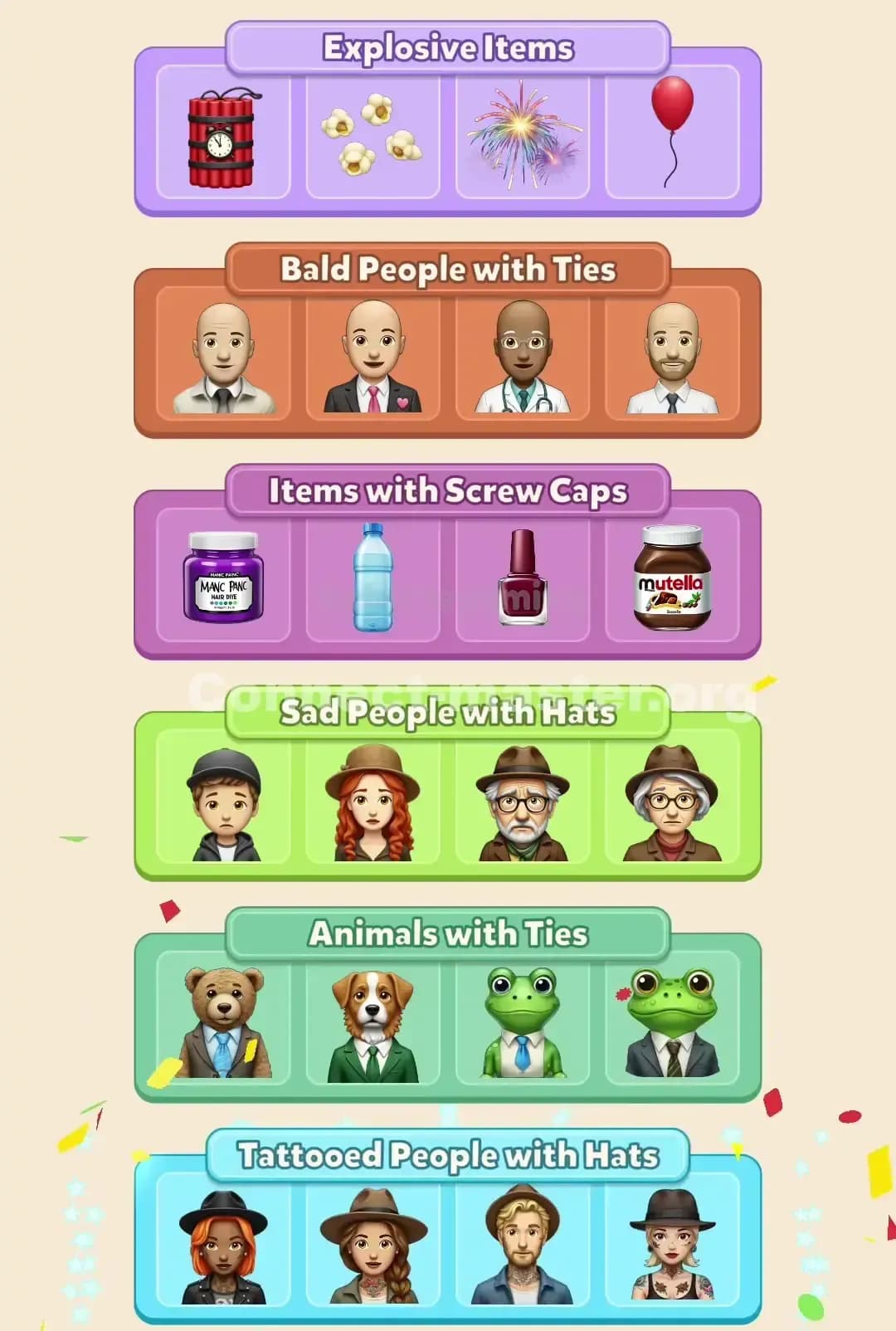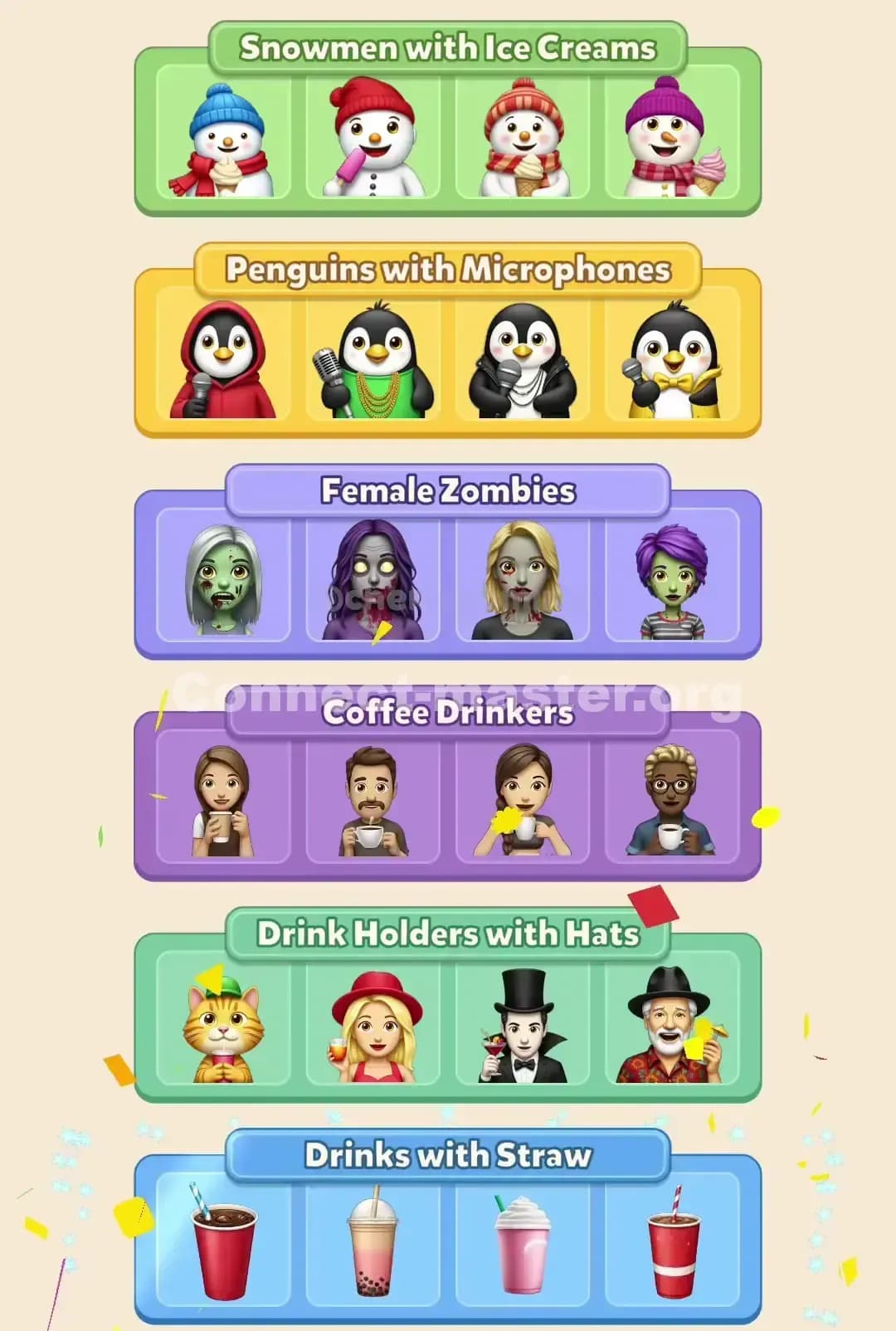
Connect Master Level 114 Solution Walkthrough & Answer
How to solve Connect Master level 114? Get instant solution & answer for Connect Master 114.
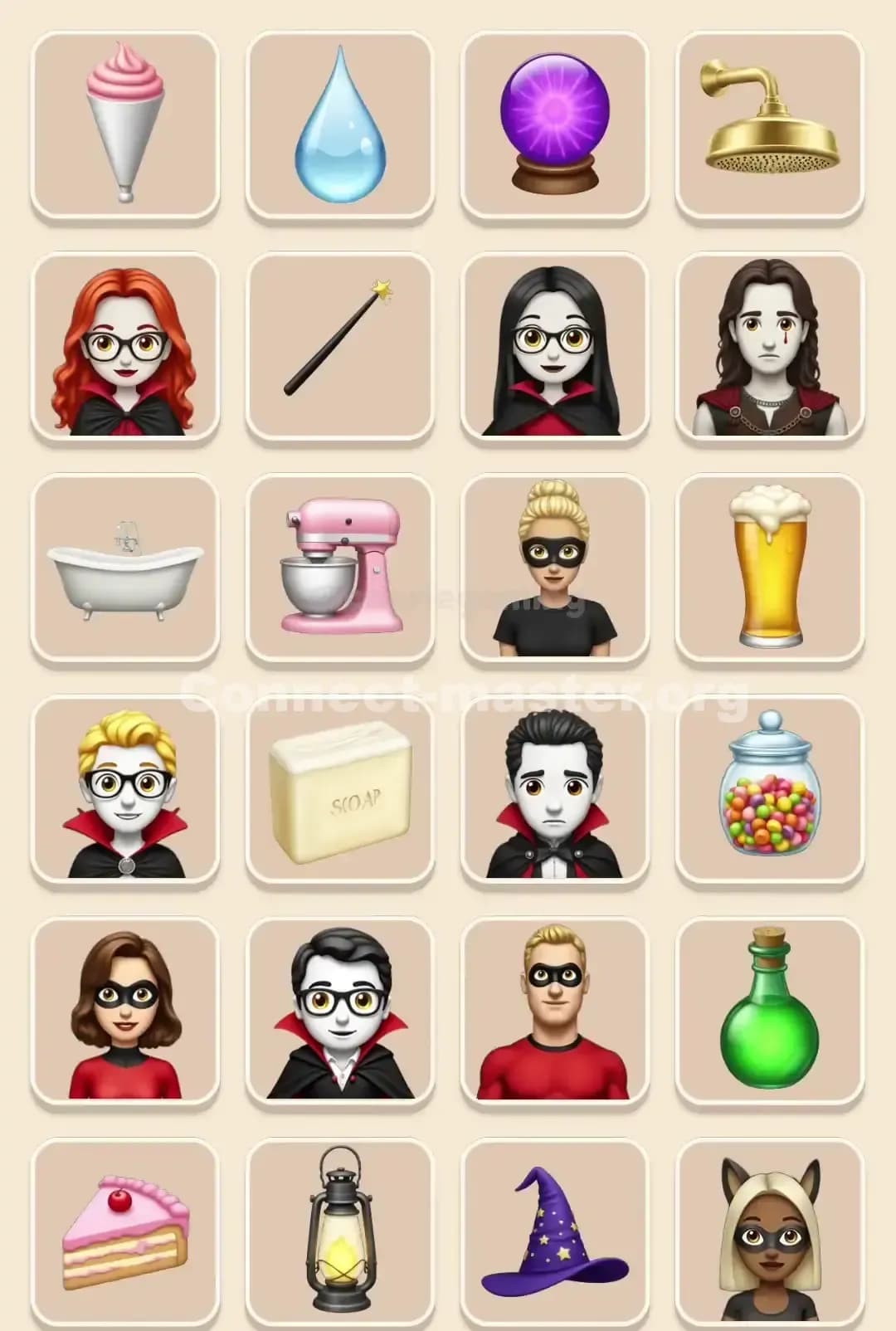
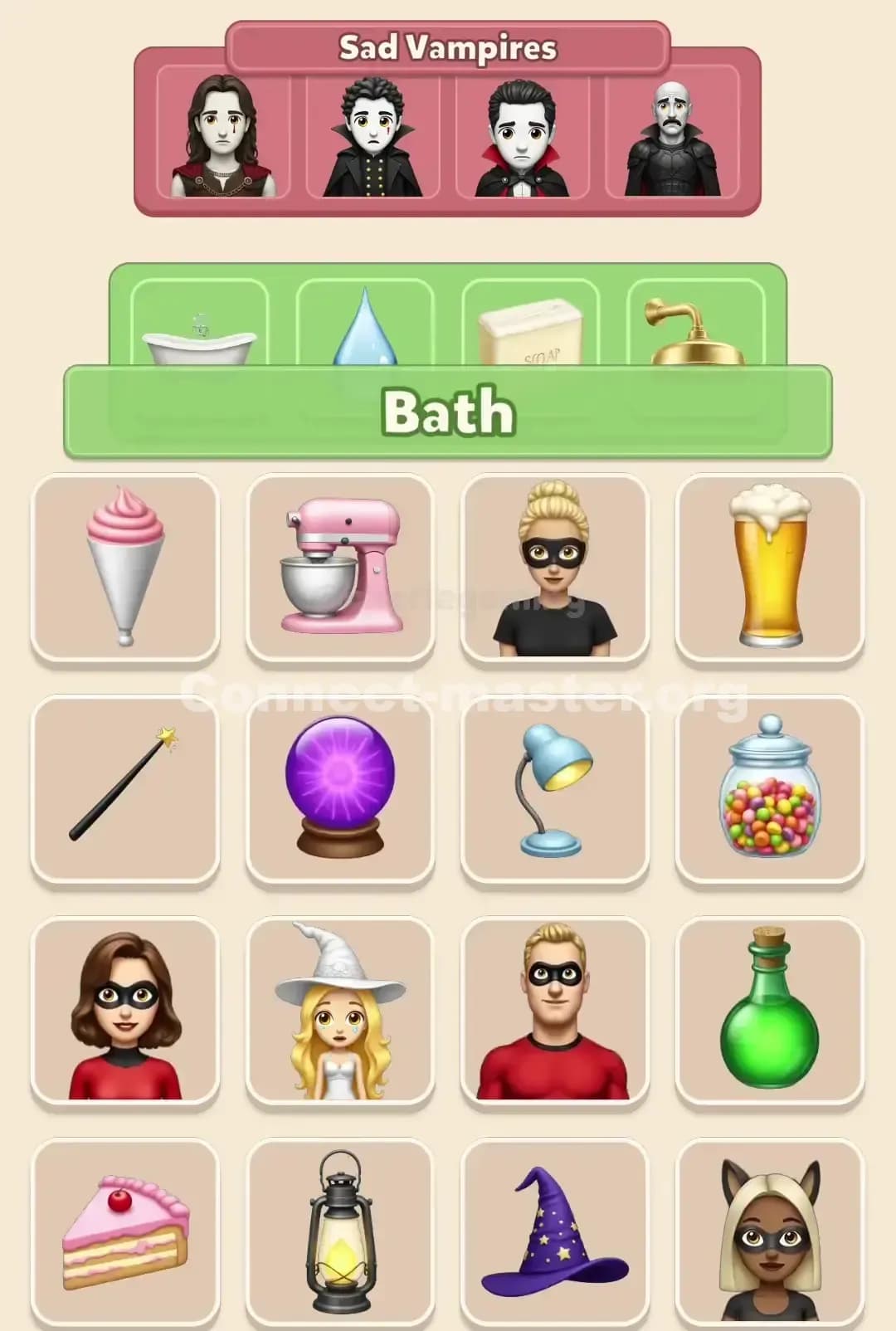
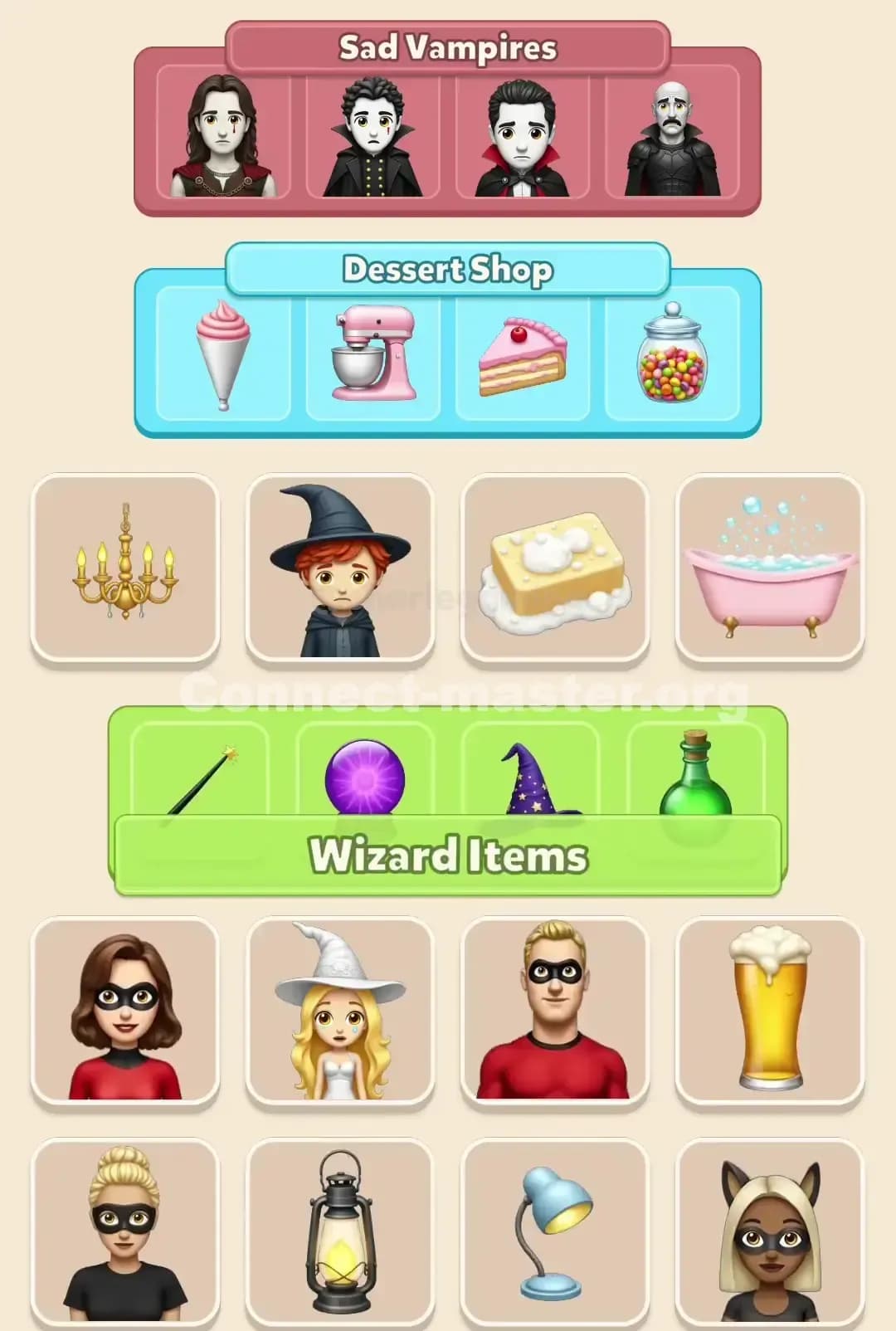
Connect Master Level 114 Pattern Overview
The Overall Theme
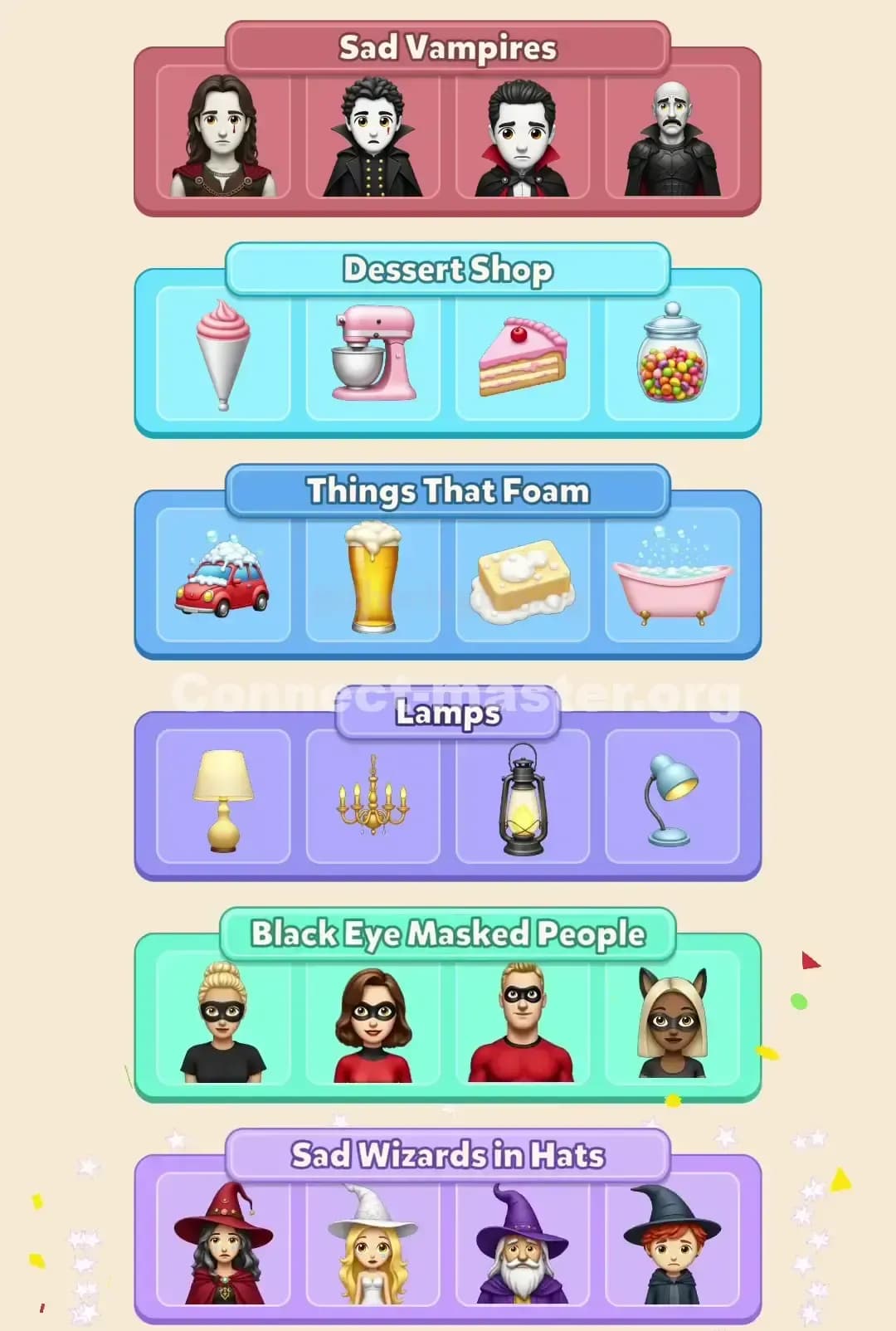
Connect Master Level 114 brings together six distinct groups of four tiles, each united by a clear visual or thematic trait. What I love about this level is how it mixes character-based categories (vampires, wizards, and masked figures) with everyday objects that share surprising properties (foaming items, lighting fixtures, and sweet treats). The puzzle feels balanced because none of the sets are blindingly obvious—you'll need to look past surface-level similarities and focus on the specific details that truly bind each group together.
The Six Sets at a Glance
Sad Vampires brings together four gloomy undead characters, each displaying distinctly melancholy expressions and classic vampire attire with dark fabrics and pale skin. Dessert Shop groups four confectionery and baking tools—a piping bag, a stand mixer, a slice of cake, and a candy jar—all the equipment or products you'd find in a pastry kitchen. Things That Foam unites objects that produce or showcase foam: a beer glass with a frothy head, a bathtub full of bubbles, a car covered in wash foam, and a bar of soap with visible lather. Lamps collects four different light sources, each providing illumination in distinct styles: a table lamp, a candlestick, a desk lamp, and a camping lantern. Black Eye Masked People features four characters wearing distinctive black eye masks, ranging from simple domino masks to more elaborate designs. Finally, Sad Wizards in Hats showcases four sorrowful magical practitioners, each wearing a signature pointy wizard hat and displaying sad or serious expressions.
Why Connect Master Level 114 Feels So Tricky
The Most Confusing Set
I found Things That Foam to be the trickiest category to lock in confidently, and I suspect you will too. The challenge isn't that the items don't belong together—they absolutely do—but rather that each tile can initially seem to belong to completely different categories. A bathtub looks like household furniture, a beer glass resembles a beverage, a car is transportation, and soap is a hygiene product. You might spend valuable mental energy trying to group "car" with other vehicles or "beer" with other drinks before you finally realize they're all connected by their visual foam element. That "aha!" moment when you see the bubbles and lather across all four tiles is satisfying, but it doesn't come instantly.
Subtle Overlaps and Decoys
The vampires and wizards sets are close cousins that can trip you up if you're not careful. Both contain sad, dark-clothed characters, and both have that gothic, spooky vibe. However, the vampires are specifically undead with pale skin and vampire-specific fashion (cloaks, high collars, dramatic dark silhouettes), while the wizards are defined entirely by their pointy hats and melancholic expressions. The moment you focus on whether a character is wearing a hat, the distinction becomes crystal clear.
Another subtle overlap lies between Lamps and the broader category of "light-giving objects." A lantern, for instance, could almost seem like it belongs with other outdoor gear or camping equipment. But the unifying detail is that every single item in Lamps is designed primarily to produce light. The candlestick, desk lamp, table lamp, and lantern all serve that exact function—nothing more, nothing less. Compare that to, say, a lit candle or a torch, which might feel similar but aren't included because they're not the fixture itself.
The Black Eye Masked People category can blur with generic "character" tiles if you're not zooming in on facial details. Each person in this set has that unmistakable black eye mask—think of the classic domino or burglar mask style. Other character tiles in the puzzle lack this specific mask, so the distinction is there if you examine the face closely.
My "Finally Saw It!" Moment
I'll be honest—I needed two retries on Connect Master Level 114 before I fully internalized the Things That Foam category. On my first attempt, I tried pairing the bathtub with other bathroom items and the car with other vehicles. It wasn't until I stepped back and looked at the visual elements in the puzzle as a whole that I realized the puzzle was hinting at a property (foam) rather than an object type. That shift in thinking—from "what is this thing?" to "what does this thing do or display?"—is exactly what Connect Master Level 114 tests.
Step-by-Step Solution for Connect Master Level 114
Opening: Lock In the Obvious Anchors
Start by confidently locking in Sad Vampires and Sad Wizards in Hats. These two sets are visually distinct once you focus on the hats. The vampires have no hats and display pale, undead features; the wizards are unmistakable with their pointy, magical headwear. By removing these eight tiles from the board, you've immediately simplified Connect Master Level 114 and created mental space to handle the trickier groups. I'd recommend tackling the vampire set first because it feels the most natural—gothic characters grouped together feels intuitive, and getting one category confirmed builds momentum.
Mid-Game: Isolate Object-Based Categories
Next, target Dessert Shop and Lamps because both are object categories with relatively clear purposes. For Dessert Shop, look for items you'd see in a pastry kitchen: a piping bag (for frosting), a stand mixer (for dough), a slice of cake (the product), and a candy jar (bulk sweets). For Lamps, identify any object that's primarily a light fixture. The key distinction here is that lamps are fixtures—not bulbs, not flames, but actual lighting devices you'd keep in a room.
Once you've removed these two sets, you're left with the two trickiest groups. Using process of elimination at this stage is your best friend because it forces you to think critically about what remains.
End-Game: Decode the Last Two Tricky Sets
Now you're facing Things That Foam and Black Eye Masked People. Here's the mental trick: stop thinking about object categories and start thinking about visual properties. Things That Foam unites four items that all display visible foam or bubbles—a beer glass with a foamy head, a bathtub filled with bubble bath, a car in a foam car wash, and a bar of soap with lather. The trait isn't "bathroom stuff" or "cleaning products"; it's specifically the presence of foam. Look at each image and ask yourself: "Can I see the foam or bubbles?" If yes, it belongs in this set.
Black Eye Masked People is the final category, but now it should fall into place by elimination. Every person in this set wears that distinctive black eye mask across the face—no exceptions. You'll notice that other character tiles in Connect Master Level 114 (like the vampires or wizards) lack this specific mask, which is the detail that separates them. Once you've removed the vampires and wizards, any remaining characters with that black eye mask belong together.
The Logic Behind This Connect Master Level 114 Solution
From Big Traits to Tiny Details
The solution to Connect Master Level 114 works because it follows a natural progression: start by identifying the broadest, most obvious traits (character type, object function), then progressively zoom in on smaller, more specific details (hats, masks, visual foam). This cascading approach prevents you from getting stuck. If you tried to solve the entire puzzle at the granular level right away—focusing on tiny details before identifying big themes—you'd exhaust your mental energy. Instead, by locking in the Sad Vampires and Sad Wizards in Hats first, you've already carved away half the board, making the remaining categories easier to spot.
Naming Each Set Keeps You Organized
Throughout my approach to Connect Master Level 114, I assigned each group a specific name the moment I identified it: Sad Vampires, Dessert Shop, Things That Foam, Lamps, Black Eye Masked People, and Sad Wizards in Hats. This mental labeling is crucial. When you have a name, you have an anchor. It prevents you from accidentally trying to place a tile in two different sets or from chasing a connection that doesn't exist. Every time you look at the board, those names remind you of the logic you've already committed to, and you can test new tiles against that established framework. That's how you guarantee a clean solution where every tile fits somewhere and nowhere else.