
Connect Master Level 185 Solution Walkthrough & Answer
How to solve Connect Master level 185? Get instant solution & answer for Connect Master 185.
Connect Master Level 185 Pattern Overview
The Theme: Global Cultures and Landmarks
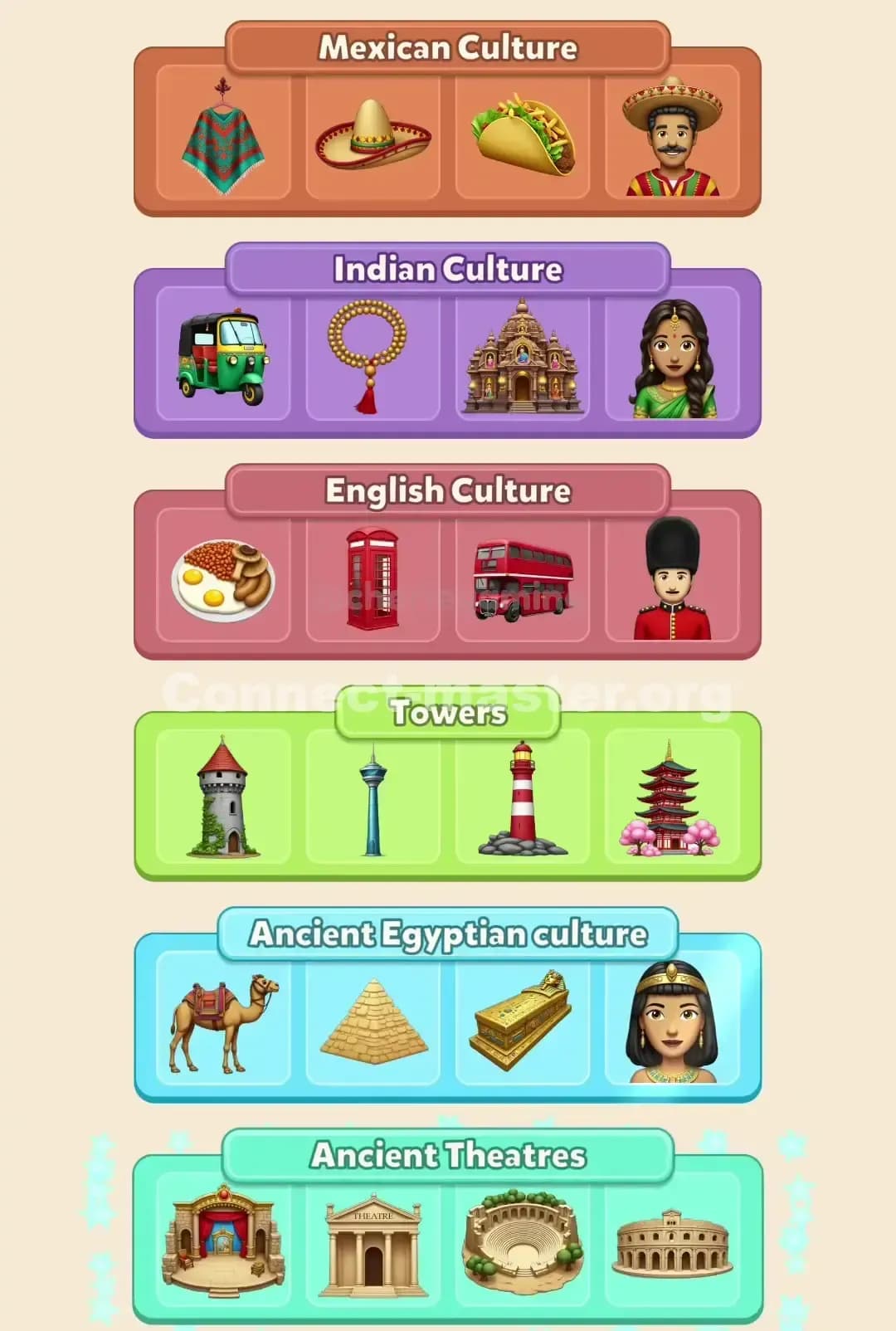
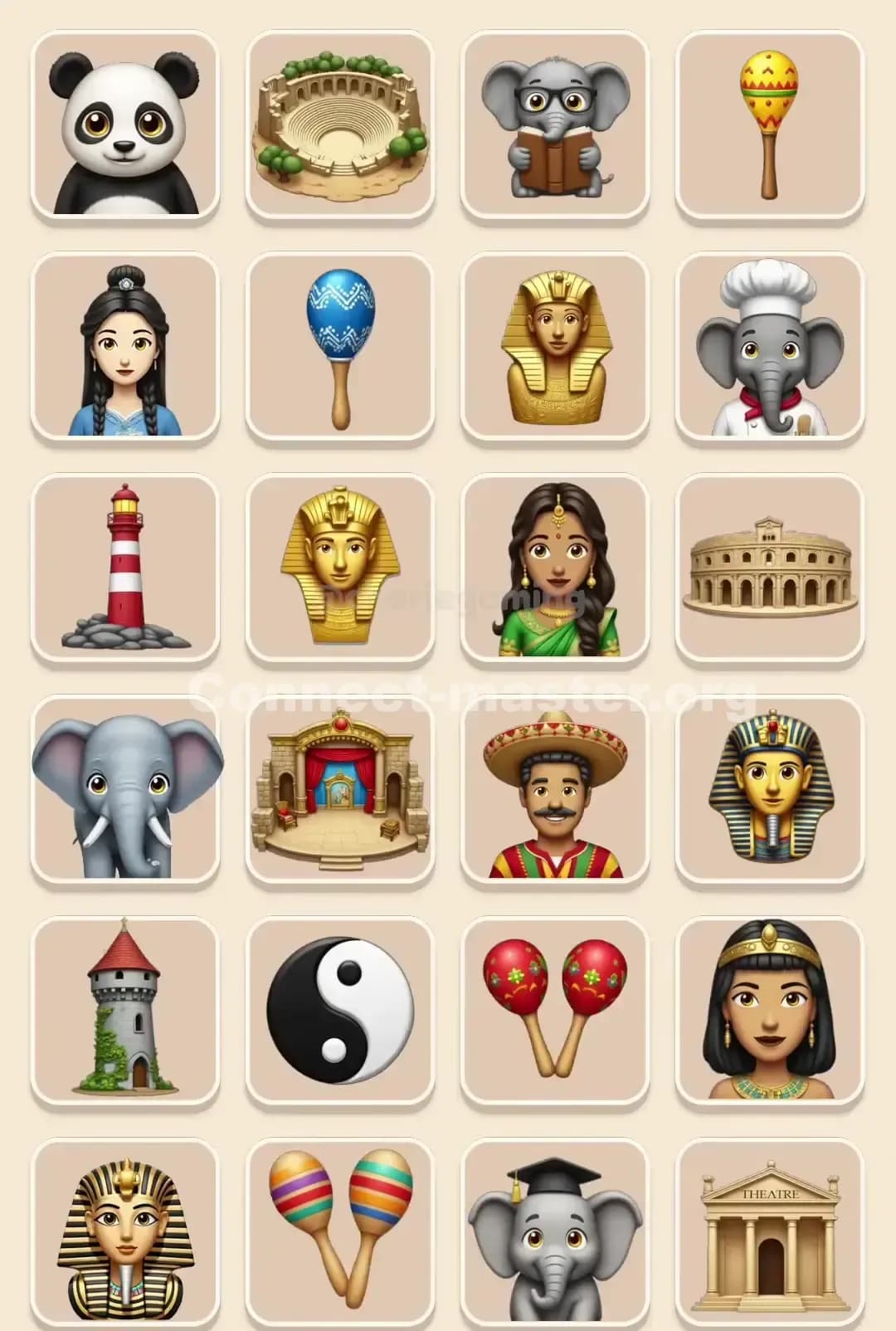
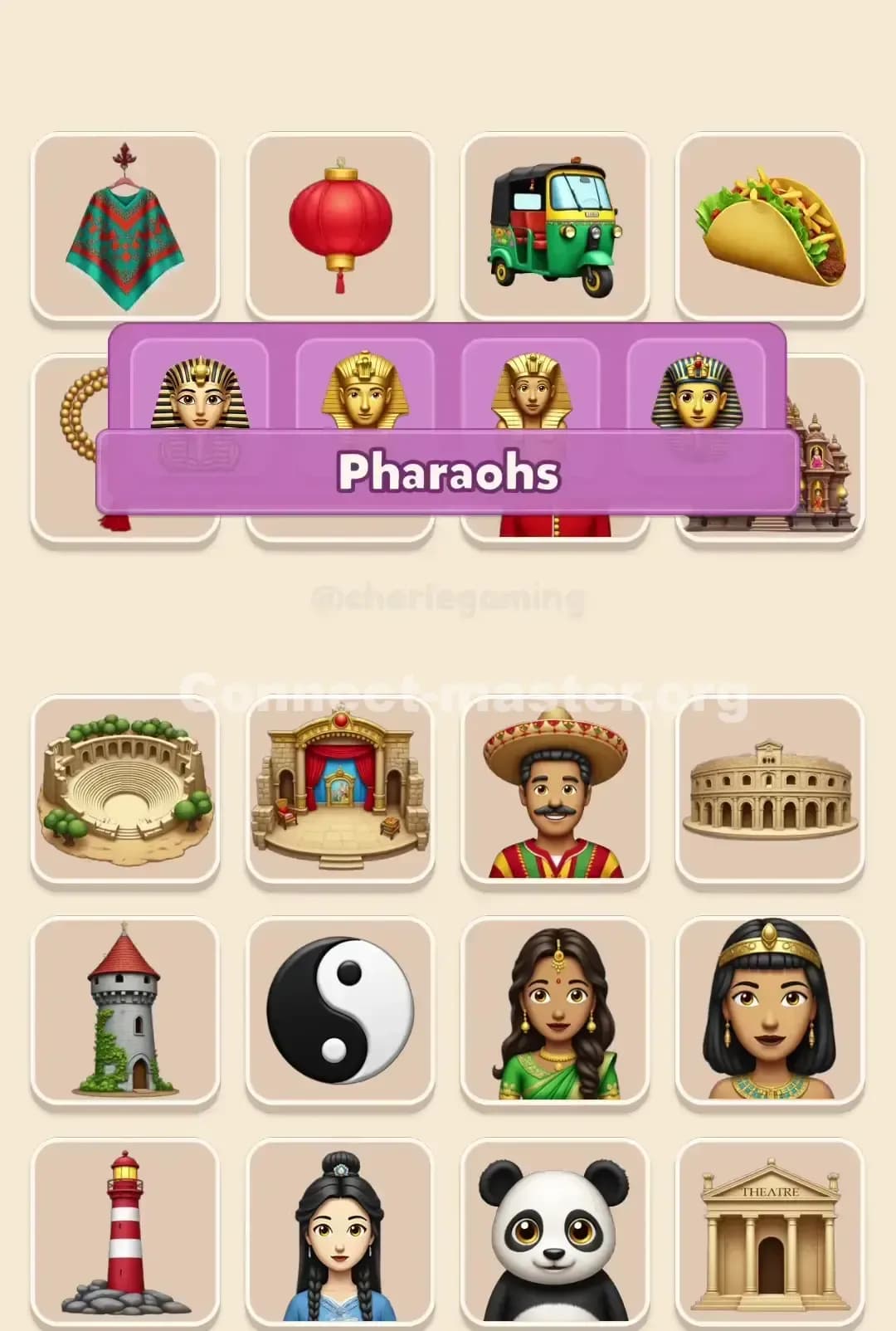
Connect Master Level 185 is all about exploring iconic cultures and architectural wonders from around the world. You're looking at 24 tiles spread across six distinct sets, each one celebrating a different region's signature style, people, food, and monuments. The puzzle mixes characters, traditional clothing, vehicles, food items, and towering structures—so there's plenty of visual variety to keep you on your toes.
The Six Sets Explained
Mexican Culture brings together the vibrant essence of Mexico: a turquoise poncho, a classic yellow sombrero, a golden taco, and a mustachioed man in traditional red and gold attire. These four tiles instantly evoke that unmistakable Mexican spirit.
Indian Culture celebrates South Asia with an auto-rickshaw (that iconic three-wheeled transport), a beaded prayer bracelet, an ornate temple building, and a woman with long dark hair wearing a green sari. Each tile represents a cornerstone of Indian life and tradition.
English Culture showcases Britain's charm through a full English breakfast with eggs and toast, a bright red telephone box, a double-decker red bus, and a guard in a red uniform with a black bearskin cap. These are the symbols everyone associates with England.
Towers strips away the cultural context and focuses purely on tall, vertical structures: a castle tower with a pointed roof, a modern TV transmission tower, a red-and-white striped lighthouse, and an ornate East Asian pagoda. Height and architectural prominence are what bind this group.
Ancient Egyptian Culture transports you to the land of pharaohs with a camel, a golden pyramid, a golden sarcophagus, and a woman wearing a golden headdress and kohl eyeliner. These tiles span transportation, tombs, burial practices, and Egyptian royalty.
Ancient Theatres rounds out the set with four different amphitheater and theatre styles: an ornate indoor theatre stage, a classical Greek temple-front theatre building, an open-air amphitheater, and the iconic Roman Colosseum. Each is a different architectural take on performance spaces from antiquity.
Why Connect Master Level 185 Feels So Tricky
The Confusing Culprit: Towers vs. Landmarks
The trickiest set in Connect Master Level 185 is Towers, and here's why: many of the items that belong to other cultural groups also happen to be tall. The temple in Indian Culture is a building. The theatre structures in Ancient Theatres are definitely landmarks. The question that trips people up is, "Does a tower have to be cultural, or can it just be a vertical structure?" The answer: Towers is purely structural. It's the only set that ignores culture entirely and focuses on one architectural trait—height and the form of a tower. Once you lock that idea in your head, the towers snap into place, and suddenly the cultural sets become much clearer.
Subtle Overlaps: The Decoration Trap
You might stare at the Indian Culture set and wonder, "Wait, is that pagoda a tower or an Indian building?" The pagoda is in the Towers set, not Indian Culture. What gives it away? Look at the context. The pagoda is shown in isolation as a pure architectural form, while the Indian temple in the Indian Culture set is ornately decorated and presented as a place of worship within a cultural framework. Similarly, the lighthouse could theoretically belong to English Culture (lighthouses are famously on British coasts), but it's grouped with Towers because it's the structural form that matters here, not the nationality.
The Sarcophagus and Sombrero Confusion
I needed to really study the Egyptian set versus the Mexican set because both include metallic, ornate objects. The sombrero is yellow and sits on someone's head; it's a garment accessory. The sarcophagus is a burial box—it's a funerary object. Once you separate "things you wear or hold as cultural dress" from "things that serve a functional purpose in a different culture," the puzzle clicks. This is where zooming in mentally on each tile's purpose, not just its appearance, saves you.
Step-by-Step Solution for Connect Master Level 185
Opening: Lock in the Most Obvious Sets First
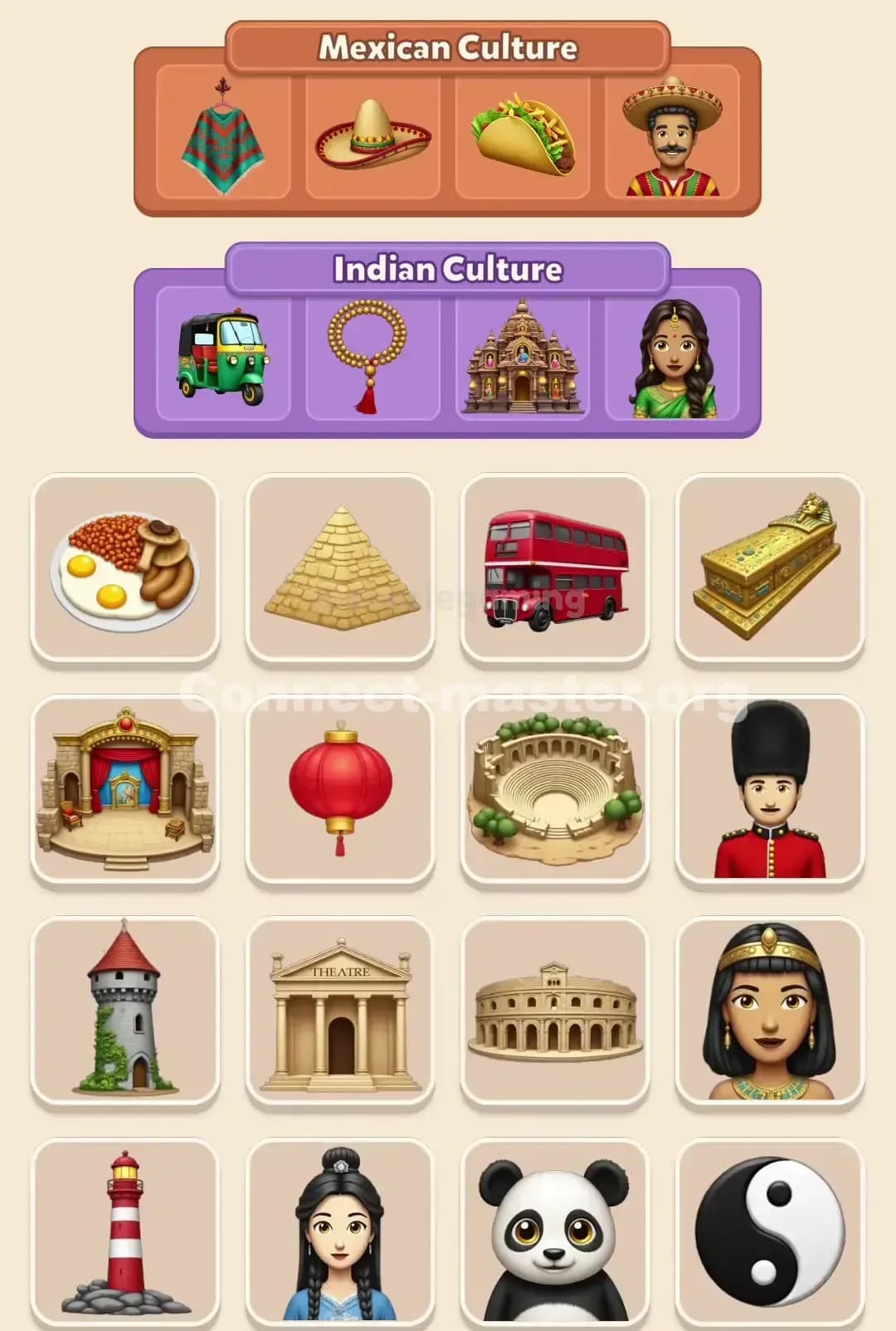
Start with Mexican Culture. All four tiles are instantly recognizable: the poncho, sombrero, taco, and the man. There's zero ambiguity here, and locking it in gives you breathing room. Next, tackle English Culture—the red telephone box, double-decker bus, English breakfast, and guard are all iconic British symbols that won't appear anywhere else.
These two rapid wins do something crucial: they remove eight tiles from the board and prove that some sets are purely cultural. This success builds your confidence and establishes a mental pattern: "When I see four things from the same country, they go together."
Mid-Game: Process of Elimination and Detail Spotting
Now things get tighter. Look at Indian Culture next. The auto-rickshaw is unmistakably Indian—you don't see those vehicles anywhere else on this board. Once that locks in, the temple, prayer beads, and woman in the sari follow naturally. You've now claimed 12 tiles and removed the "culture" variable from most of your remaining choices.
Here's where you need to slow down. You've got six tiles left from the cultural sets... wait, no. You have 12 tiles left, and some of them are not cultural at all. That's when you should separate your visual field. Group all the buildings and structures in one mental pile, and all the other items in another. You'll notice four unmistakable towers: the castle tower, TV tower, lighthouse, and pagoda. Lock Towers immediately.
End-Game: Ancient Egypt and Ancient Theatres
You're down to eight tiles, and this is where patience pays off. Ancient Egyptian Culture is relatively easy to spot once you've eliminated the architecture-only categories. The camel is the "odd one out" visually, but it's the Egyptian transport animal. Pair it with the pyramid (monument), sarcophagus (burial), and the Egyptian woman, and you've got your fourth set.
The final four tiles are all Ancient Theatres. Even if you initially thought one of them might belong elsewhere, process of elimination makes it certain. You've got an indoor theatre with a stage, a Greek temple-facade theatre, an open-air amphitheater, and the Colosseum. They represent different styles and regions of ancient theatre architecture, but they're united by their single purpose: performance spaces.
The Logic Behind This Connect Master Level 185 Solution
From Obvious to Invisible: The Pattern-Recognition Funnel
The genius of Connect Master Level 185 is that it teaches you to move from obvious categorical groupings (culture, region, nationality) to invisible structural ones (a set based purely on height and form). You start by thinking, "What country is this from?" By the end, you're thinking, "What is the true function of this object, beyond its cultural association?"
This funnel works because your brain naturally gravitates toward what's easiest. Culture is obvious. But once you've claimed the easy wins, you have to zoom in on the remaining tiles and ask harder questions: "Is this a theatre because it's in a play, or because of its architectural role?" "Is this a tower because it's tall, or because it's culturally significant?" The answer always lies in comparing what remains.
Naming Your Sets: The Anti-Confusion Shield
Throughout Connect Master Level 185, I found that giving each set a short, descriptive name—not just a vague category—kept my brain from mixing them up. Instead of thinking "buildings," I thought "Towers." Instead of "structures," I thought "Ancient Theatres." This specificity is crucial because ambiguity is your enemy in puzzles like this. Once you've named a set and claimed your four tiles, that name becomes a lock. You won't accidentally try to swap a tile back and forth or second-guess yourself as much.
By the time you finish Connect Master Level 185, you'll realize that every single tile fits into exactly one group, and the overlaps that seemed so confusing at the start were actually just distractions. The logic was always there—you just needed to look deeper than the surface.