Connect Master Level 674 Solution Walkthrough & Answer
How to solve Connect Master level 674? Get instant solution & answer for Connect Master 674.
Connect Master Level 674 Pattern Overview
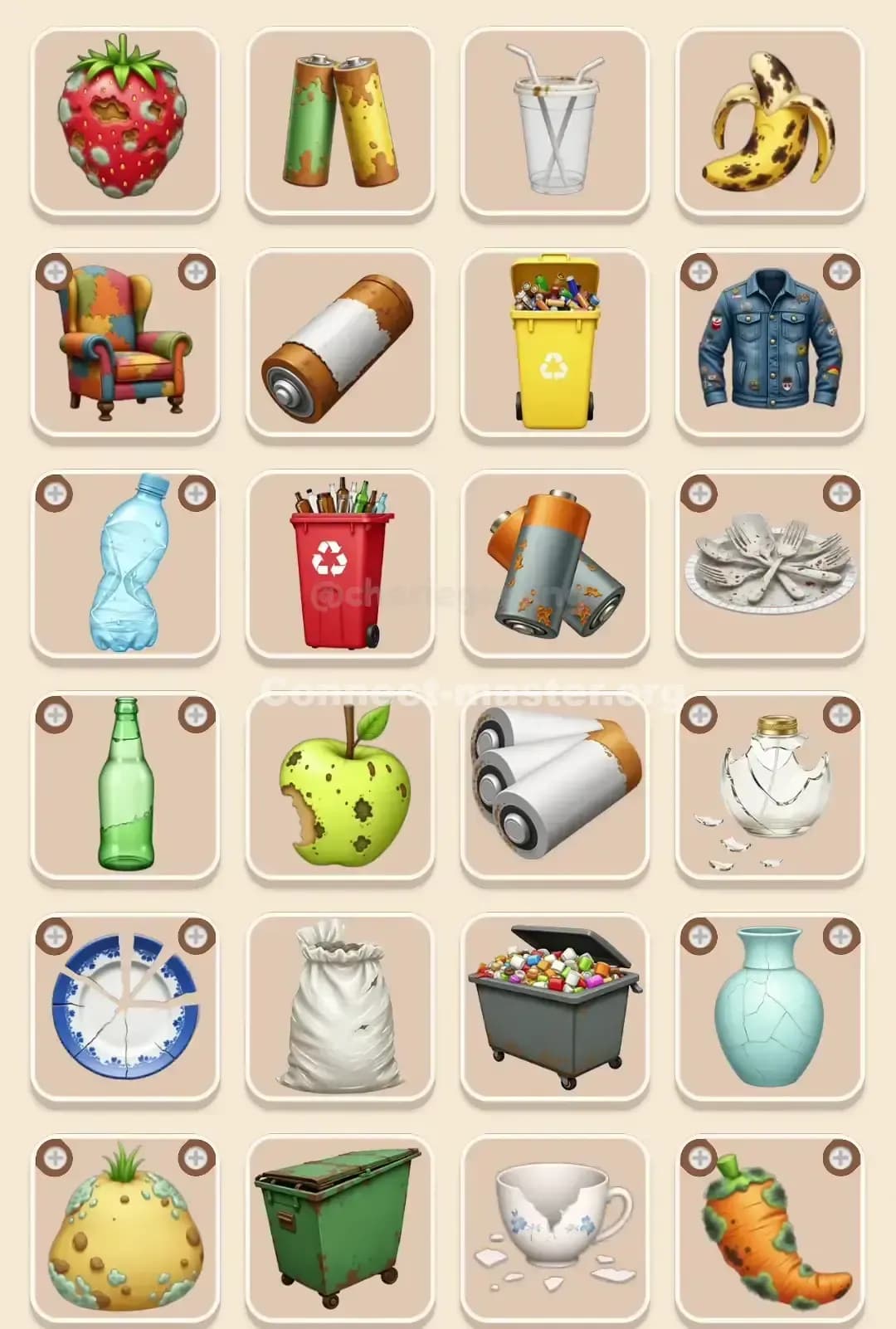
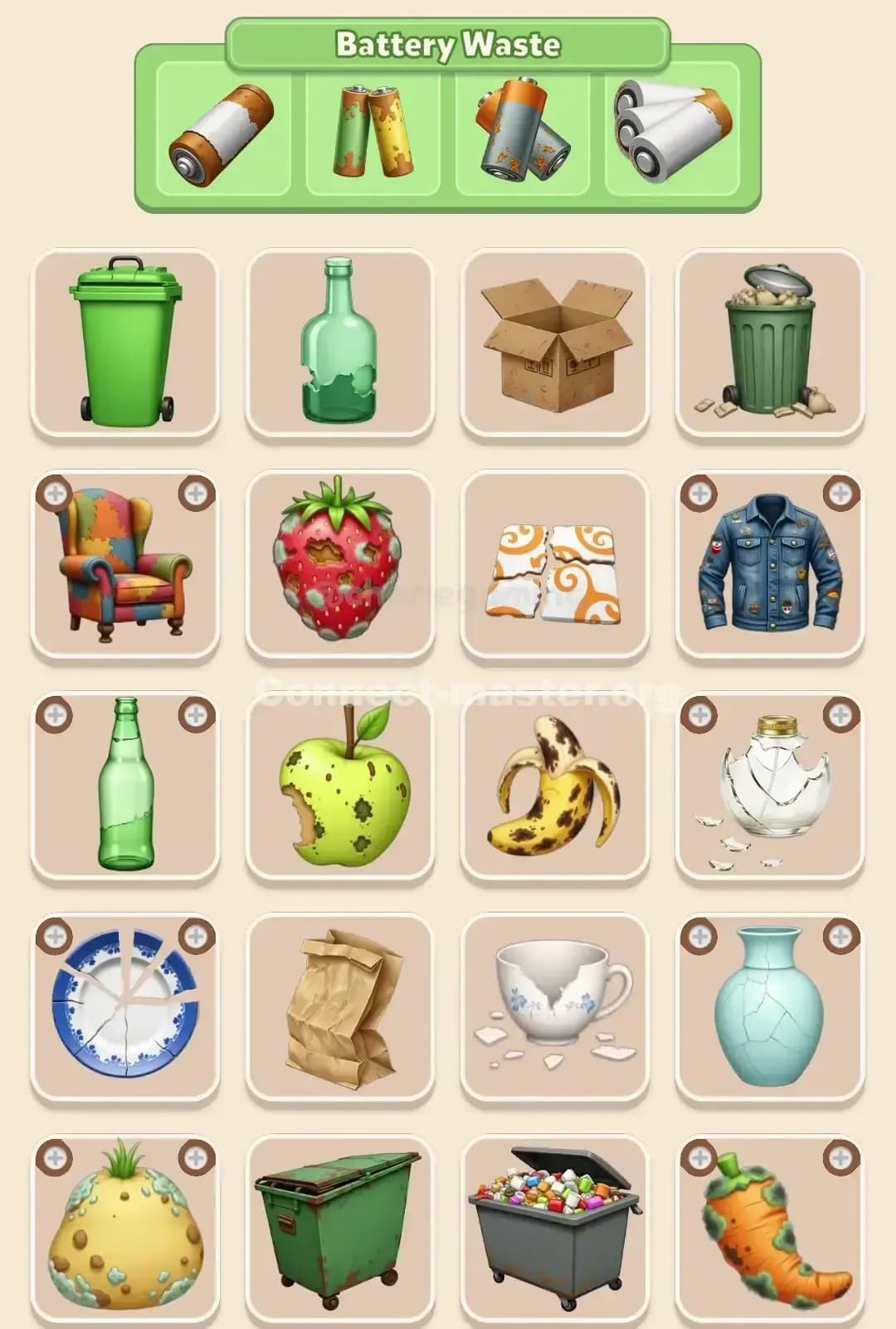
Connect Master Level 674 is a waste-sorting puzzle that challenges you to organize 16 tiles into four distinct recycling and disposal categories. The board mixes everyday household items—from batteries and glass bottles to rotting produce and cardboard boxes—each representing a different waste stream. What makes Connect Master 674 interesting is that it forces you to think beyond surface-level similarities and dig into the specific type of waste each item represents.
The Six Sets of Connect Master Level 674
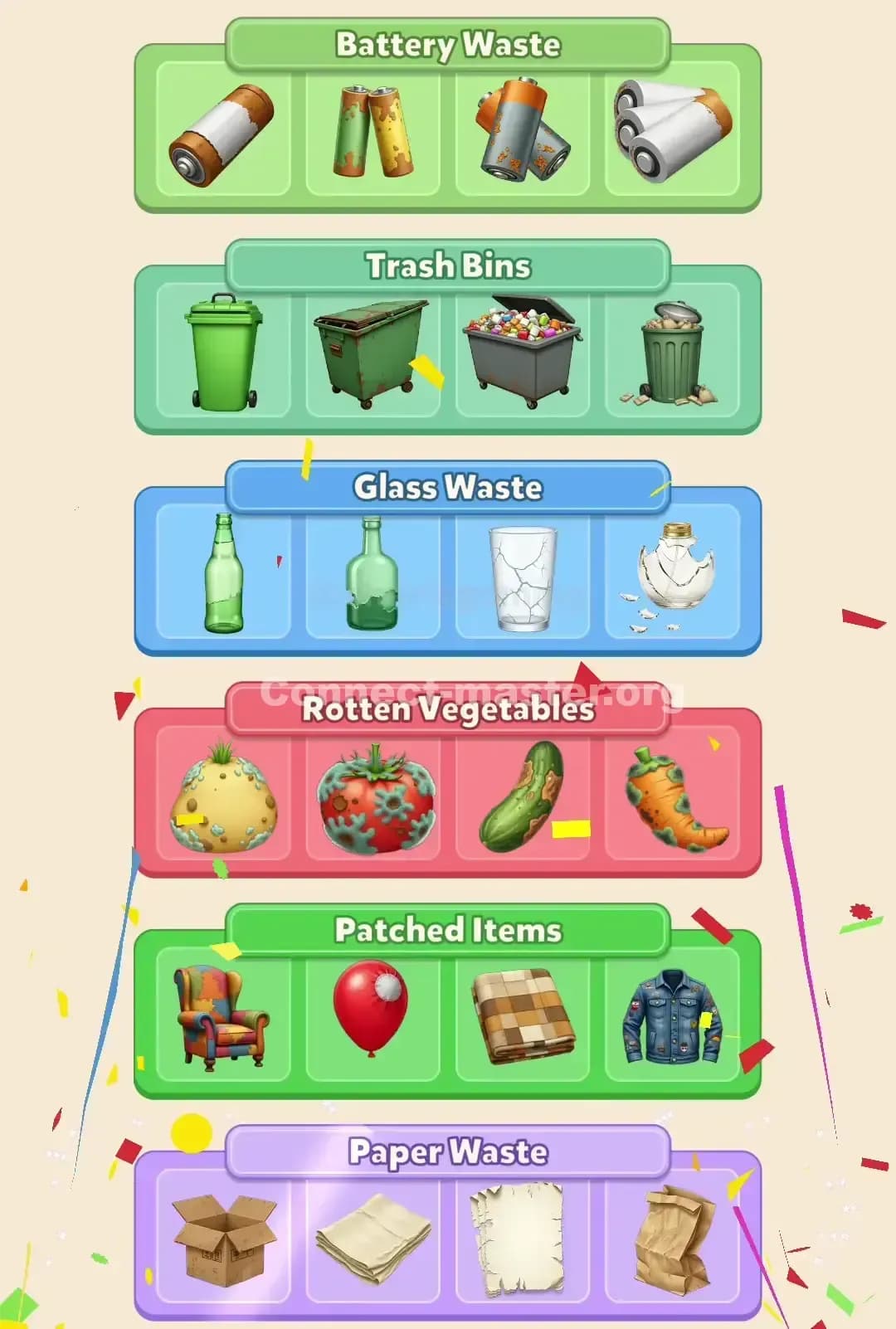
The solution breaks down into these four core categories:
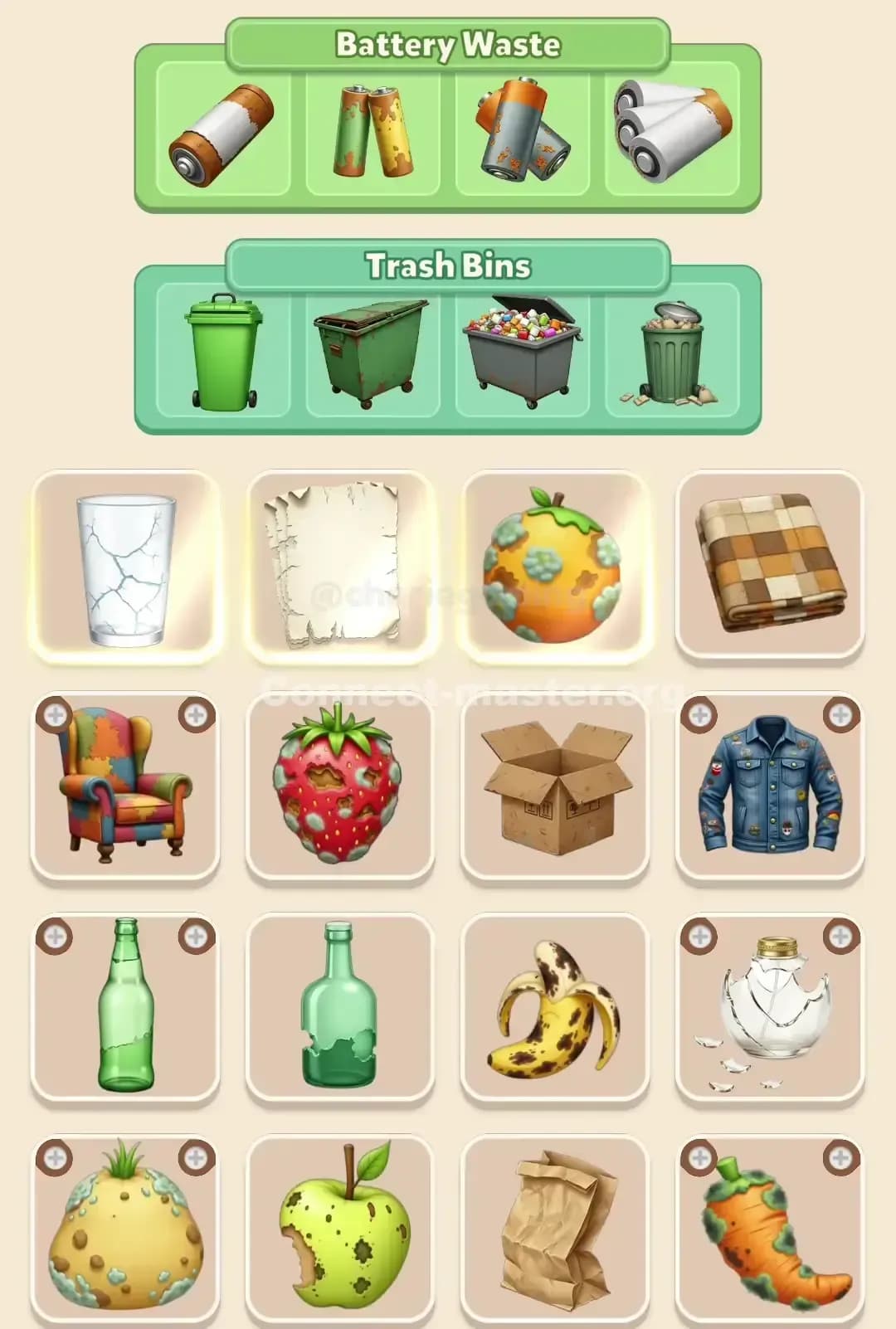
Battery Waste groups four different battery types: a single AA battery, a pair of alkaline batteries, a pair of cylindrical batteries, and a roll of batteries. They're all power sources, but the trick is recognizing that each tile shows a distinct battery configuration.
Trash Bins collects four different waste containers: a green wheeled bin, a green dumpster, a black bin filled with colorful waste, and a green metal trash can. These aren't the waste itself—they're the vessels designed to hold it.
Glass Waste brings together four items made of or containing glass: a green beer bottle, a darker green wine bottle, a broken glass cup, and a shattered decorative vase. The common thread is fragile, recyclable glass in various states of damage.
Rotten Vegetables pairs four pieces of spoiled produce: a moldy pineapple, a diseased tomato, a spotted banana, and a decaying carrot. Each shows visible signs of rot, mold, or decay—they're all organic waste past its prime.
Patched Items features four objects with visible repairs or patches: a colorful patchwork armchair, a red balloon with a white patch, a brown checkered blanket, and a denim jacket with yellow patches. The unifying trait is that each has been mended or decorated with contrasting material.
Paper Waste rounds out the puzzle with four paper-based items: a cardboard box, a stack of papers, a crumpled sheet, and a brown paper bag. They're all recyclable paper products in different forms.
Why Connect Master Level 674 Feels So Tricky
The Deceptive Trash Bins Set
The trickiest set in Connect Master 674 is honestly the Trash Bins category. Most players expect the puzzle to focus on the waste itself—the batteries, glass, and vegetables—so they overlook that four of the tiles are actually containers rather than contents. I nearly fell into that trap myself. The green wheeled bin and green metal trash can look so similar that you might assume they belong together with other green items, but the real connection is that all four are designed to hold waste, not be waste themselves.
Subtle Overlaps That Cause Confusion
The Rotten Vegetables and Patched Items sets sit dangerously close in logic. A moldy pineapple and a diseased tomato both show discoloration and decay, but a patched balloon also has visible marks on its surface. The key difference? The vegetables show natural deterioration and rot, while the patched items show intentional human repair or decoration. Look closely at the texture: rot is irregular and organic, while patches are geometric and applied.
Another overlap happens between Glass Waste and Paper Waste. A broken glass cup and a crumpled sheet both look damaged, but glass is rigid and shatters into sharp fragments, while paper crumples and tears. The broken cup has jagged edges and visible cracks; the crumpled sheet is soft and folded. That distinction matters.
The Battery Waste set also plays tricks because batteries come in pairs and singles. You might group "two batteries together" as one set, but Connect Master 674 wants you to recognize that each tile represents a different battery configuration—single, pair, cylindrical pair, and roll—all unified by being power sources, not by their quantity.
The "Aha!" Moment
I finally cracked Connect Master 674 when I stopped thinking about what items do and started thinking about what category they belong to. The puzzle isn't asking "what's broken?" or "what's green?" It's asking "what waste stream does this belong in?" Once I reframed the Trash Bins as a category about containers rather than contents, everything clicked into place.
Step-by-Step Solution for Connect Master Level 674
Opening: Lock In the Obvious Sets First
Start with Battery Waste. All four tiles are clearly power sources with distinct visual markers—a single battery, paired alkalines, paired cylinders, and a battery roll. There's minimal ambiguity here, so securing this set early removes four tiles and gives you momentum.
Next, tackle Glass Waste. The green beer bottle, wine bottle, broken cup, and shattered vase are all unmistakably glass. Even though some are intact and others are broken, the material is consistent. This set is visually distinct enough that you won't second-guess it.
Mid-Game: Use Process of Elimination
With eight tiles locked, you're left with eight tiles across four remaining categories. Now compare the Trash Bins against the Rotten Vegetables. The bins are containers—they have handles, wheels, or lids. The vegetables are organic matter showing decay. Separate these two groups by asking: "Is this something you put waste into, or is this the waste itself?" The green wheeled bin, dumpster, black bin, and metal trash can all answer "container." The pineapple, tomato, banana, and carrot all answer "waste."
End-Game: Nail the Final Two Sets
You're down to Patched Items and Paper Waste. This is where Connect Master 674 demands precision. The patched armchair, patched balloon, checkered blanket, and denim jacket all have visible repairs or decorative patches applied to them—they've been mended or customized. The cardboard box, paper stack, crumpled sheet, and paper bag are all paper products in their raw or used form. The distinction is intentional human modification (patches) versus natural paper products (waste). Look at the texture and construction: patches are sewn or glued on top; paper items are the material itself.
The Logic Behind This Connect Master Level 674 Solution
From Broad Traits to Specific Details
The winning strategy for Connect Master 674 is to start with the broadest categories—material type (glass, paper, batteries)—and then narrow down to more specific traits. Once you've locked in the obvious material-based sets, you shift your focus to functional categories (containers versus contents) and then to subtle visual markers (patches versus plain paper). This funnel approach prevents you from getting stuck comparing tiles that seem similar but belong to different sets.
Naming Each Set Keeps You Organized
Mentally labeling each group—Battery Waste, Trash Bins, Glass Waste, Rotten Vegetables, Patched Items, Paper Waste—is crucial for solving Connect Master 674 without confusion. When you have a name for each set, you're less likely to accidentally assign a tile to two groups or chase a false pattern. The name acts as a filter: if a tile doesn't fit the category's core trait, it doesn't belong, no matter how similar it looks to another tile in that group. This systematic approach transforms Connect Master 674 from a frustrating guessing game into a logical puzzle you can solve with confidence.