Connect Master Level 654 Solution Walkthrough & Answer
How to solve Connect Master level 654? Get instant solution & answer for Connect Master 654.
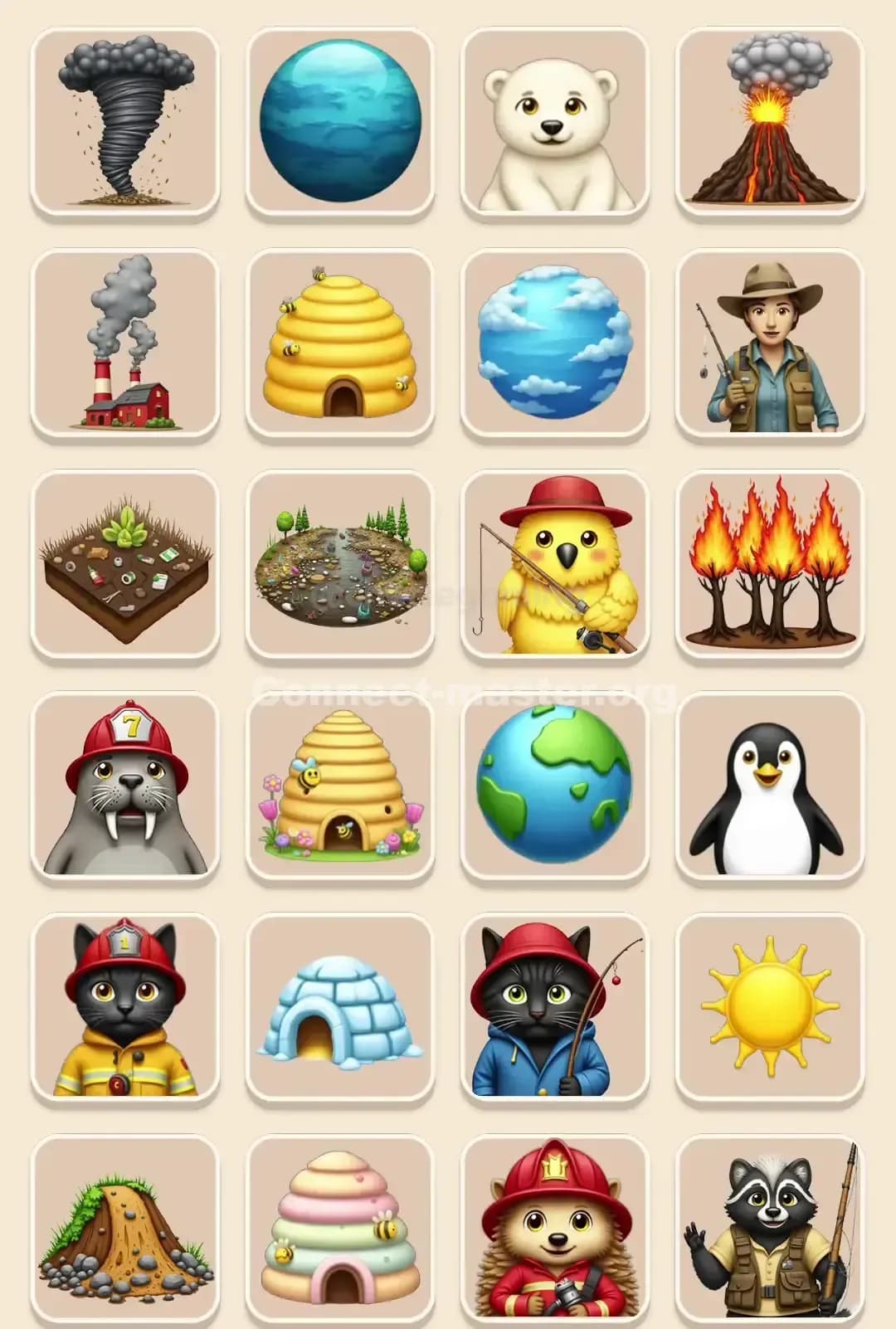
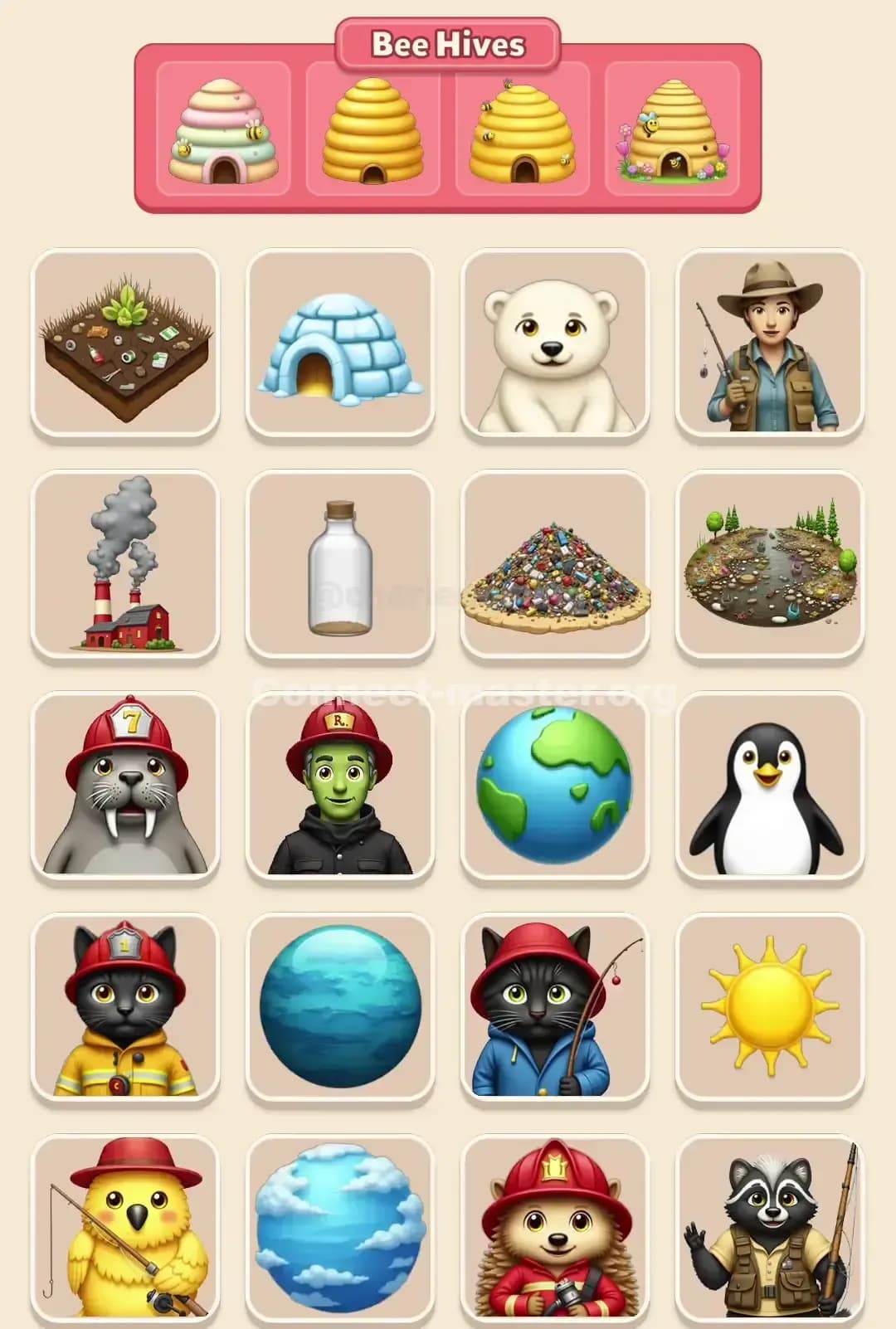
Connect Master Level 654 Pattern Overview
The Theme and Structure
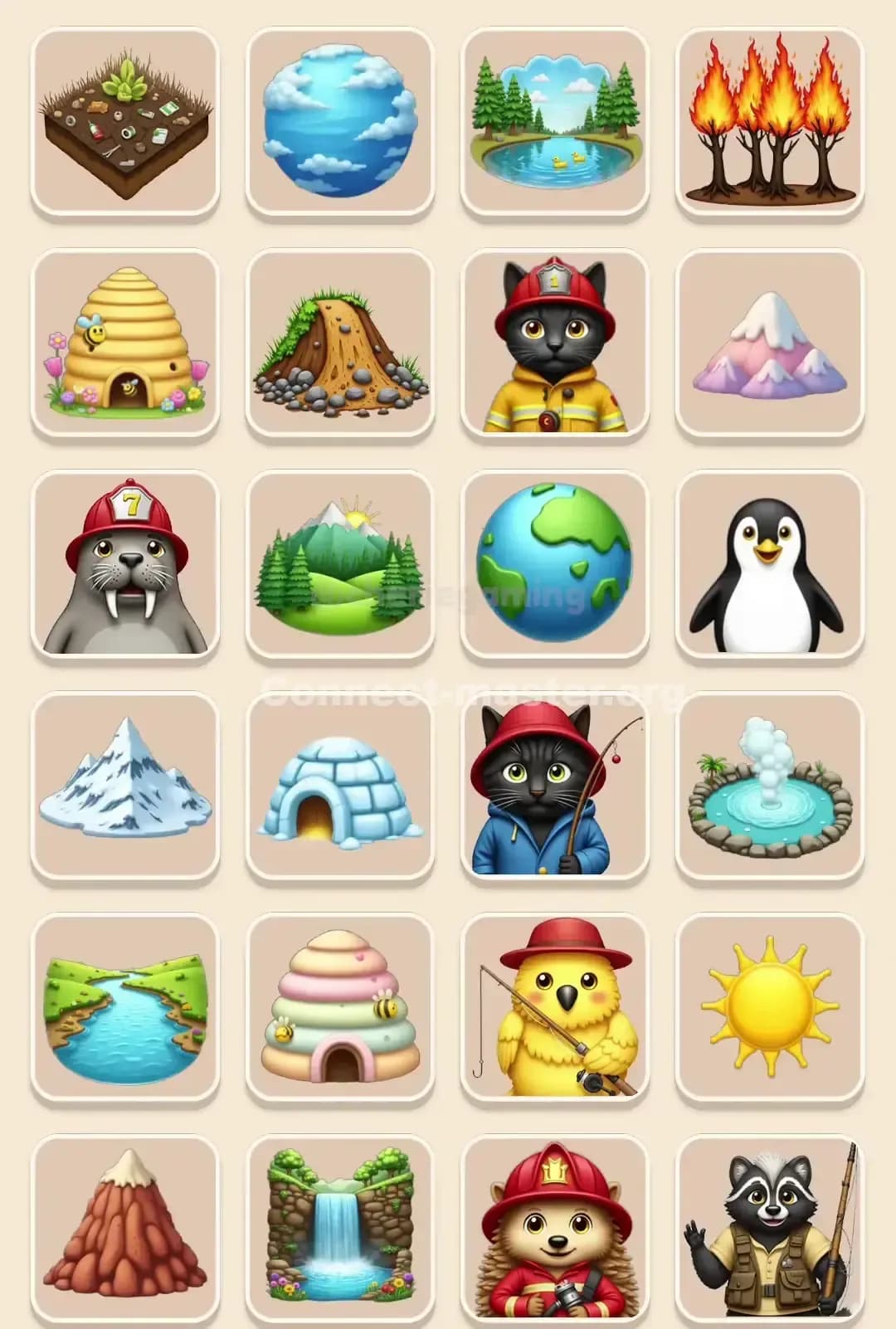
Connect Master Level 654 is an environmental and nature-themed puzzle that challenges you to spot connections across six distinct categories. You're working with 24 tiles total—exactly six sets of four—and the puzzle mixes natural disasters, wildlife, habitats, and planetary elements in a way that looks deceptively simple at first glance. The tiles range from cute animal characters to abstract planetary visuals, which means you'll need to shift your thinking between "what does this character represent?" and "what does this object symbolize?"
The Six Sets You'll Encounter
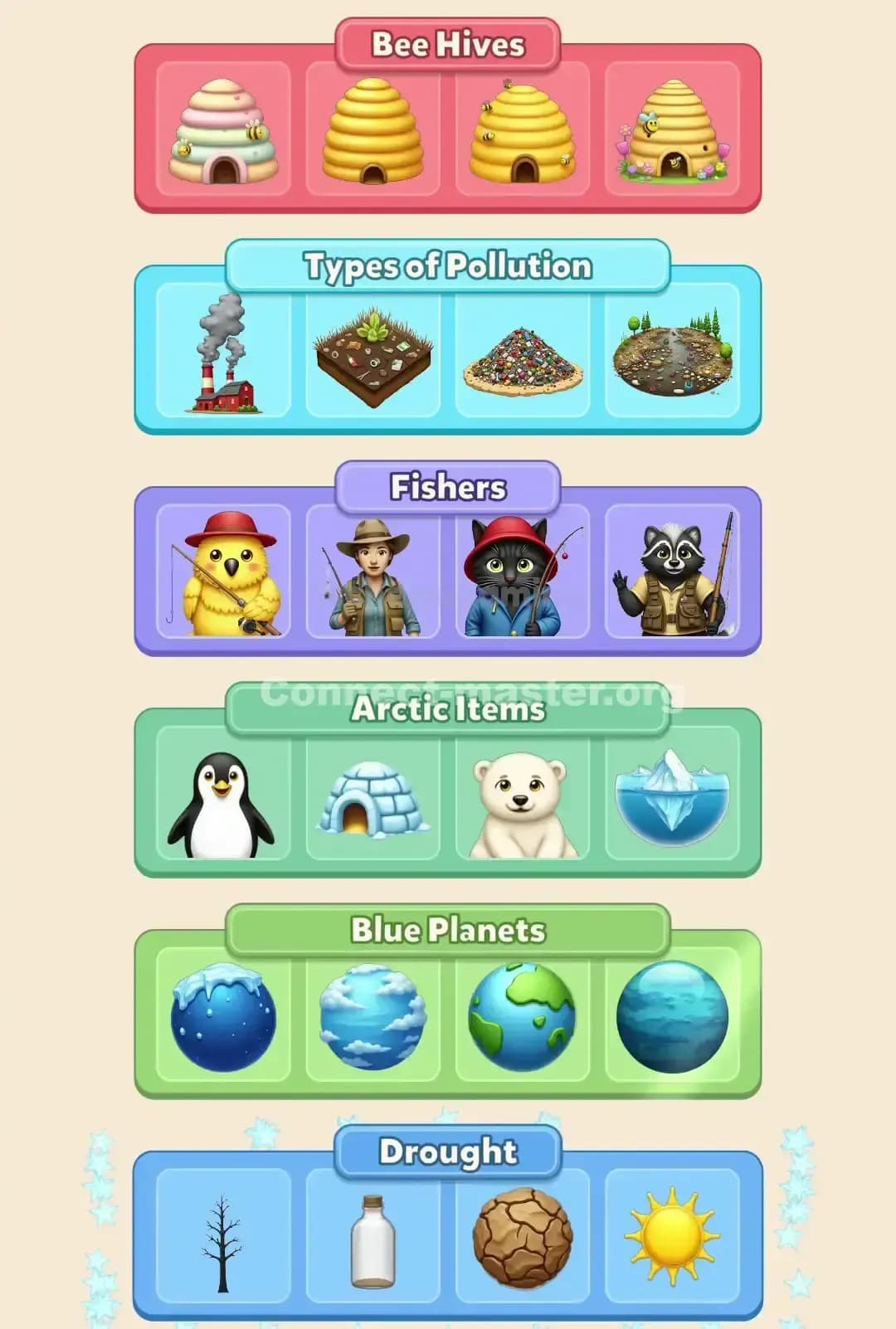
Bee Hives brings together four different hive structures, each with its own visual twist. Some are plain yellow, one's striped with pastel colors, and one has decorative flowers around it—but they're all unmistakably bee homes.
Types of Pollution groups four distinct pollution sources: factory smoke, soil contamination, garbage heap, and industrial waste. Each one represents a different way humans damage the environment.
Fishers collects four characters who all share the fishing profession. You've got a yellow bird fisher, a human in a cowboy hat, a cat in a red hat, and a raccoon—all holding fishing rods or gear.
Arctic Items pulls together creatures and structures from cold climates: a penguin, an igloo, a polar bear, and an iceberg. These are the iconic symbols of the frozen north.
Blue Planets features four spheres that all share a blue or blue-green color palette and represent different planetary or water-based visuals. They're distinct from each other but unified by their aquatic appearance.
Drought captures four symbols of water scarcity and environmental stress: a dead tree, a water bottle, a cracked earth sphere, and a blazing sun. Each one tells a story of dryness and depletion.
Why Connect Master Level 654 Feels So Tricky
The Confusing Set: Fishers
The Fishers category is where most players stumble. You've got a yellow bird, a human, a cat, and a raccoon—and at first glance, they don't look like they belong together at all. The human is realistic, the bird is cartoonish, the cat and raccoon are anthropomorphic. But here's the key: they're all holding fishing rods or fishing gear. The puzzle wants you to ignore appearance and focus on the action or profession they share. I needed two retries here before I realized the connection wasn't about species or style—it was purely about what they do.
The Subtle Overlaps
There's a sneaky overlap between Bee Hives and Arctic Items that'll trip you up. Both categories have structures with rounded, dome-like shapes. The igloo and some of the hives look superficially similar, but the difference is clear once you zoom in: hives have horizontal stripes or a honeycomb pattern, while the igloo is made of ice blocks. The color palette helps too—hives are warm yellows and pastels, while the igloo is icy blue.
Another tricky moment comes when you're comparing the Blue Planets to other round objects on the board. The polar bear and penguin might seem like they could fit with planetary themes because they're associated with cold, blue environments. But the planets are objects, not creatures. The polar bear belongs with Arctic Items because it's an animal that lives there, not because it's blue.
The third overlap worth watching: Drought symbols versus Types of Pollution. Both categories deal with environmental damage, and you might think the cracked earth sphere belongs with pollution. But pollution is about contamination sources, while drought is about water scarcity and heat stress. The cracked earth represents dryness, not pollution—that's your differentiator.
Step-by-Step Solution for Connect Master Level 654
Opening: Lock In the Obvious Ones First
Start with Bee Hives. This set is visually cohesive and unmistakable once you know what you're looking for. All four tiles are clearly hive structures, and there's no ambiguity. Locking this in immediately removes four tiles and gives you breathing room.
Next, tackle Blue Planets. These four spheres are distinct from everything else on the board—they're the only round, planetary-looking objects. Even though they have different cloud patterns and land masses, they're unified by their spherical shape and blue-dominant color scheme. This is another high-confidence set.
Arctic Items is your third quick win. The penguin, polar bear, igloo, and iceberg are iconic Arctic symbols. There's minimal overlap with other categories here, so grab it while you're building momentum.
Mid-Game: Process of Elimination
Now you're left with 12 tiles, and the remaining three sets are trickier. Focus on Types of Pollution next. You're looking for four distinct pollution sources: factory smoke (industrial), soil contamination (agricultural), garbage heap (waste), and industrial waste (environmental). These are all sources of pollution, not effects. Compare them carefully to the Drought set—the cracked earth in Drought is a result of environmental stress, not a pollution source itself.
With nine tiles left, Drought becomes clearer. You've got the dead tree (no water), the water bottle (scarcity), the cracked earth sphere (dryness), and the sun (heat). Each one symbolizes a different aspect of water shortage or extreme heat. The key detail: these are all symbols of scarcity, not sources of damage.
End-Game: The Fishers Reveal
You're down to four tiles, and they're all Fishers. This is where the puzzle's logic clicks into place. The yellow bird fisher, the human in the cowboy hat, the cat in the red hat, and the raccoon all have one thing in common: they're holding fishing rods or fishing gear. Ignore their appearance, their species, their outfit colors—focus on the action. They're all fishers, and that's the connection.
The Logic Behind This Connect Master Level 654 Solution
From Big Traits to Tiny Details
The winning strategy for Connect Master Level 654 is to start with broad, obvious visual categories and then zoom in on specific details. Begin by asking, "What's the most obvious thing these four tiles share?" For Bee Hives, it's the structure. For Blue Planets, it's the spherical shape and color. For Arctic Items, it's the cold-climate association.
Once you've locked in those high-confidence sets, you're left with tiles that require more nuanced thinking. That's when you shift to asking, "What's the specific trait that ties these four together?" For Fishers, it's the profession. For Pollution, it's the source type. For Drought, it's the symbol of scarcity. This layered approach prevents you from chasing false patterns and keeps you grounded in concrete visual or thematic details.
Naming Each Set Keeps You Organized
Here's a mental trick that works wonders: give each set a short, descriptive name in your head as you identify it. When you call them "Bee Hives," "Blue Planets," "Fishers," and so on, you're creating mental anchors that prevent double-counting or confusion. If you're staring at a tile and thinking, "Could this be a Fisher or an Arctic Item?" you can quickly reference your named categories and ask, "Does this tile have a fishing rod? No? Then it's not a Fisher." This systematic naming ensures every tile lands in exactly one set and nowhere else.
Connect Master Level 654 rewards patience and attention to detail. Take your time comparing small visual elements—the accessories, the colors, the shapes—and you'll crack it.