Connect Master Level 565 Solution Walkthrough & Answer
How to solve Connect Master level 565? Get instant solution & answer for Connect Master 565.
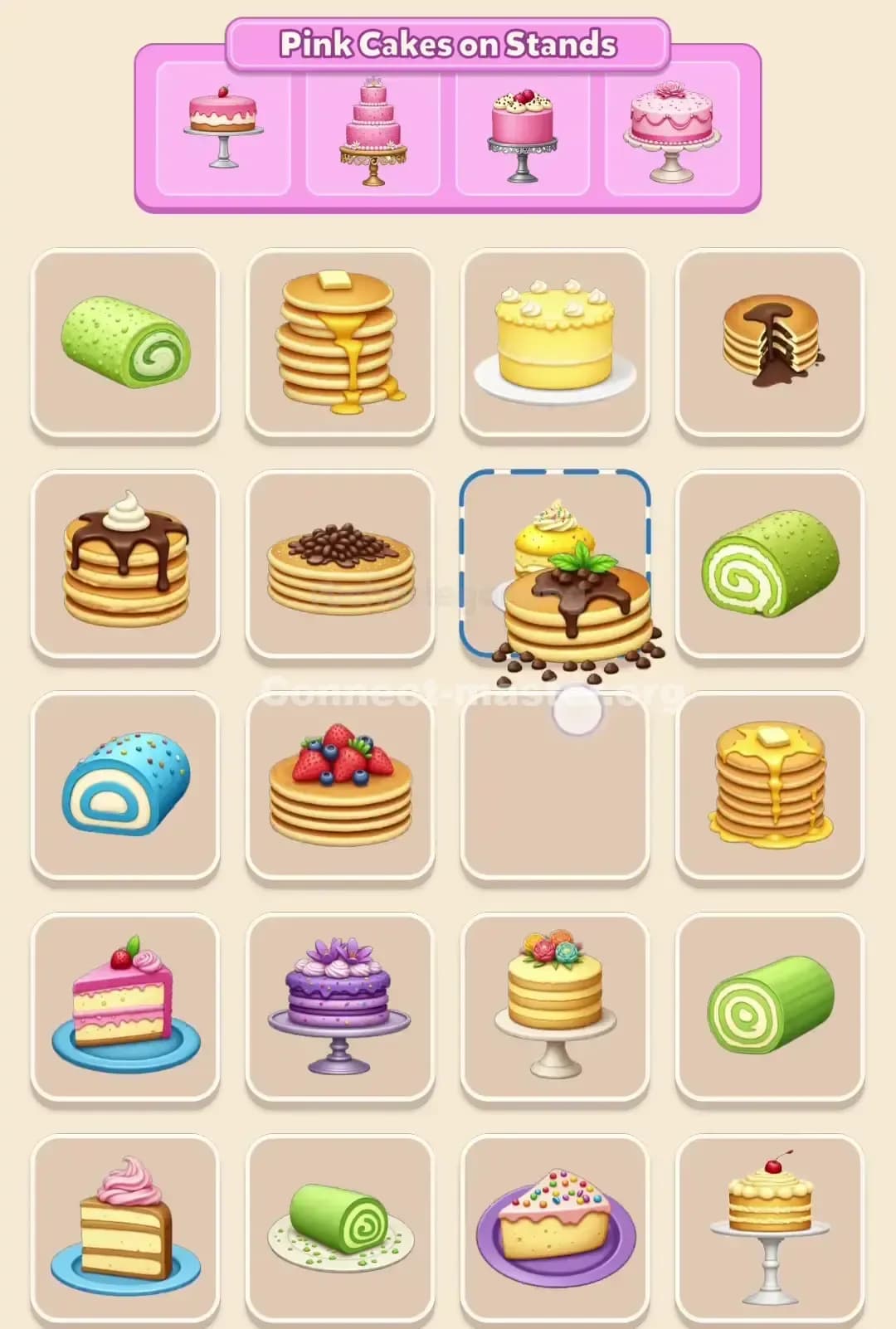

Connect Master Level 565 Pattern Overview
The Sweet Challenge Ahead
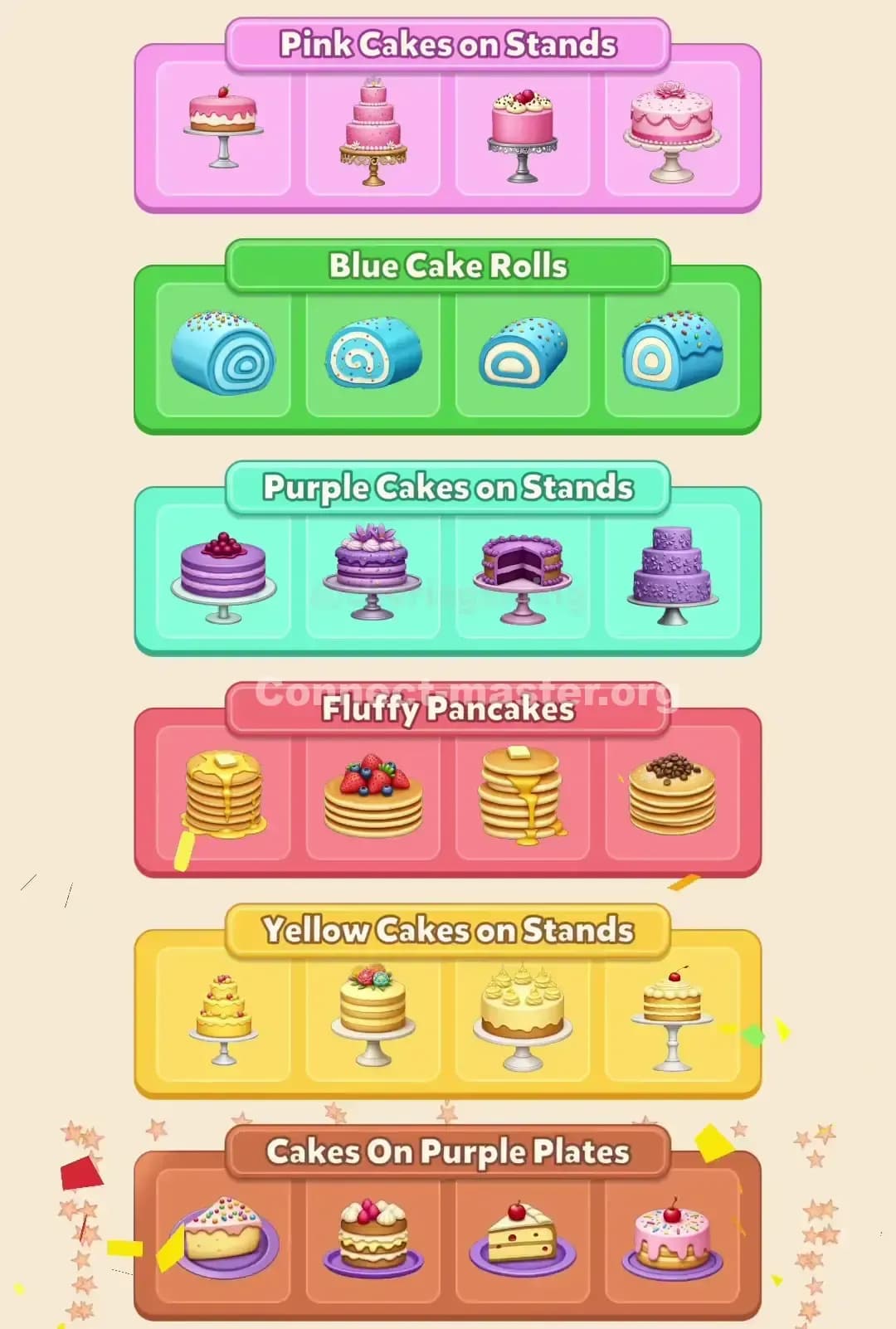
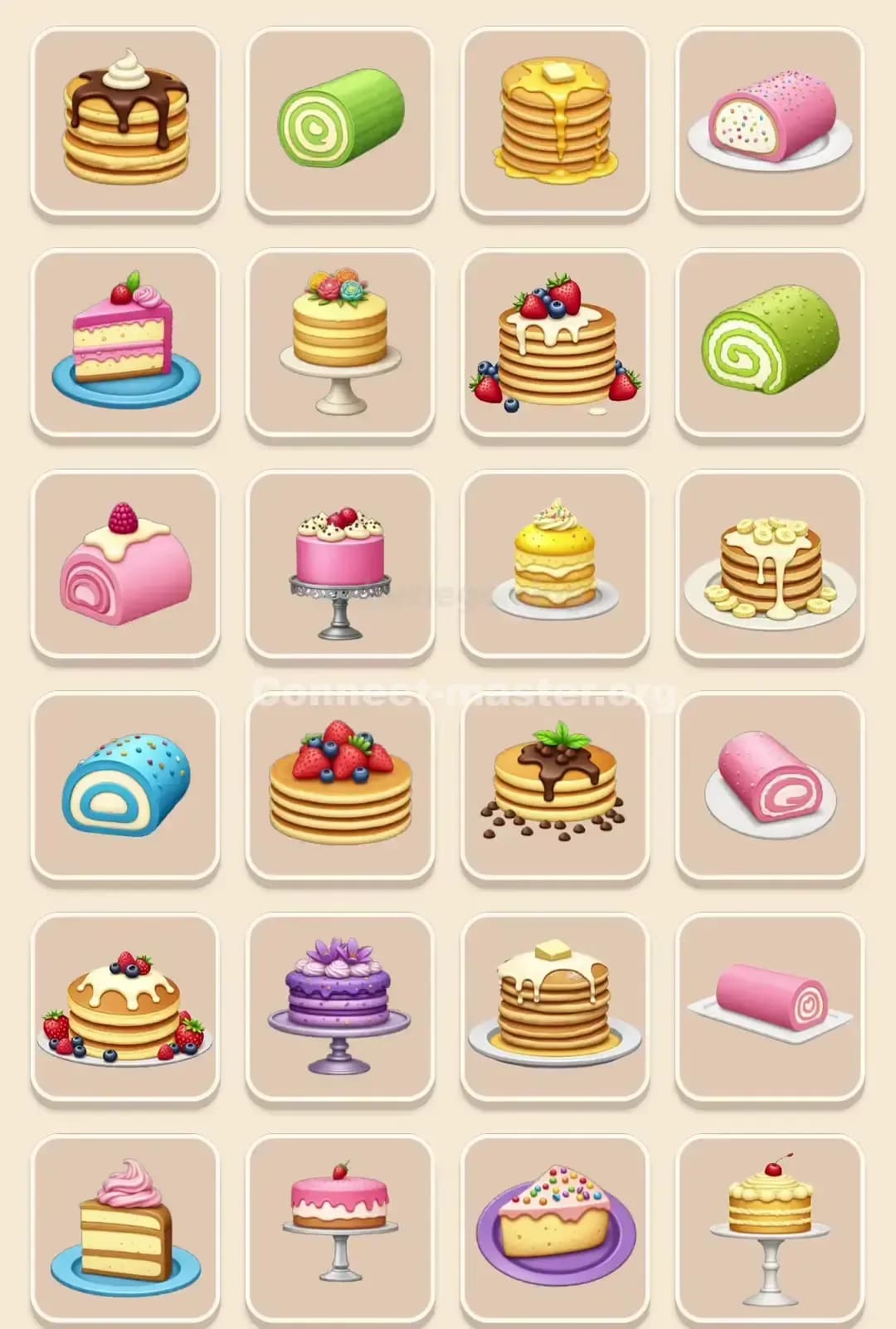
Connect Master Level 565 presents you with a delightful bakery-themed puzzle featuring 24 dessert tiles that need to be sorted into six distinct groups of four. This level revolves entirely around cakes, pastries, and sweet treats, but don't let the sugary theme fool you—the visual similarities between different dessert types make this one of the trickier levels you'll encounter. Each tile depicts a beautifully illustrated dessert with specific details that determine which group it belongs to, and you'll need to examine colors, presentation styles, and dessert types carefully to crack the code.
The Six Sweet Categories
Here's how Connect Master Level 565 breaks down into its six sets: Pink Cakes on Stands features four elegant pink-frosted cakes, each displayed on decorative cake pedestals. Blue Cake Rolls groups together four blue-colored rolled pastries with cream filling and various toppings. Purple Cakes on Stands showcases four purple-themed layer cakes, all presented on cake stands. Fluffy Pancakes brings together four stacks of golden pancakes with different toppings and syrups. Yellow Cakes on Stands contains four yellow or vanilla-colored cakes displayed on pedestals. Finally, Cakes on Purple Plates features four different cake slices and whole cakes that share the common trait of being served on purple dishware.
Why Connect Master Level 565 Feels So Tricky
The Purple Plate Predicament
The most confusing set in Connect Master 565 is definitely Cakes on Purple Plates. I initially overlooked this group because I was so focused on cake colors and types that I completely missed the plate detail. These four tiles don't share cake flavors or frosting colors—instead, they're united by the purple serving dishes beneath them. This category includes a slice of layered cake, a small round cake with cherry, a piece of cheesecake, and a decorated mini cake, all sitting on distinctly purple plates or platters.
Color Confusion and Stand Similarities
The biggest visual trap in Connect Master Level 565 comes from the overlap between cake colors and presentation styles. You'll notice that several pink cakes appear throughout the puzzle, but only four of them belong to the Pink Cakes on Stands group. The key difference lies in the stands themselves—some pink cakes sit on purple plates instead of cake pedestals, which puts them in an entirely different category. Similarly, the yellow and purple cake groups can trip you up because some cakes have multi-colored frosting that might include yellow or purple elements, but you need to focus on the dominant color scheme and the presence of proper cake stands.
My "Aha!" Moment
I needed two retries on Connect Master Level 565 before I realized I was overthinking the cake flavors and underthinking the presentation details. The breakthrough came when I stopped trying to categorize by dessert type (layer cake vs. bundt cake vs. cheesecake) and started paying attention to the serving method. Once I noticed that some cakes were on stands, others were on plates, and the pancakes were in their own category entirely, the whole puzzle clicked into place.
Step-by-Step Solution for Connect Master Level 565
Opening Moves: Lock in the Obvious
Start your Connect Master 565 solution by identifying the Blue Cake Rolls and Fluffy Pancakes groups first. These two categories are the most visually distinct and won't overlap with anything else on the board. The blue cake rolls are unmistakable with their spiral cream filling and blue coloring, while the pancake stacks have that characteristic golden, fluffy appearance with syrup and various toppings. Mentally setting these eight tiles aside immediately reduces your working set from 24 to 16 tiles, making the remaining categories much more manageable.
Mid-Game Strategy: Color and Context
With the obvious groups identified, focus on the three cake-on-stand categories: Pink Cakes on Stands, Purple Cakes on Stands, and Yellow Cakes on Stands. The trick here is to look at both the cake color and the stand presence simultaneously. Don't just grab every pink cake you see—make sure it's actually sitting on a decorative pedestal or cake stand. Some pink cakes in this level are served on purple plates, which puts them in the final category. Use process of elimination by comparing the stand styles and cake presentations to avoid mixing up these similar-looking groups.
End-Game Precision: The Purple Plate Solution
The final set, Cakes on Purple Plates, requires the most careful observation in Connect Master Level 565. These four tiles feature completely different cake types—you might see a slice of chocolate layer cake, a small frosted cake with a cherry, a piece of cheesecake, and a decorated petit four. What unites them isn't the cake itself but the purple serving dish underneath. Look for that distinctive purple color in the plates, platters, or serving dishes to identify this tricky final group.
The Logic Behind This Connect Master Level 565 Solution
From Broad Categories to Specific Details
The key to mastering Connect Master 565 lies in working from the most obvious visual differences down to the subtle details. By starting with dessert types that can't be confused (cake rolls vs. pancakes), you eliminate the easiest tiles first and create mental space to focus on the trickier distinctions. This systematic approach prevents you from getting overwhelmed by the visual similarities between different cake presentations and keeps you from second-guessing your initial observations.
Naming Strategy for Mental Organization
I've found that giving each group a descriptive name—like Purple Cakes on Stands rather than just "purple group"—helps maintain clarity throughout the solving process. When you name each category based on its defining trait, you're less likely to accidentally place a tile in the wrong group or forget what makes each set unique. This naming system also helps you double-check your work by ensuring every tile genuinely matches its group's specific criteria, preventing those frustrating moments where you realize you've used the same tile in multiple mental categories.