Connect Master Level 76 Solution Walkthrough & Answer
How to solve Connect Master level 76? Get instant solution & answer for Connect Master 76.
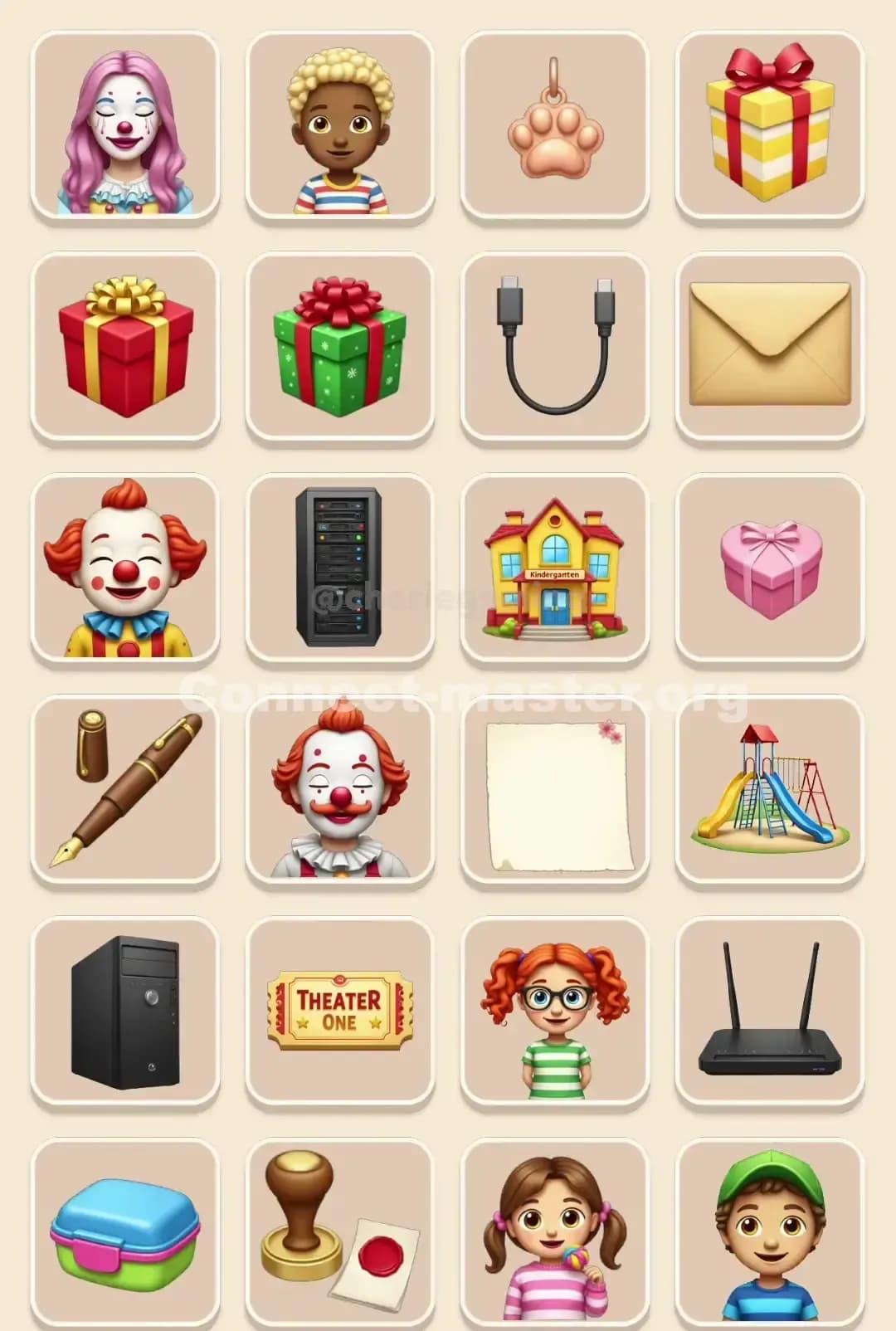
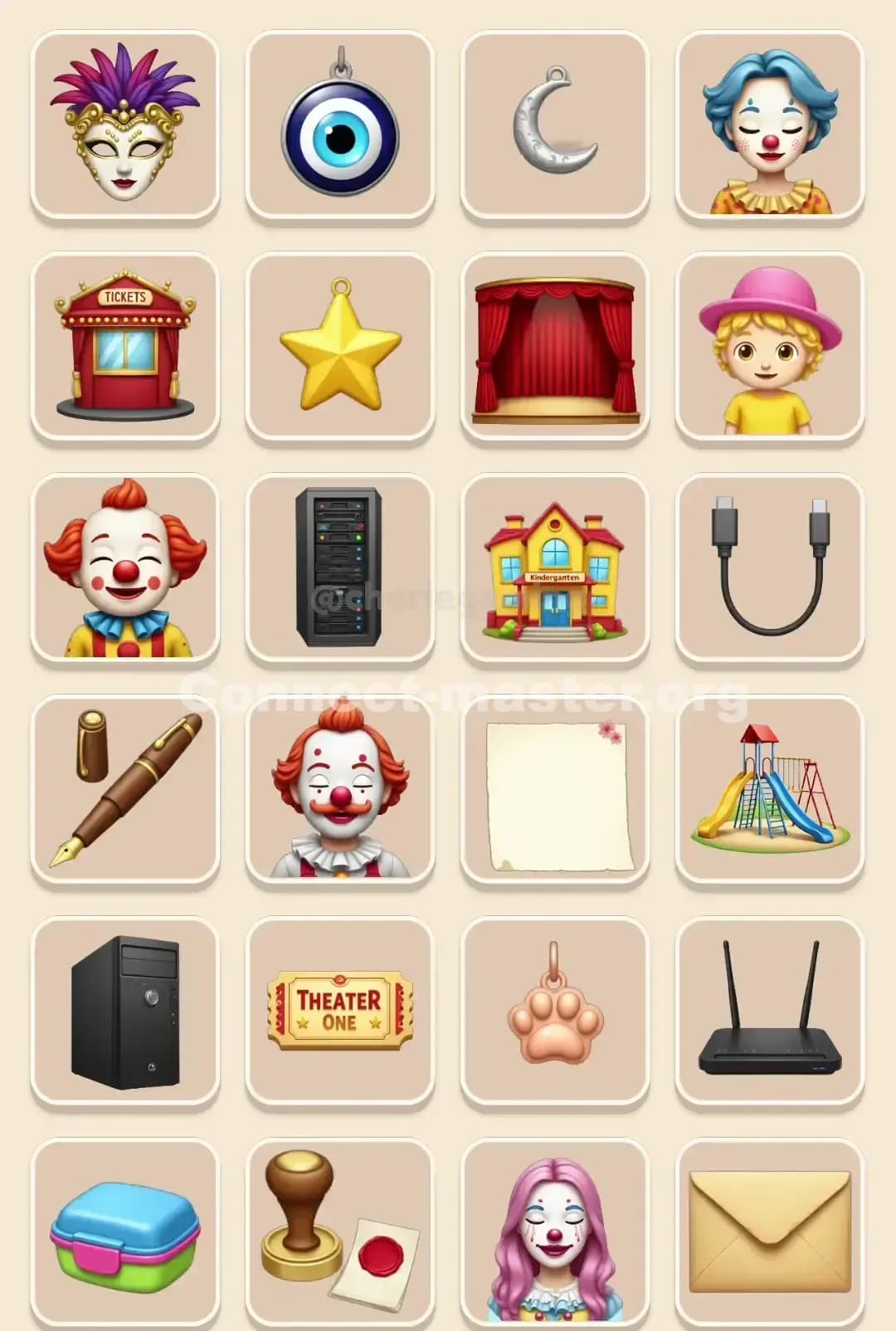
Connect Master Level 76 Pattern Overview
Connect Master Level 76 throws together a fascinating mix of characters and objects that span everything from theater props to computer equipment. You're looking at six distinct sets of four tiles each, and the variety here is what makes the puzzle both fun and deceptively challenging. The board features clowns in various states of expression, magical accessories, office supplies, playground elements, stage-related items, and tech components. At first glance, it feels scattered—but once you identify the core logic of each category, the solution clicks into place.
The Six Core Categories
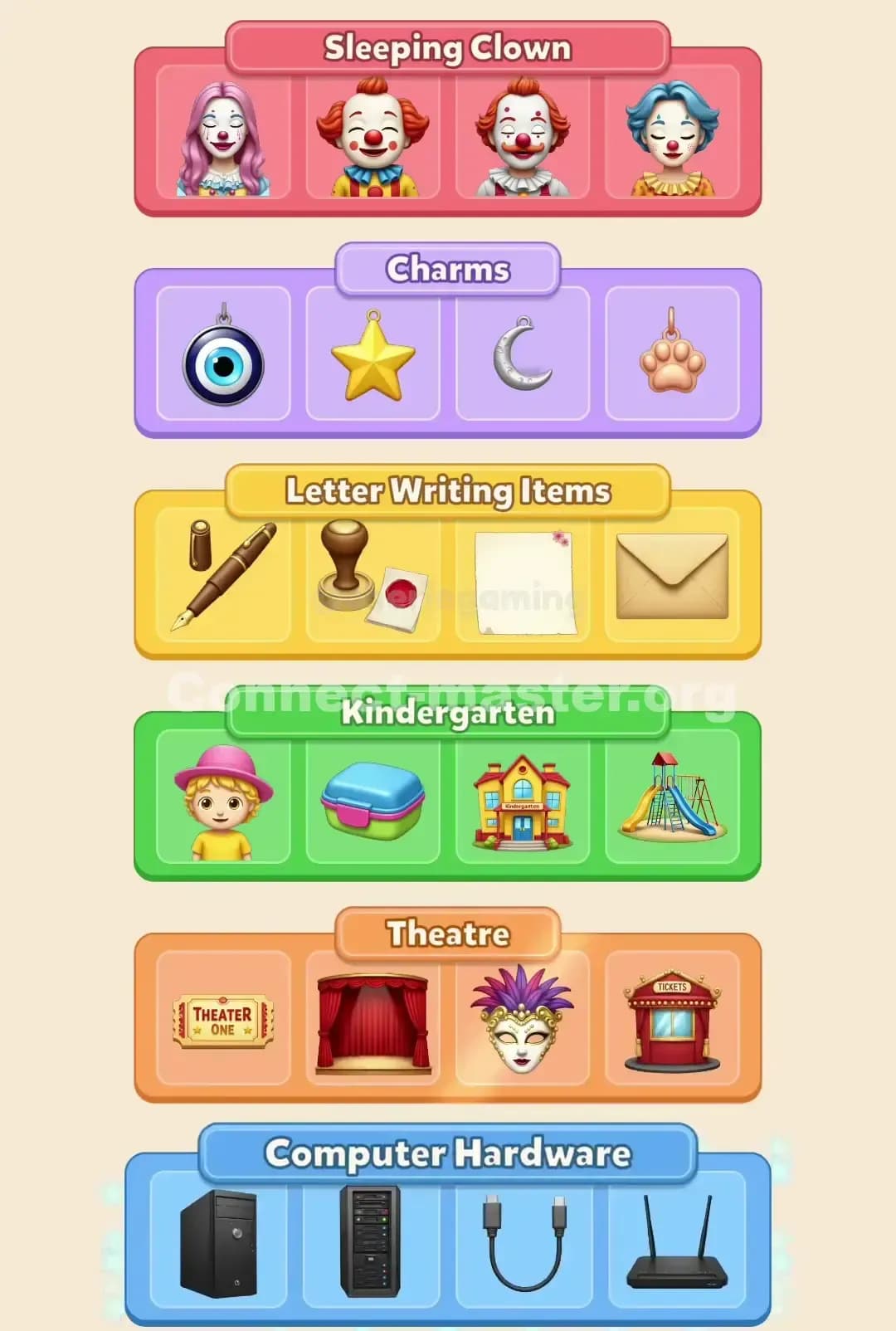
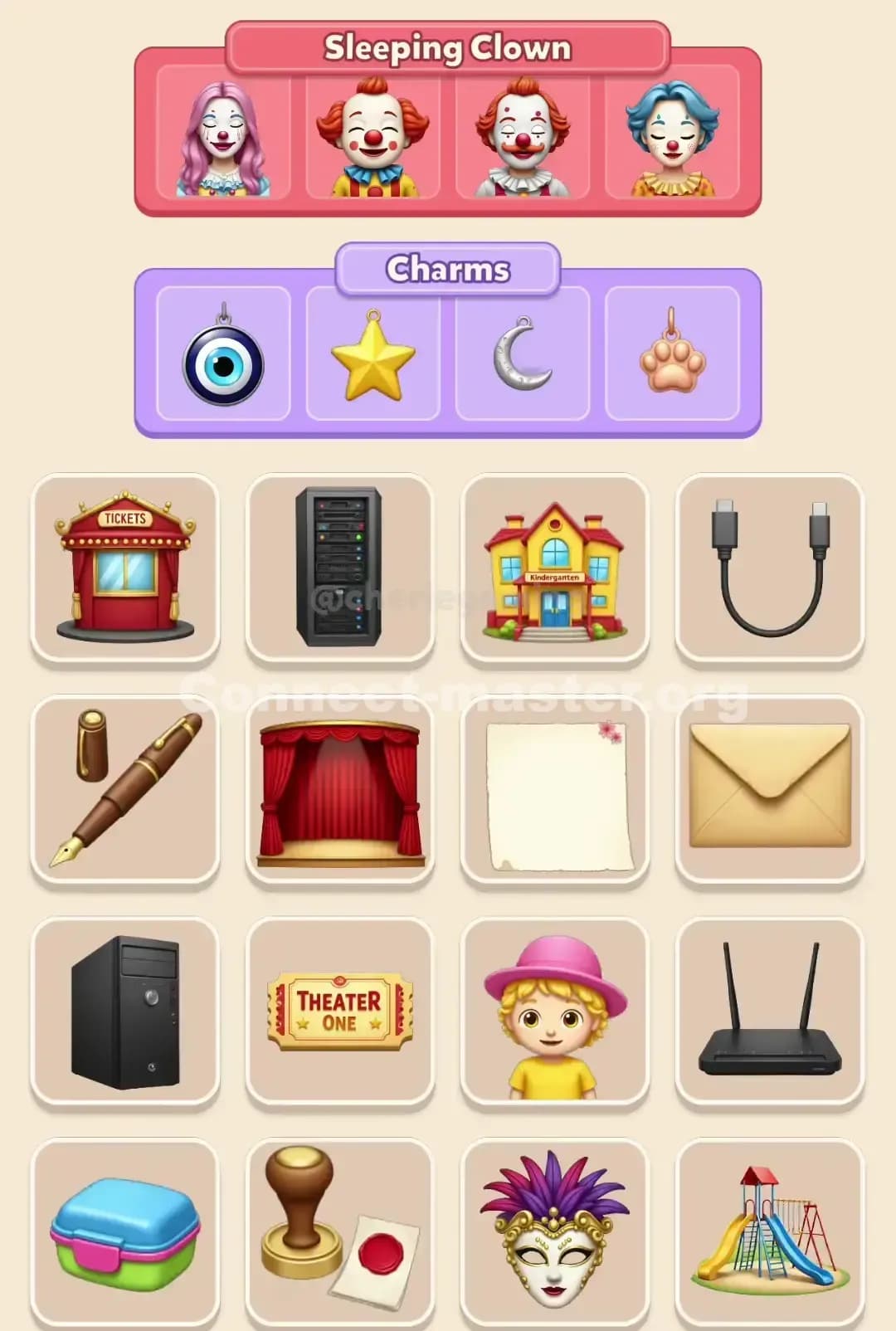
Sleeping Clown features four clown characters with closed or sleepy eyes and peaceful expressions, regardless of hair color or outfit details. Charms groups together small, decorative pendant-style accessories (an eye charm, a star, a moon, and a paw print) that all dangle on strings. Letter Writing Items contains the tools and materials you'd use to compose correspondence: a pen, a stamp, a blank letter, and an envelope. Kindergarten brings together everything you'd find at a children's school or playground: a kid wearing a hat, a lunch box, a schoolhouse, and a playground slide. Theatre unites stage and performance elements: a theater ticket stub, a red velvet curtain, a masquerade mask with purple feathers, and a ticket booth window. Computer Hardware pairs up the tech equipment you'd use to build or maintain a desktop system: a tower case, a server unit, a USB cable, and a wireless router.
Why Connect Master Level 76 Feels So Tricky
The Confusing Heart: Clown Expressions
The Sleeping Clown set is where most players stumble. You'll notice there are clowns everywhere on the board, and not all of them are sleeping. The trick is that you must focus exclusively on the closed-eye, peaceful expression—not just "any clown." One clown has reddish hair and a huge grin with eyes wide open; that one doesn't belong. Another clown has blue hair and a smiling face. The key detail you can't miss is that the four tiles in the Sleeping Clown set all have their eyes closed or nearly shut, giving them a serene, resting appearance. I found myself initially grouping clowns by hair color or outfit color, which sent me down a dead end. The moment I zeroed in on eye state, everything aligned.
Subtle Overlaps and How to Spot the Difference
Charms vs. other small objects is your second major pitfall. The charm set looks like it could include random tiny items, but charms are specifically pendants with hooks or loops—they're meant to hang from something. A stamp, by contrast, is flat and rectangular, designed for pressing onto paper. The paw print is a round charm with a loop; the star is a hanging charm with a point at the top. Once you see them as "things that dangle," they separate cleanly from office supplies.
Another sneaky overlap happens between Letter Writing Items and Theatre elements. Both categories can include ornate, decorative objects. The stamp might look theatrical because it's got a nice wooden handle, and the theater ticket might seem like it could be "written on." But the stamp is fundamentally a postal tool—it applies ink to letters. The ticket is fundamentally a theater item—it grants entry to a show. That functional difference is what saves you from mis-grouping.
Personal Breakthrough Moment
I'll be honest: I needed two retries before the Kindergarten set clicked. I kept trying to force the lunch box into a "school supplies" category alongside the letter-writing items, but the lunch box is specifically a child's item used for carrying food—it belongs with playground and schoolhouse imagery. Once I reframed my thinking from "office and school" to "literal kindergarten environment," the four tiles fell into place perfectly.
Step-by-Step Solution for Connect Master Level 76
Opening: Lock Down the Obvious Sets First
Start with Computer Hardware—it's the most visually distinct. A tower case, a server unit, a USB cable, and a wireless router are unmistakably tech equipment. There's virtually no ambiguity here, so claiming this set first clears four tiles and builds your confidence. Next, grab Letter Writing Items. Even though the stamp has a decorative wooden handle, it's paired with a pen, a blank letter, and an envelope. All four are unambiguously postal and writing-related. These two sets should lock in on your first pass through the board without much second-guessing.
Mid-Game: Process of Elimination and Detail Hunting
Once you've cleared eight tiles, you're left with four sets competing for sixteen spaces. This is where you shift into detective mode. Look at Charms carefully: each tile must be a small, dangling ornament. The eye charm, star, moon, and paw print all have that characteristic loop or hook. Set this group aside mentally, and you'll immediately see that the remaining decorative items (like the theater mask or the schoolhouse) don't have that hanging quality.
Now focus on Theatre versus Kindergarten. The theater ticket booth, the red curtain, the feathered masquerade mask, and the theater ticket stub are all performance or venue-related. The kindergarten schoolhouse, the playground slide, the lunch box, and the child with the hat are all childhood and play-centered. The schoolhouse might look slightly theatrical with its bright colors, but its function is educational and playful, not entertainment-focused. The mask is purely theatrical—it's a face covering for a masquerade performance, not a child's toy.
End-Game: Clinching the Last Two Sets
Your final challenge is separating Sleeping Clown from any other character tile lingering on the board. Examine every clown's eyes: are they closed? Are they peaceful? The four clowns in this set all share that resting-face quality, regardless of wig color or clothing. Any clown with wide-open eyes, an exaggerated grin, or an alert expression doesn't belong here. Once you've locked in the sleeping clowns, every remaining tile should fall perfectly into one of the five other categories—you shouldn't have any orphaned tiles or forced fits.
The Logic Behind This Connect Master Level 76 Solution
From Big Categories to Tiny Details
The winning strategy for Connect Master Level 76 is to build from broad categories downward. Start by identifying the most obvious functional categories: Computer Hardware is clearly tech, Letter Writing Items are postal supplies, Theatre items are performance-related. Once those are set, you shrink your pool and focus on the subtle distinctions. With fewer tiles remaining, you can afford to zoom in on eye expressions, hanging loops, and playground imagery. This top-down approach prevents you from getting lost in the weeds early on.
Naming Your Sets Prevents Tile Reuse
One reason the puzzle feels confusing at first is that you haven't anchored each category to a clear mental name. If you just say "clowns" or "stuff," you risk accidentally trying to use the same tile twice or leaving one tile homeless. But when you think in terms of Sleeping Clown, Charms, Letter Writing Items, Kindergarten, Theatre, and Computer Hardware, you create mental boxes. Each tile has a single home. When you look at a stamp, you automatically ask: "Is this a charm? No—it's postal. Is it computer hardware? No. It's letter writing." That naming discipline is the backbone of Connect Master Level 76's solution, and it's the same logic that'll carry you through harder levels too.